
Why does my car jump out of gear?
A manual gearbox jumps out of gear when the sleeve locking the gear to its shaft is pushed back to neutral. The usual causes are worn dog teeth on the gear or the sleeve, a worn shift fork or a weak detent spring, and worn engine or gearbox mounts that let the engine rock and pull on the linkage.
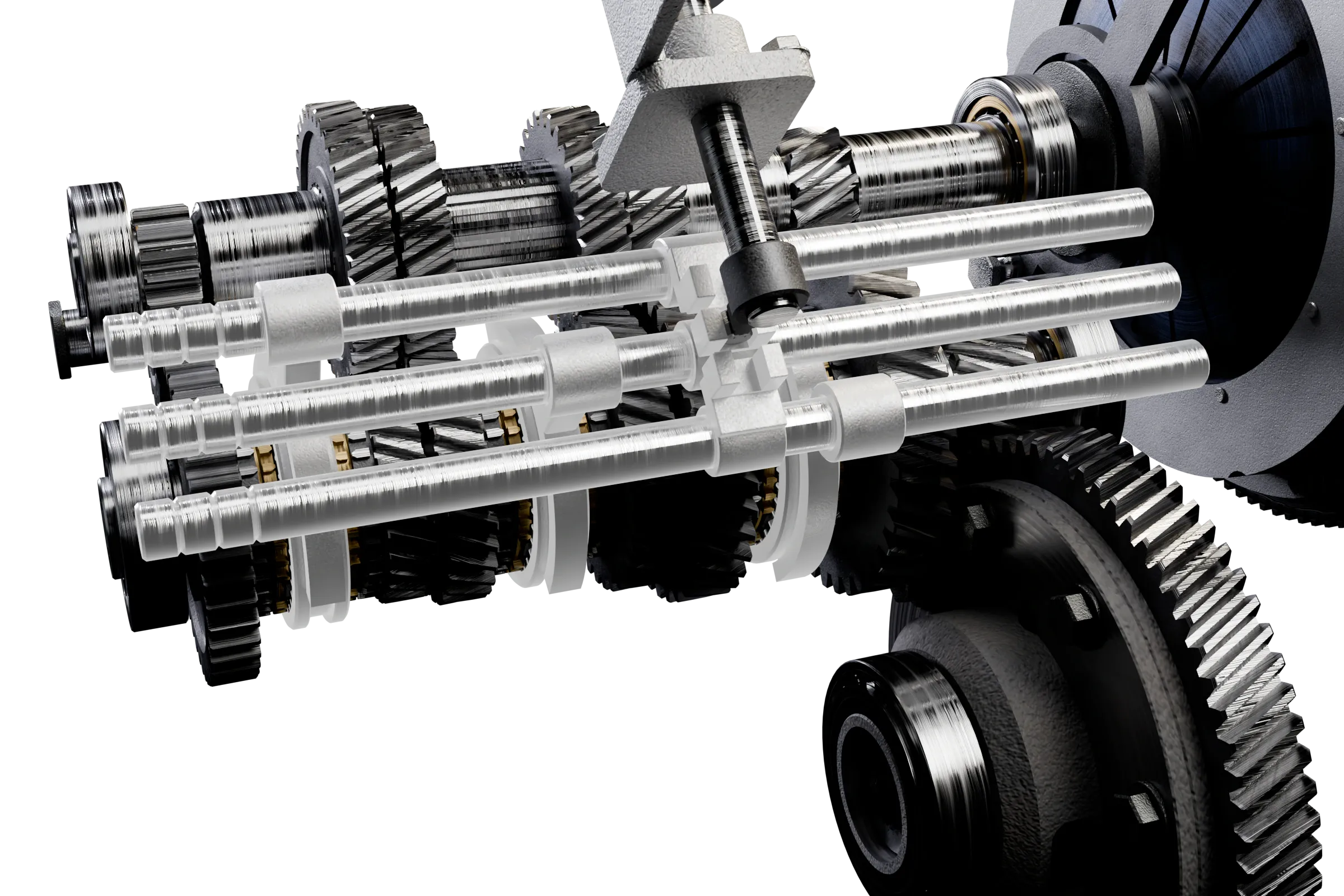
- 1st/2nd shift fork
- 1st/2nd shift rail
- 1st/2nd synchro sleeve
- 3rd/4th shift fork
The likely causes, most common first
-
Worn dog teeth on the gear and sleeve
Most likelyHow it shows One gear pops out under load or as you lift off, often a gear that has crunched going in for years.
Check Note which gear and when. Confirming it means stripping the gearbox, and the gear, its sleeve and usually the blocker ring are replaced.
Have it checked soon
-
Worn engine or gearbox mounts
CommonHow it shows Gears jump out when you accelerate or lift off sharply, with a clunk as the engine rocks, and the lever may move on its own.
Check Have a helper watch the engine from the side as you take up drive gently in first, then reverse, with the brakes on hard. Look at the mounts' rubbers for splits too.
Have it checked soon
-
A worn shift fork or weak detent
CommonHow it shows A gear slips out over bumps or on the overrun, sometimes with the lever creeping back towards neutral.
Check A garage checks the fork's pads and the detent springs and balls with the gearbox apart.
Have it checked soon
-
A worn or badly adjusted gear linkage
Less likelyHow it shows A vague lever and a gear that does not quite go fully home, which can then work its way out.
Check Look at the linkage or cables where they meet the gearbox for worn bushes and loose ends, and have the adjustment checked.
Fix it soon
-
Worn gearbox bearings
Less likelyHow it shows Jumping out of one or more gears under load, often with a whine or rumble from the gearbox.
Check Needs the gearbox stripped: worn bearings let the shafts move, so a gear and its sleeve no longer stay fully engaged.
Have it checked soon
How to narrow it down
- Note which gear jumps out and when: under load, on the overrun or over bumps. One gear points inside the gearbox; several point to the mounts or the linkage.
- With the handbrake on and your foot on the brake, take up drive gently while a helper standing to the side watches the engine: a big lurch means worn mounts.
- Look at the gear linkage or cables where they meet the gearbox, and at the mounts' rubbers, for splits and play.
- Check the gearbox oil level: low oil speeds up the wear on the teeth and bearings.
Is it safe to drive a car that jumps out of gear?
Have it checked before you drive far
Not for long. A gear that drops out leaves you without drive at the moment you asked for it, pulling out of a junction or overtaking, and without engine braking on a hill. Holding the lever in gear only wears the fork's pads against the spinning sleeve. Have it checked before you drive far, starting with the mounts and the linkage, which are the simpler repairs and often the cause.
Why does a worn gear jump out under load?
Because the dog teeth are shaped to stay in. The teeth on the sleeve and on the side of the gear are cut with a slight back taper, so the torque passing through them draws them together. As they wear, often after years of crunched changes, their ends round off and the taper is lost. The torque then pushes the sleeve back towards neutral, and only the detent spring and the fork hold it. On the overrun, or as the engine rocks on its mounts, that is not always enough.
Why do worn engine mounts make a car jump out of gear?
Because the engine and gearbox move on their mounts while the gear lever is fixed to the body. Cables or rods join the two, so every time a worn mount lets the engine rock, the linkage tugs on the selector. Hard acceleration or a sudden lift-off can rock it far enough to pull the sleeve out of engagement, usually with a clunk. The manual gearbox guide shows the rails, forks and detents that are meant to hold each gear in.
Questions people ask
Why does my car jump out of gear on the overrun?
Because the load on the dog teeth reverses when you lift off. Worn teeth that hold under power can be pushed apart as the drive turns into engine braking, and the engine rocking back on its mounts pulls on the linkage at the same moment.
Does jumping out of gear mean a new gearbox?
Not always. Worn mounts or a worn linkage are outside the gearbox and much simpler to fix. Wear inside means the gearbox has to come out and be stripped, and the worn gear, sleeve and fork are replaced, or a reconditioned gearbox is fitted.
Can a worn clutch make a car jump out of gear?
Not directly: the clutch connects the engine to the gearbox but does not hold the gear in. A clutch that drags makes gears crunch going in, though, and the chipped teeth that leaves behind can later let a gear jump out.
Can low gearbox oil make a car jump out of gear?
Not directly, but it speeds up the wear that does: the dog teeth, the bearings and the fork's pads all rely on the oil. A gearbox that has run low for a long time is more likely to be worn inside.
Related
Similar symptoms
- Why does my gearbox grind when I change gear? A gearbox grinds when the gear you select is still turning at a different speed from the shaft it is being locked to.
- Why does my car make a noise when I press the clutch? A whirr, squeal or chirp that starts when you press the clutch pedal is usually a worn release bearing (US: throw-out bearing), which works only while the pedal is down.
