
Why does my gearbox grind when I change gear?
A gearbox grinds when the gear you select is still turning at a different speed from the shaft it is being locked to. If only one gear crunches, often second on a quick change, its synchro is worn. If every gear crunches, and first and reverse are hard to select at a standstill, the clutch is not releasing fully.
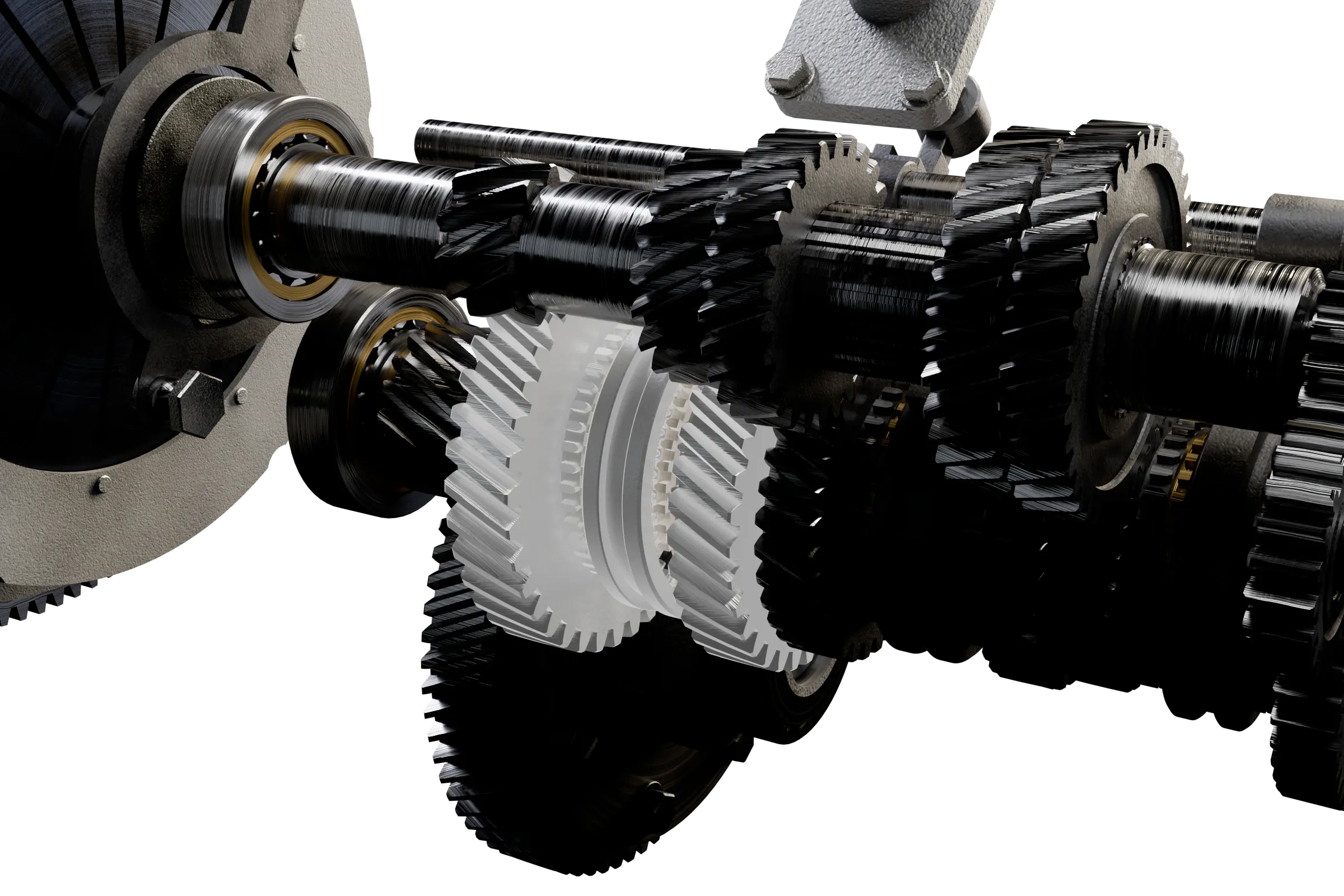
- 1st/2nd synchro sleeve
- 1st/2nd blocker ring
- 1st gear
- 2nd gear
The likely causes, most common first
-
Worn synchro blocker rings
Most likelyHow it shows One gear crunches as it goes in, often second or third, worse on a quick change and with the oil cold, while the others go in cleanly.
Check Change into that gear slowly, pausing in neutral. If a slow change is clean and a quick one crunches, its synchro is tired.
Fix it soon
-
How it shows Every gear is reluctant and crunches, and first and reverse grind at a standstill with the engine running, often with a soft pedal.
Check With the engine off, select first and reverse. If they go in easily, then crunch with the engine running and the pedal down, the clutch is dragging: check the fluid and look for leaks.
Have it checked soon
-
Reverse selected too soon
CommonHow it shows A crunch from reverse only, when you select it before the car has fully stopped.
Check Wait a moment after stopping with the pedal down. If it still crunches, briefly select first, whose synchro stops the input shaft, then select reverse.
Fix it soon
-
A dragging clutch plate
Less likelyHow it shows The same crunching as a hydraulic fault, but with a firm pedal and the fluid full, sometimes after the clutch has overheated or the car has stood unused.
Check Make sure nothing, such as a floor mat, stops the pedal reaching the floor. Otherwise a buckled plate, a plate sticking on its splines or weak pressure plate straps need the gearbox out.
Have it checked soon
-
Low or wrong gearbox oil
Less likelyHow it shows Notchy, reluctant changes and crunches in several gears, sometimes with a whine that rises with road speed.
Check Have the level checked at the filler plug, and use the oil the maker specifies: the synchros depend on its friction.
Fix it soon
-
A worn or badly adjusted gear linkage
Less likelyHow it shows A vague lever, gears that are hard to find and crunches when a gear does not go fully home.
Check Look at the linkage or cables where they meet the gearbox for worn bushes, and have the adjustment checked.
Fix it soon
How to narrow it down
- Note which gears crunch, and when. One gear on a quick change points to its synchro; every gear points to the clutch; reverse alone, to selecting it too soon.
- With the engine off and the pedal down, select first and reverse. If they go in cleanly now but crunch with the engine running, the clutch is not releasing.
- Check nothing stops the pedal reaching the floor, such as a floor mat, then look at the clutch fluid level and for leaks at the slave cylinder.
- Try the change slowly, with a pause in neutral. If that is clean, the synchro is wearing; if it still crunches, look at the clutch.
- Have the gearbox oil checked, especially if there is a whine as well.
Is it safe to drive with a gearbox that grinds?
Fix it soon
Usually, if only one gear crunches now and then. Change gear more slowly to spare its synchro, and have it looked at soon, because every crunch chips the dog teeth and the wear speeds up. If every gear crunches, or first and reverse grind at a standstill, the clutch is not releasing properly: have that checked before you drive far, because a clutch that stops releasing altogether leaves you unable to change gear.
Why does a worn synchro make a gear crunch?
Because it can no longer match the speeds in time. With the clutch down, the gear you want is still turning at its old speed while the output shaft turns with the wheels. The brass blocker ring has to rub on a cone on the side of the gear until both turn together, and its teeth block the sleeve until they do. The cone is shallow, 6.5° each side in the app’s model, so a light push gives a strong grip.
As the ring’s cone wears, or its fine grooves polish smooth, it grips less. On an unhurried change it still gets there; on a quick one the sleeve arrives before the speeds match, its teeth clash with the gear’s dog teeth, and that is the crunch. Second is often the first to wear, because the change up from first asks its synchro to slow the input shaft the furthest. There is more in how a manual gearbox works.
Why do first and reverse grind when the clutch drags?
Because at a standstill the output shaft is not turning. If the clutch does not fully release, the input shaft keeps turning with the engine, and first’s synchro has to stop it against the clutch’s drag. Many gearboxes have no synchro on reverse, so there the teeth simply clash, though the app’s model synchronises reverse with the same sleeve as fifth. With the engine off the input shaft stands still, so the same gears go in cleanly.
Questions people ask
Is double declutching still needed?
Not with a synchromesh gearbox in good order. Double declutching, blipping the throttle in neutral with the clutch up to speed the input shaft up on a change down, was needed on old gearboxes without synchros. It can still spare a worn synchro, but it is no cure.
Can the wrong gearbox oil cause grinding?
Yes. Synchros rely on friction between the blocker ring and the gear's cone, and an oil that is too thick, too slippery or of the wrong specification can stop them gripping, so the changes crunch, worst when cold. Use the oil the maker specifies.
Does grinding gears damage the gearbox?
Yes, a little each time. The clash chips and rounds the ends of the dog teeth on the gear and the sleeve, and teeth worn that way can later let the gear jump out under load.
Why does it only grind when the gearbox is cold?
Because cold gearbox oil is thick. It drags on the gears, so the synchros have more to slow down, and it takes longer to squeeze out from between the blocker ring and the cone. A crunch that fades as the gearbox warms usually means the synchros are starting to wear, or the oil is wrong.
Related
The parts
- What does a clutch slave cylinder do? A clutch slave cylinder is the small hydraulic cylinder on the gearbox that releases the clutch.
- What does a clutch plate do? A clutch plate (US: clutch disc) is the friction disc clamped between the engine's flywheel and the pressure plate.
Similar symptoms
- Why does my car jump out of gear? A manual gearbox jumps out of gear when the sleeve locking the gear to its shaft is pushed back to neutral.
- Why is my clutch pedal stuck to the floor? A clutch pedal that sinks to the floor or stays there is nearly always a hydraulic fault: a fluid leak, air in the line or a failed seal in the master or slave cylinder.
- How can you tell if a clutch is slipping? A slipping clutch lets the engine's revs rise without the car speeding up to match, most clearly when you accelerate hard in a high gear or climb a hill.
- Why does my car make a noise when I press the clutch? A whirr, squeal or chirp that starts when you press the clutch pedal is usually a worn release bearing (US: throw-out bearing), which works only while the pedal is down.
