
How can you tell if a clutch is slipping?
A slipping clutch lets the engine's revs rise without the car speeding up to match, most clearly when you accelerate hard in a high gear or climb a hill. Other signs are a biting point near the top of the pedal, a burning smell and weak pulling power. The usual cause is a worn clutch plate.
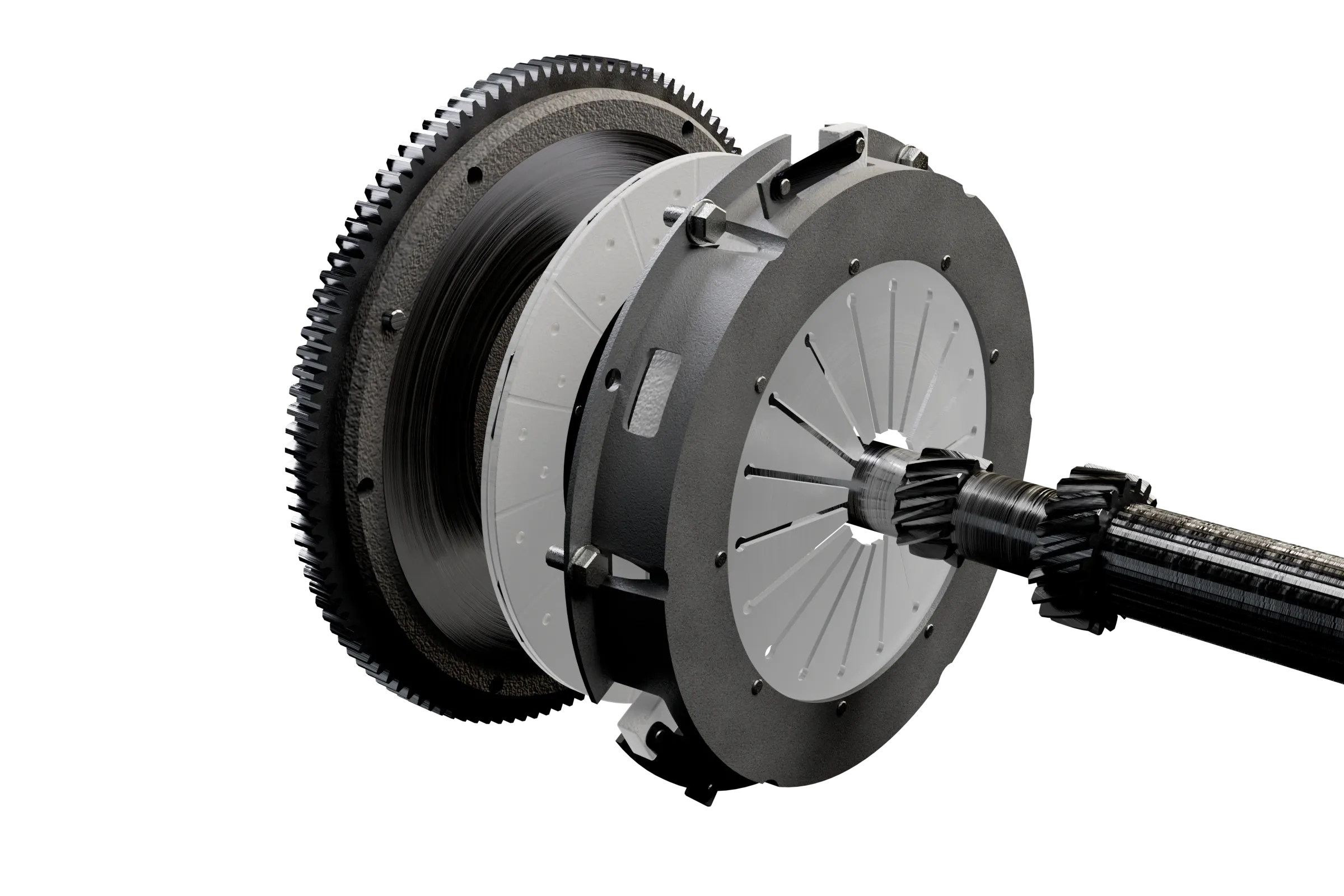
- Friction facing
- Pressure plate
- Diaphragm spring
The likely causes, most common first
-
A worn clutch plate
Most likelyHow it shows Slip that has crept in over months, first under full throttle in fourth or fifth, with a biting point that has moved up the pedal.
Check Try the road test below. On a high-mileage clutch with a high biting point, a worn plate is the likely answer; a garage confirms it with the gearbox out.
Have it checked soon
-
Oil on the clutch plate
CommonHow it shows Slip and judder together, sometimes coming on quickly in a clutch that was fine.
Check Look under the car where the engine meets the gearbox for oil: a leaking crankshaft rear seal or gearbox input shaft seal soaks the plate.
Have it checked soon
-
A clutch held partly released
Less likelyHow it shows Slip that gets worse as the car warms up, or that began after work on the clutch or its fluid, sometimes with a pedal that does not come fully up.
Check Check the pedal returns to its stop. A sticking slave cylinder or release bearing, or a master cylinder that cannot return its fluid, keeps pressing the spring's fingers.
Have it checked soon
-
A weak diaphragm spring or glazed pressure plate
Less likelyHow it shows Slip on a clutch that has been badly overheated, by heavy towing or a long, slipping hill start, even with plenty of lining left.
Check Only visible with the gearbox out: blue heat marks, a glazed face or a spring that has lost its strength.
Have it checked soon
-
A foot resting on the pedal
Less likelyHow it shows Slip that comes and goes on long drives, in a car whose clutch is otherwise healthy.
Check Keep your left foot on the footrest, not the pedal: even light pressure can unload the diaphragm spring.
Fix it soon
-
More torque than the clutch was built for
Less likelyHow it shows Slip in high gears soon after an engine remap or other tuning, on a clutch that was fine before.
Check The standard clutch may not have the margin for the extra torque; an uprated clutch is the usual answer.
Have it checked soon
How to narrow it down
- Find a quiet, straight road you know. In fourth at about 30 mph, press the accelerator to the floor and watch the rev counter and the speedometer together.
- On a healthy clutch they rise in step. If the revs flare ahead of the road speed, then the car catches up when you ease off, the clutch is slipping.
- Note where the clutch bites as you let the pedal up: right at the top on an older clutch points to a worn plate.
- Look under the car where the engine meets the gearbox for oil, and check the clutch fluid level.
- Notice the smell after a hill start or a hard pull: a sharp, burning smell on ordinary drives means the facings are overheating.
Can you drive with a slipping clutch?
Have it checked before you drive far
There is no fixed distance, but not long. Slip turns the engine's power into heat at the facings, which glazes them and the flywheel and makes the slip worse, so the end tends to come quickly. A clutch that slips only at full throttle in fifth may last weeks with gentle driving; one that slips in every gear may not get you up the next hill. Keep the revs and the throttle down, and have it inspected before you drive far.
Why does slip show up in high gears first?
The clutch sits before the gearbox, so in every gear it carries the engine’s torque, not the much larger torque at the wheels. What changes from gear to gear is how much of the engine’s effort goes into spinning itself up. In first the revs climb fast, and part of the torque is spent speeding up the engine’s own crankshaft and flywheel. In fifth they climb slowly, so nearly all of it passes through the clutch, and for longer, often with the engine near its peak torque.
A healthy clutch has a margin over that. The app’s model holds 302 N·m, about 1.6 times the 190 N·m its engine makes. Wear, oil or heat eat into the margin, and the first place it runs out is a full-throttle pull in a high gear. There is more on where the clamp comes from in how a clutch works.
Questions people ask
Can a clutch slip in first gear?
Yes, once it is badly worn, but you notice it there last. In first the engine spins up so quickly that it never holds full torque against the clutch for long, so slip shows first in the high gears and spreads down as the wear goes on.
Does a slipping clutch smell?
Often. Overheated facings give off a sharp, acrid smell, a little like hot brakes, after a hill start, a tow or a hard pull away. One smell after a clumsy hill start proves little; a smell on ordinary drives is a warning.
Can low clutch fluid make a clutch slip?
Not usually. Low fluid or air stops a clutch releasing, which makes the gears crunch. Slip comes from the opposite fault: something holding the clutch partly released, such as a sticking slave cylinder or seals swollen by the wrong fluid.
Can a slipping clutch be adjusted?
Only on older cars with a clutch cable and a manual adjuster, where too little free play holds the clutch partly released. Hydraulic and self-adjusting clutches have nothing to adjust: a worn plate has to be replaced.
Related
The parts
- What does a clutch plate do? A clutch plate (US: clutch disc) is the friction disc clamped between the engine's flywheel and the pressure plate.
- What does a clutch slave cylinder do? A clutch slave cylinder is the small hydraulic cylinder on the gearbox that releases the clutch.
Similar symptoms
- Why does my car make a noise when I press the clutch? A whirr, squeal or chirp that starts when you press the clutch pedal is usually a worn release bearing (US: throw-out bearing), which works only while the pedal is down.
- Why is my clutch pedal stuck to the floor? A clutch pedal that sinks to the floor or stays there is nearly always a hydraulic fault: a fluid leak, air in the line or a failed seal in the master or slave cylinder.
- What causes a spongy brake pedal? A spongy or soft brake pedal usually means air in the brake fluid, which compresses where fluid does not.
- Why does my gearbox grind when I change gear? A gearbox grinds when the gear you select is still turning at a different speed from the shaft it is being locked to.
