
Brakes · Floating disc caliper
What causes a spongy brake pedal?
A spongy or soft brake pedal usually means air in the brake fluid, which compresses where fluid does not. The other common causes are a fluid leak, old fluid that has absorbed water and a brake hose that swells under pressure. Don't drive with a soft pedal until it is fixed: it can go to the floor.
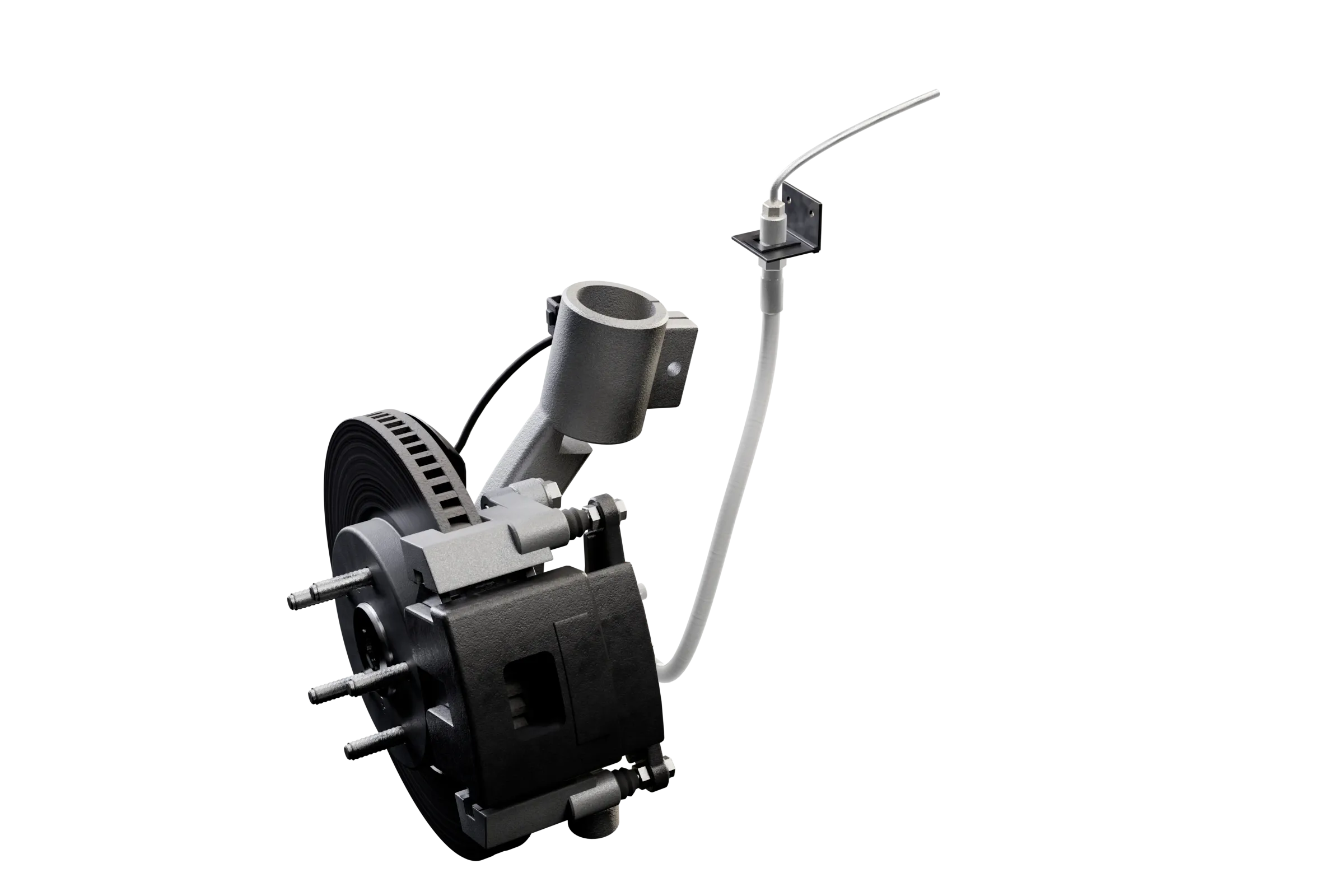
- Flexible brake hose US: Brake hose
- Brake pipe US: Brake line
The likely causes, most common first
-
Air in the brake fluid
Most likelyHow it shows A soft, springy pedal that firms up a little when you pump it, often soon after brake work.
Check Bleeding the brakes removes the air. If it comes back soon after, look for where air is getting in.
Don't drive it
-
A fluid leak
CommonHow it shows A pedal that sinks or travels further each time, a falling reservoir level and the red brake warning light.
Check Look at the reservoir, then for wet, oily patches inside each wheel, along the pipes and below the master cylinder.
Don't drive it
-
How it shows A pedal that goes soft after hard braking or a long descent, and firms up again as the brakes cool.
Check Find out when the fluid was last changed: it is usually due every two years. A garage can test its water content.
Have it checked soon
-
A swelling brake hose
Less likelyHow it shows A soft, long pedal even with fresh fluid and a good bleed.
Check Have a helper press the pedal hard while you watch each flexible hose: one that bulges needs replacing.
Don't drive it
-
A failing master cylinder
Less likelyHow it shows A pedal that slowly sinks while you hold steady pressure at a junction, with no leak to be found.
Check With the engine running, hold firm, steady pressure for half a minute: a pedal that creeps down points to its seals.
Don't drive it
-
Pads pushed back by a worn wheel bearing
Less likelyHow it shows A long first press, often after hard cornering, that is firm on the second.
Check Have the wheel bearings checked for play and the discs for runout.
Have it checked soon
-
Rear drum brakes out of adjustment
Less likelyHow it shows A long pedal, and a handbrake lever that needs more clicks than it used to.
Check Have the rear brakes checked: drum brakes adjust themselves as they wear, but the adjusters can seize.
Have it checked soon
How to narrow it down
- Look at the fluid reservoir: a level below MIN usually means a leak.
- With the engine off, press the pedal. It should stop high and feel firm; a soft, springy feel that improves when you pump it points to air.
- With the engine running, hold steady pressure for half a minute. A pedal that slowly sinks, with no leak in sight, points to the master cylinder.
- Look inside each wheel, along the pipes and below the master cylinder for wet, oily patches.
- Find out when the fluid was last changed. Most makers ask for a change every two years.
Is it safe to drive with a spongy brake pedal?
Don't drive it
No. A soft pedal leaves less in reserve, and its causes get worse without warning: the next press can go much further, or to the floor. Most cars have two hydraulic circuits, so a single leak usually leaves some braking, but not enough to rely on. Have the brakes bled or the leak found before you drive. If the pedal goes soft while you are driving, pump it, change down through the gears and stop somewhere safe.
Is a spongy pedal the same as a sinking one?
Not quite. A spongy pedal is soft and springy but stops at about the same point each time: something in the system is compressing, usually air or a swelling hose. A sinking pedal keeps going down under steady pressure, because fluid is escaping, out through a leak or past a worn seal inside the master cylinder. Neither is safe to drive on, and a sinking pedal is the more urgent. A hard pedal that needs a big push is a different fault, usually the brake servo.
Questions people ask
Why does the brake pedal go to the floor after fitting new pads?
Because the pistons were pushed back to make room for the thicker pads, the first presses only move them out to meet the pads again. Pump the pedal until it is firm before you move the car. If it stays soft after that, have the brakes bled.
Why does the brake pedal drop when I start the engine?
On most cars that is normal. With the engine off the brake servo has no vacuum, so the pedal feels high and hard; once the engine runs, the servo starts helping and the pedal sinks a little under your foot.
Can a bad brake servo make the pedal spongy?
Not usually. A failing servo (US: brake booster) makes the pedal hard, so you need a much bigger push to stop. A soft or sinking pedal is a hydraulic fault: air, a leak or a worn seal.
Related
The parts
- What does brake fluid do? Brake fluid carries the push from the brake pedal to the calipers.
- What does brake fluid do? Brake fluid carries the push from the brake pedal to the calipers.
- What does a wheel bearing do? A wheel bearing lets the wheel spin freely while carrying the car's weight and the cornering and braking loads.
Similar symptoms
- Why does my car pull to one side when braking? A car that pulls to one side when braking usually has a brake that grips harder on one side than the other.
- What causes a grinding noise when braking? A grinding noise when you brake usually means the brake pads have worn through their friction material, so their steel backing plates are scraping the discs.
- Why is my clutch pedal stuck to the floor? A clutch pedal that sinks to the floor or stays there is nearly always a hydraulic fault: a fluid leak, air in the line or a failed seal in the master or slave cylinder.
- How can you tell if a clutch is slipping? A slipping clutch lets the engine's revs rise without the car speeding up to match, most clearly when you accelerate hard in a high gear or climb a hill.
Explained
- Disc vs drum brakes: what's the difference? A disc brake squeezes pads against a disc that turns with the wheel; a drum brake pushes curved shoes outwards against the inside of a drum.
