
Brakes · Floating disc caliper
Why does my car pull to one side when braking?
A car that pulls to one side when braking usually has a brake that grips harder on one side than the other. The most common cause is a sticking caliper or seized guide pins; uneven tyre pressures, contaminated pads, worn suspension bushes and a collapsed brake hose come next.
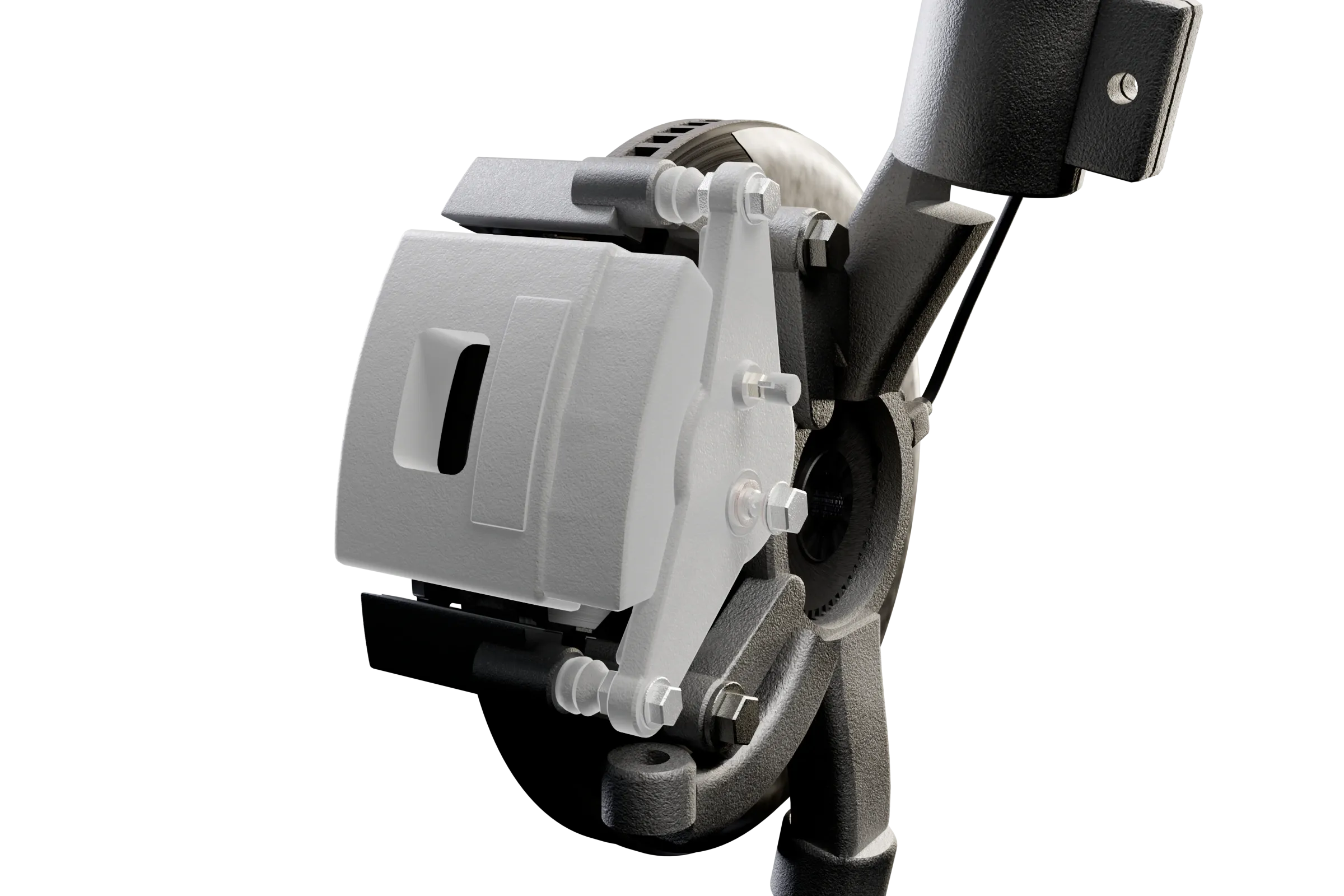
- Caliper housing US: Brake caliper
- Guide pin, upper US: Slide pin, upper
- Guide pin, lower US: Slide pin, lower
The likely causes, most common first
-
A sticking caliper or seized guide pins
Most likelyHow it shows A pull under braking, often with a hot wheel, a burning smell or one pad worn far more than the other.
Check Have a garage check that each caliper slides and releases freely, and that its guide pins move in their bores.
Have it checked soon
-
Uneven tyre pressures or a worn tyre
CommonHow it shows A pull that is there when you drive and grows when you brake.
Check Check all four pressures with the tyres cold, and compare the tread on the two front tyres.
Fix it soon
-
How it shows A pull that came on suddenly, with that brake grabbing or hardly working.
Check Look for a wet, dark disc or a damp inside of the wheel. Soaked pads are replaced in pairs, and a fluid leak means don't drive.
Have it checked soon
-
Worn control arm bushes
CommonHow it shows A tug or dart as you brake, often with a clunk, as the wheel shifts back under the braking force.
Check Look for split or cracked rubber in the bushes, and have the suspension checked for movement.
Have it checked soon
-
A collapsed brake hose
Less likelyHow it shows One brake that keeps dragging after you let go, with that wheel hot, though the caliper itself is fine.
Check A garage can test it by opening the bleed screw on that side: if the brake frees at once, the hose was holding pressure.
Have it checked soon
-
Pads or discs that differ across the axle
Less likelyHow it shows A steady pull after only one side was worked on.
Check Pads and discs must match on both sides of an axle and are changed in pairs.
Fix it soon
-
Wheel alignment out
Less likelyHow it shows A pull that is there all the time, with the steering wheel off centre or tyres wearing on one edge.
Check Have the alignment checked once the tyre pressures are right.
Fix it soon
How to narrow it down
- Set all four tyre pressures cold, to the figures in the handbook or on the door pillar, and look at the front tyres' tread.
- On an empty, straight road with nothing behind you, brake gently and then firmly with your hands light on the wheel. Note which way it pulls, and whether it also pulls with your foot off the pedal.
- After a drive, hold a hand near each front wheel without touching it, to find a hot side.
- Look through each front wheel at the pads and disc: one side much more worn, or a wet, oily disc, points to the brake on that side.
- A garage can measure the braking force at each wheel on a roller tester, the machine used in the MOT.
Is it safe to drive if the car pulls when braking?
Have it checked before you drive far
Only with care, and only as far as a garage. A brake that is weaker on one side makes the car swerve in an emergency stop, when you most need it straight, and a dragging brake overheats. Leave extra room and brake early and gently. If the pull is strong or came on suddenly, or comes with a wet wheel, a soft pedal or a burning smell, don't drive it until it is fixed. A big difference in braking across an axle fails an MOT.
Which way does the car pull?
Towards the side that brakes harder. A brake that cannot clamp fully, because its piston is stuck or its pads are soaked in oil, makes the car pull away from that side. A brake that drags, because its guide pins have seized or its hose is holding pressure, makes the car pull towards that side, often even with your foot off the pedal, and that wheel runs hot. A pull only under braking points to the brakes or worn suspension bushes; a pull all the time points first to the tyres or the alignment.
Questions people ask
Why does my car pull to the left when braking?
Because the left front brake is gripping harder than the right: the right one may be sticking off or have soaked pads, or the left one may be dragging. British roads also slope towards the kerb, which gives most cars a gentle drift to the left with or without braking.
Can new brake pads make a car pull?
A little, for the first few miles, until they bed in, especially if only one side was done or the discs were left unevenly worn. Pads are always fitted to both wheels of an axle. A pull that lasts beyond the first few dozen miles needs checking.
Can a wheel alignment cause pulling under braking?
It can add to it, but alignment faults usually pull all the time, not only when you brake. A pull that appears only under braking points first to the brakes or worn suspension bushes.
Related
The parts
- What does a brake caliper do? A brake caliper is the clamp at each disc brake. When you brake, fluid pressure pushes its piston out and the caliper squeezes the two pads against the disc.
- What do brake pads do? Brake pads are the friction blocks the caliper squeezes against the brake disc, turning the car's movement into heat to slow it down.
- What do control arm bushes do? Control arm bushes (US: bushings) are the rubber mountings where a control arm pivots on the subframe.
Similar symptoms
- Why does my steering wheel shake when braking? A steering wheel that shakes when you brake usually means the front brake discs have worn unevenly, which is often called warped.
- What causes uneven tyre wear? Uneven tyre wear usually means the wheel alignment is out, the tyre pressures are wrong or a suspension part is worn, and the pattern points to which.
- What causes a grinding noise when braking? A grinding noise when you brake usually means the brake pads have worn through their friction material, so their steel backing plates are scraping the discs.
- What causes a knocking noise over bumps? A knocking or clunking noise over bumps usually comes from a worn joint in the front suspension.
Explained
- What is camber? Camber is the lean of a wheel seen from the front of the car.
