
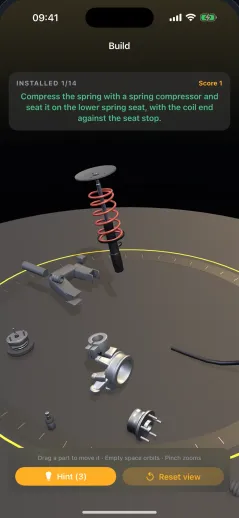
Build it yourself
Every part starts on the shop floor. Fit each one in the order a technician would, and the app tells you when you get it wrong.
Seven real car systems, built part by part. Turn them, take them apart, run them and put them back together on iPhone and iPad.

Scan with your iPhone camera to open the App Store
In the app
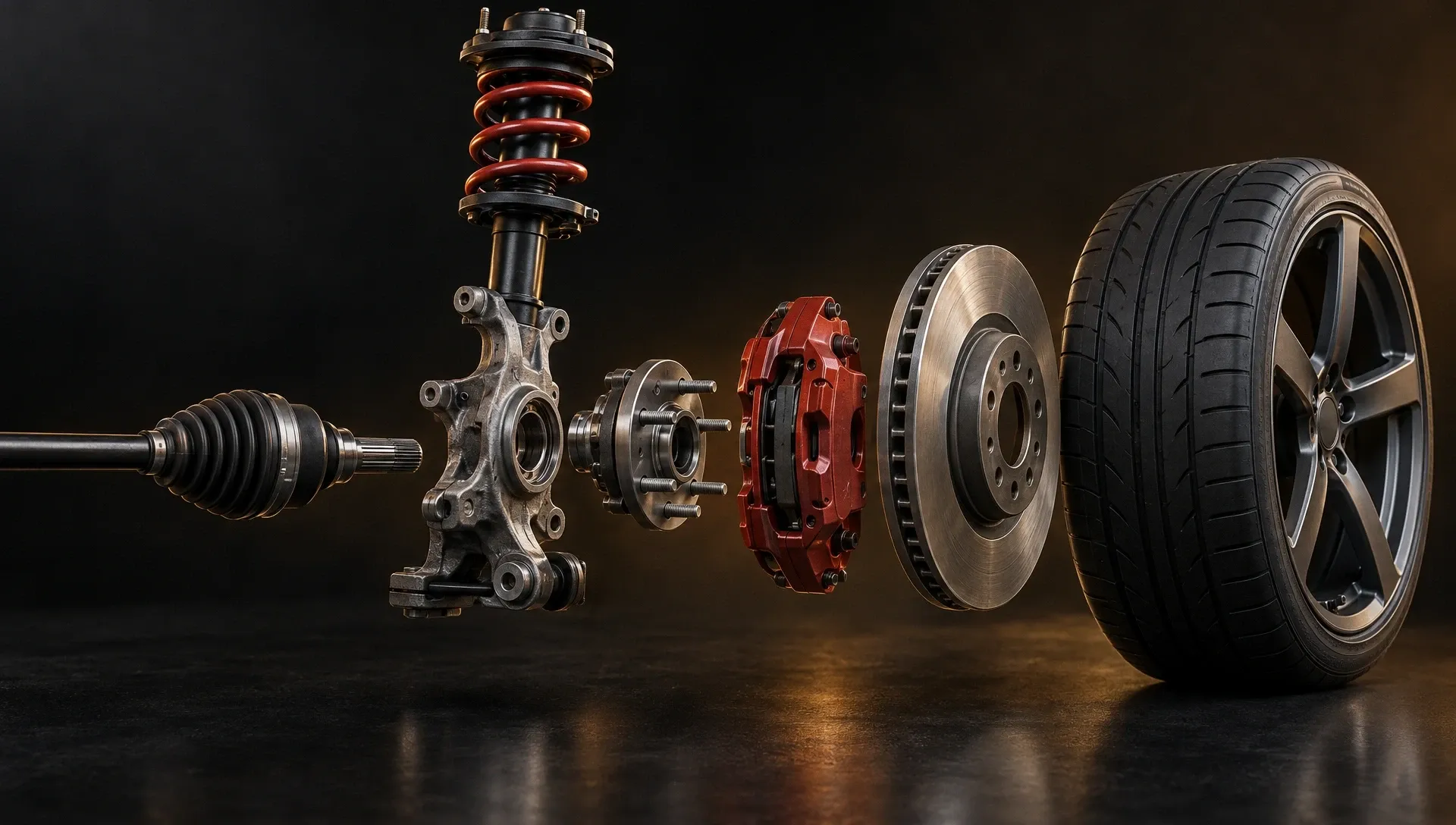
Every system is a working 3D assembly. Explode it to see each part, tap a part to learn its job, then run the live test and watch the whole thing respond.
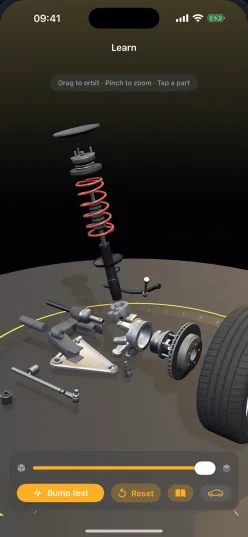
Pull a system apart into its parts and see how they fit together.
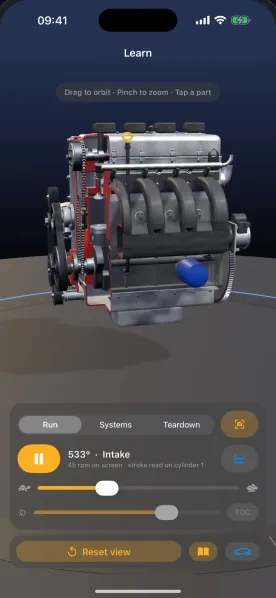
A four-stroke cutaway with every valve, piston and cam live.
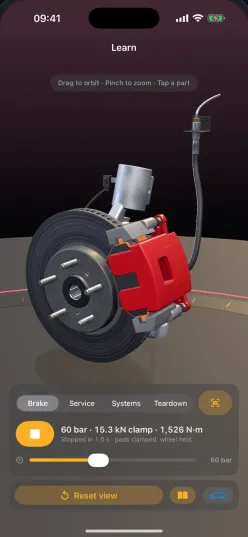
Squeeze the caliper and read the clamp force as it builds.
Seven systems
Each guide answers one question in plain words, with a diagram you can drive. Then open the same system in the app and take it apart.
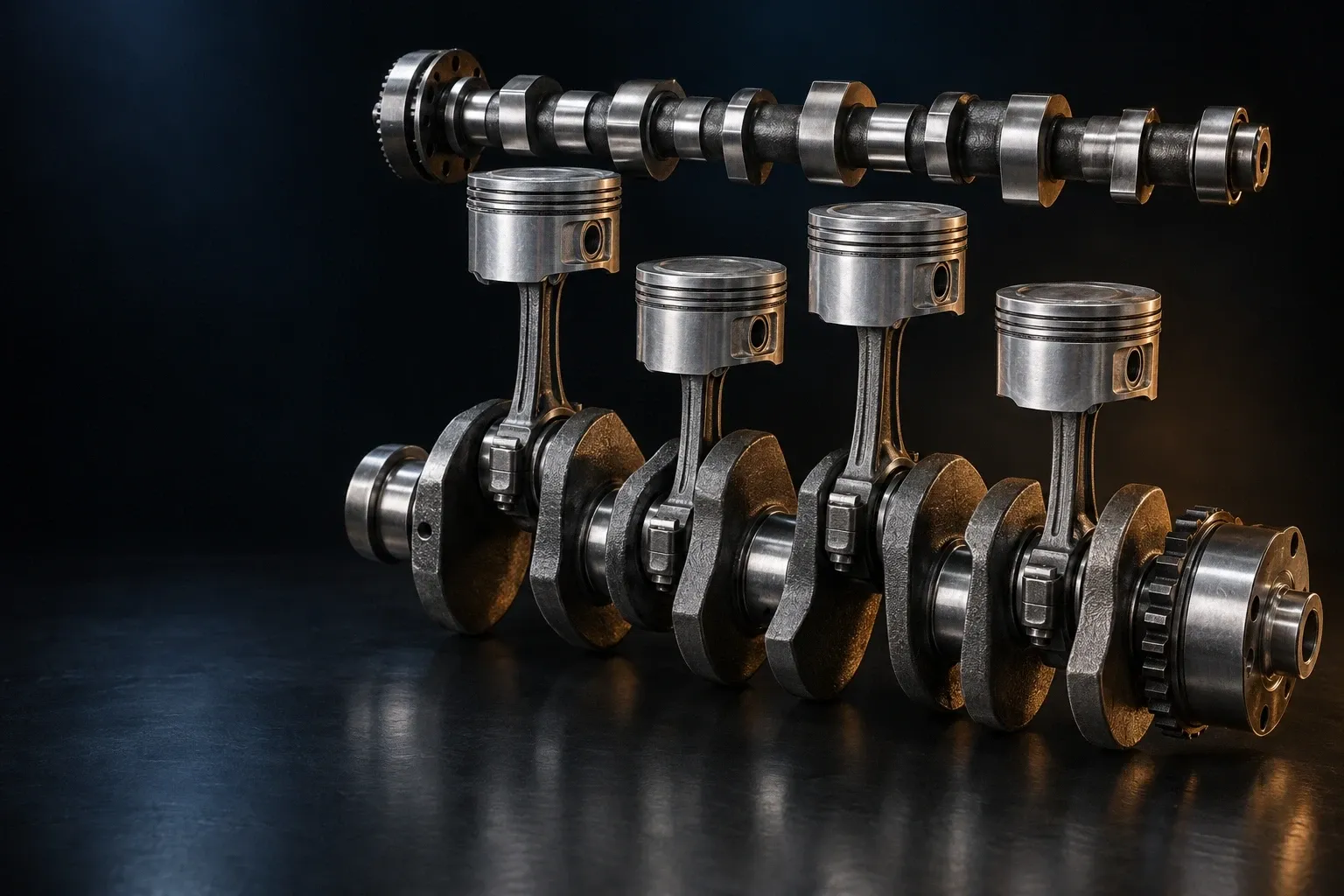
Engine
A four-stroke engine makes power in a cycle of four piston strokes, which take two turns of the crankshaft.
Read the guide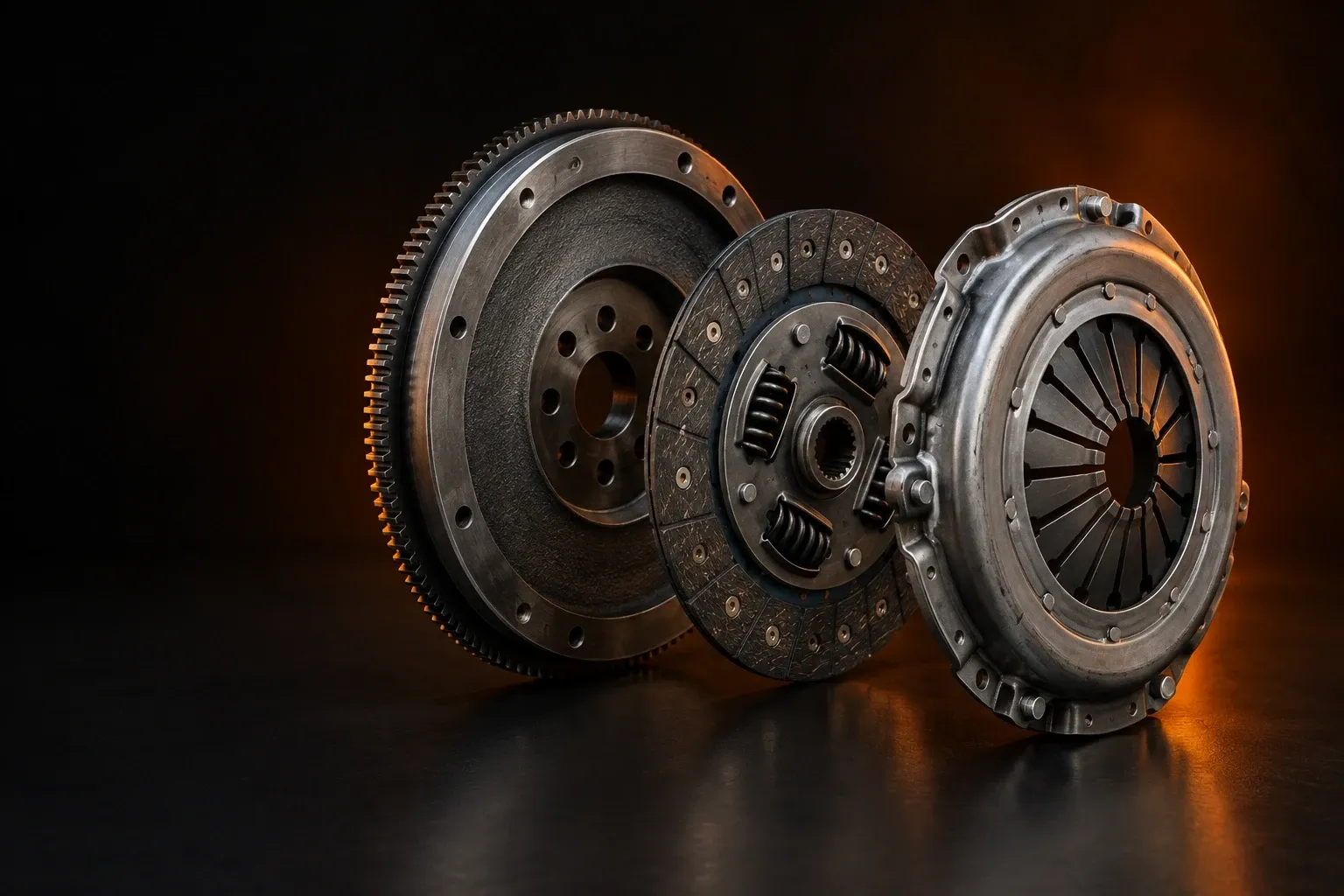
Clutch
A clutch connects and disconnects the engine and the gearbox (transmission).
Read the guide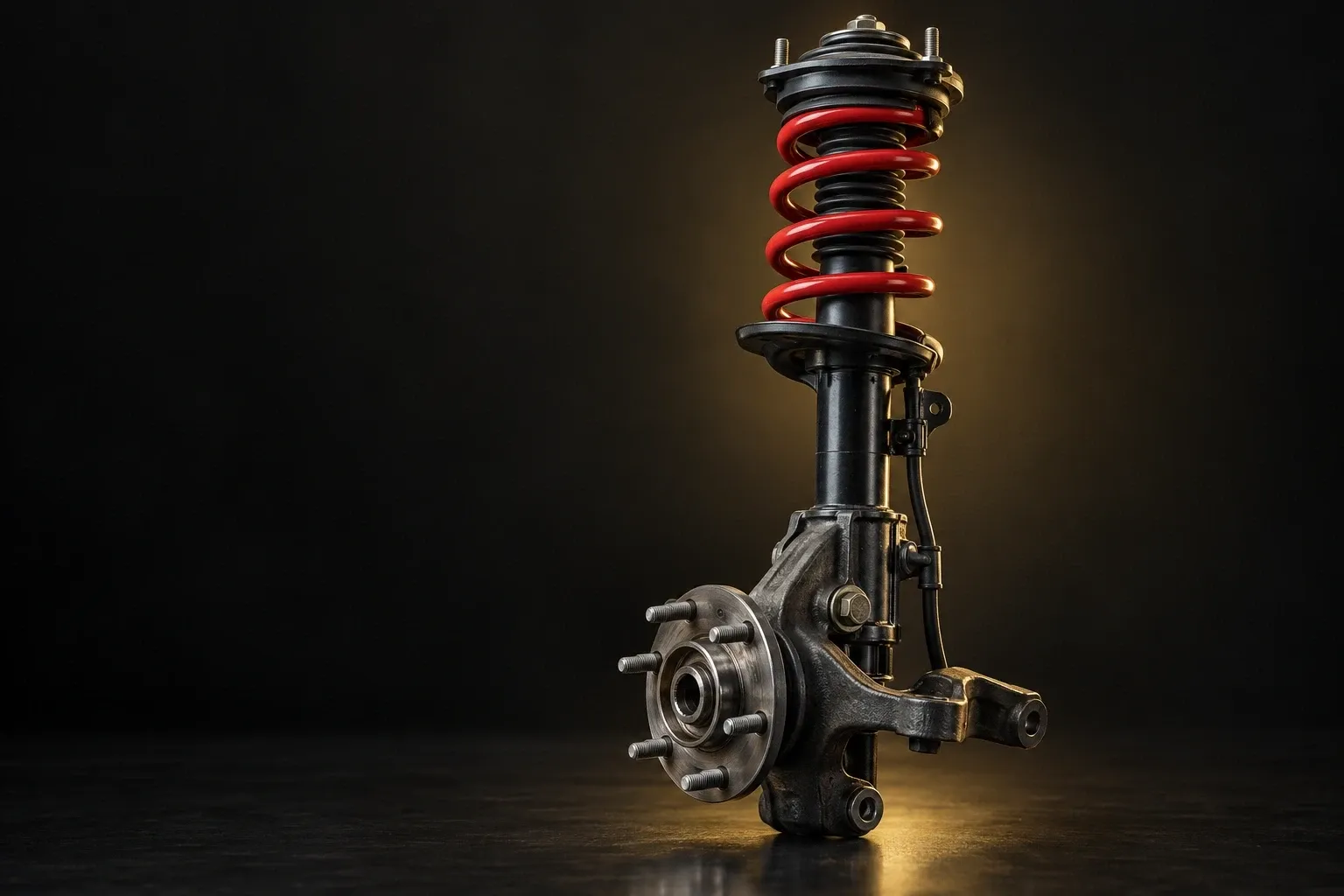
Suspension
A MacPherson strut is a suspension design in which one unit, a coil spring wrapped around a damper, locates the top of the wheel and carries the car's weight.
Read the guide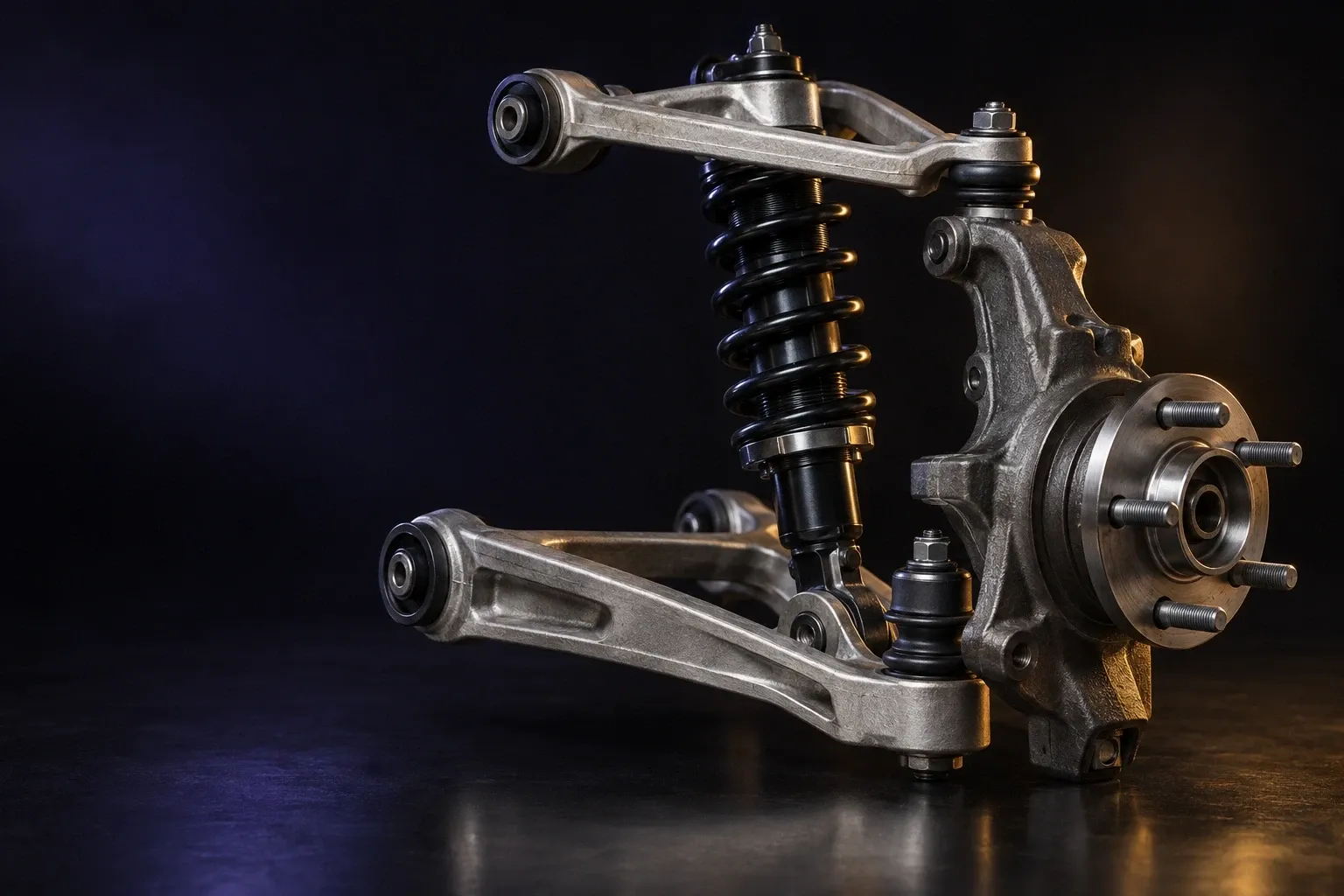
Wishbone
Double wishbone suspension holds each wheel between two A-shaped arms, an upper and a lower, which pivot on the body and meet the wheel's knuckle at ball joints.
Read the guide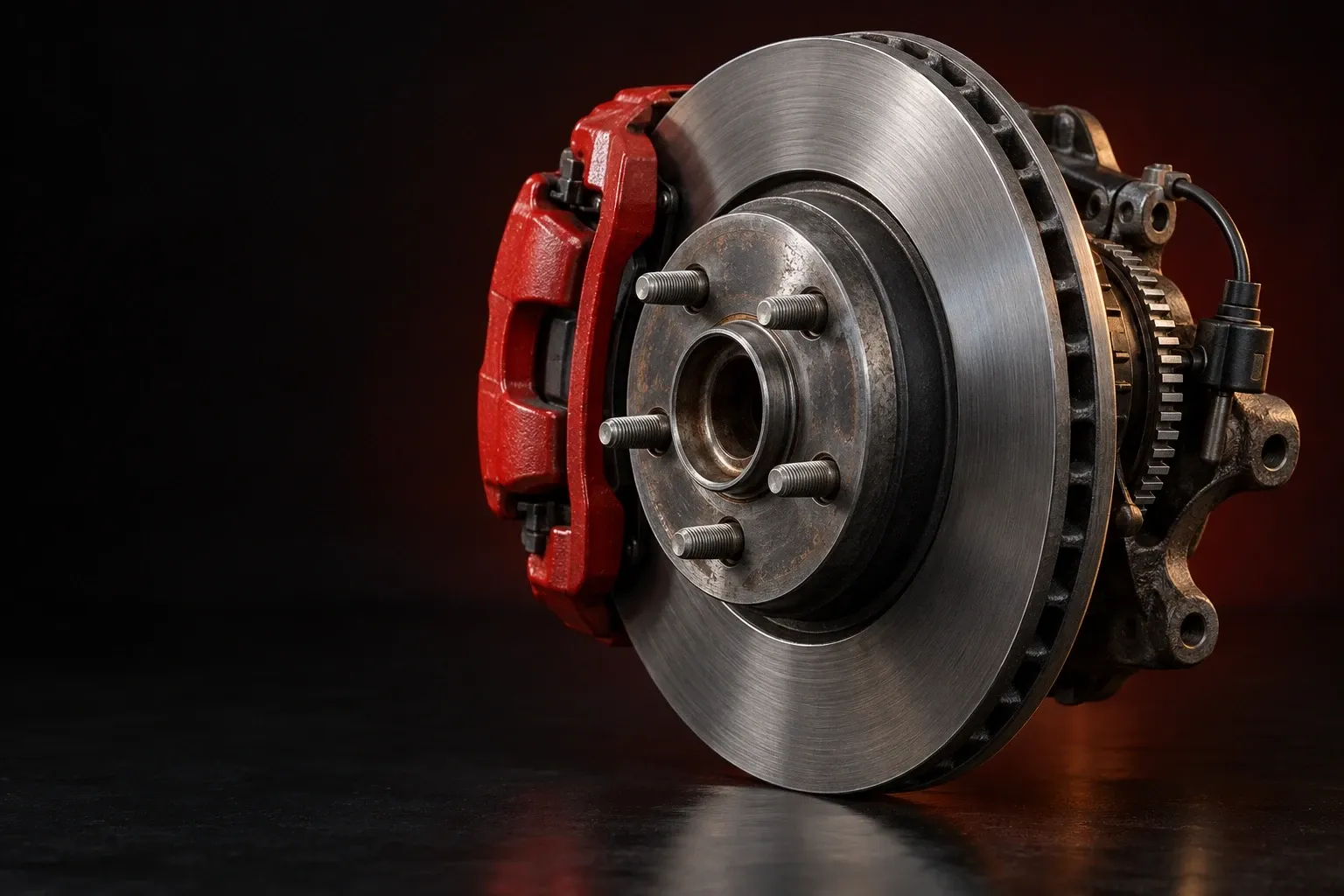
Brakes
Pressing the brake pedal pushes fluid to a caliper at each wheel, where a piston squeezes two friction pads against a disc that turns with the wheel.
Read the guide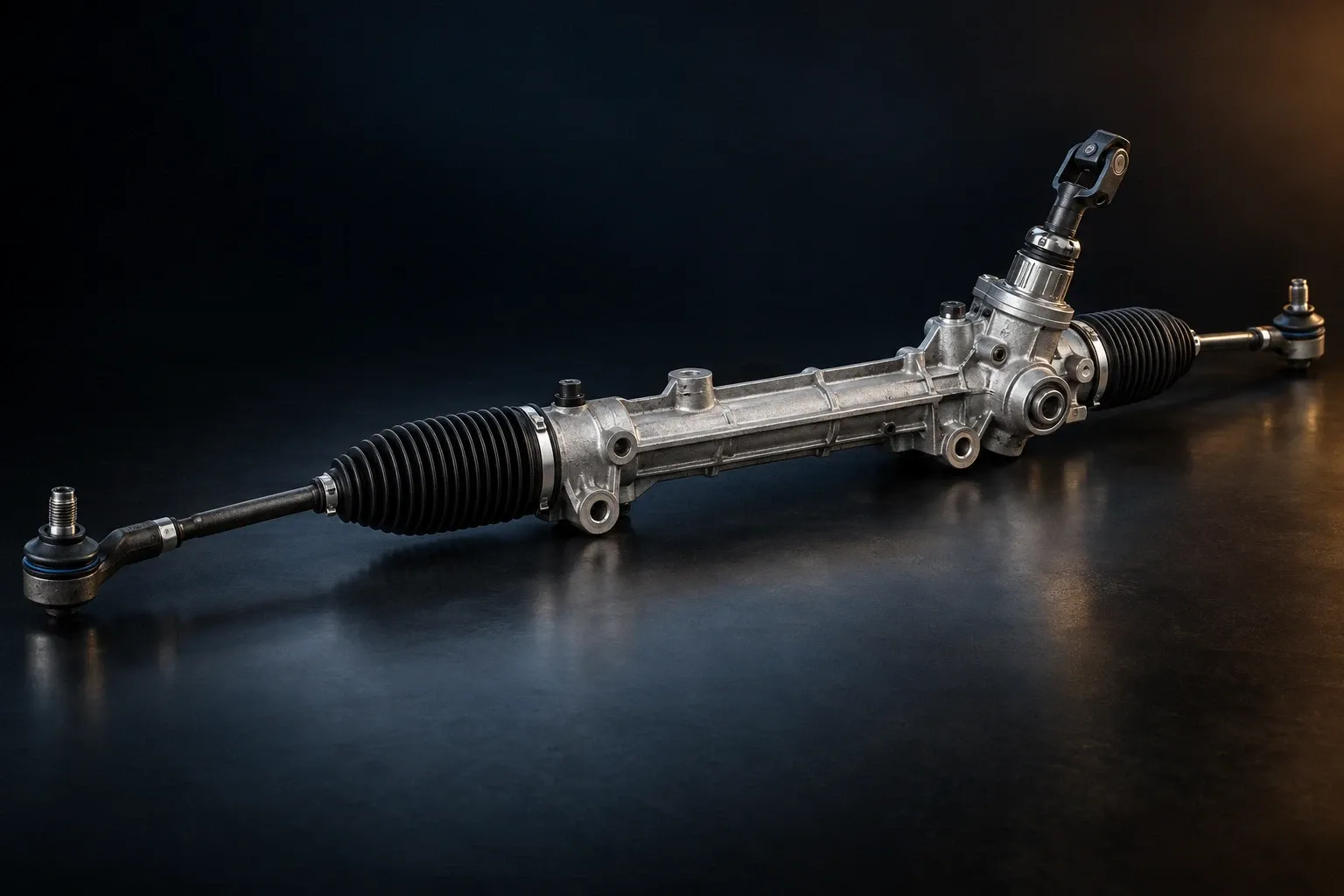
Steering
In rack and pinion steering, the steering column turns a small gear, the pinion, which meshes with a toothed bar, the rack.
Read the guide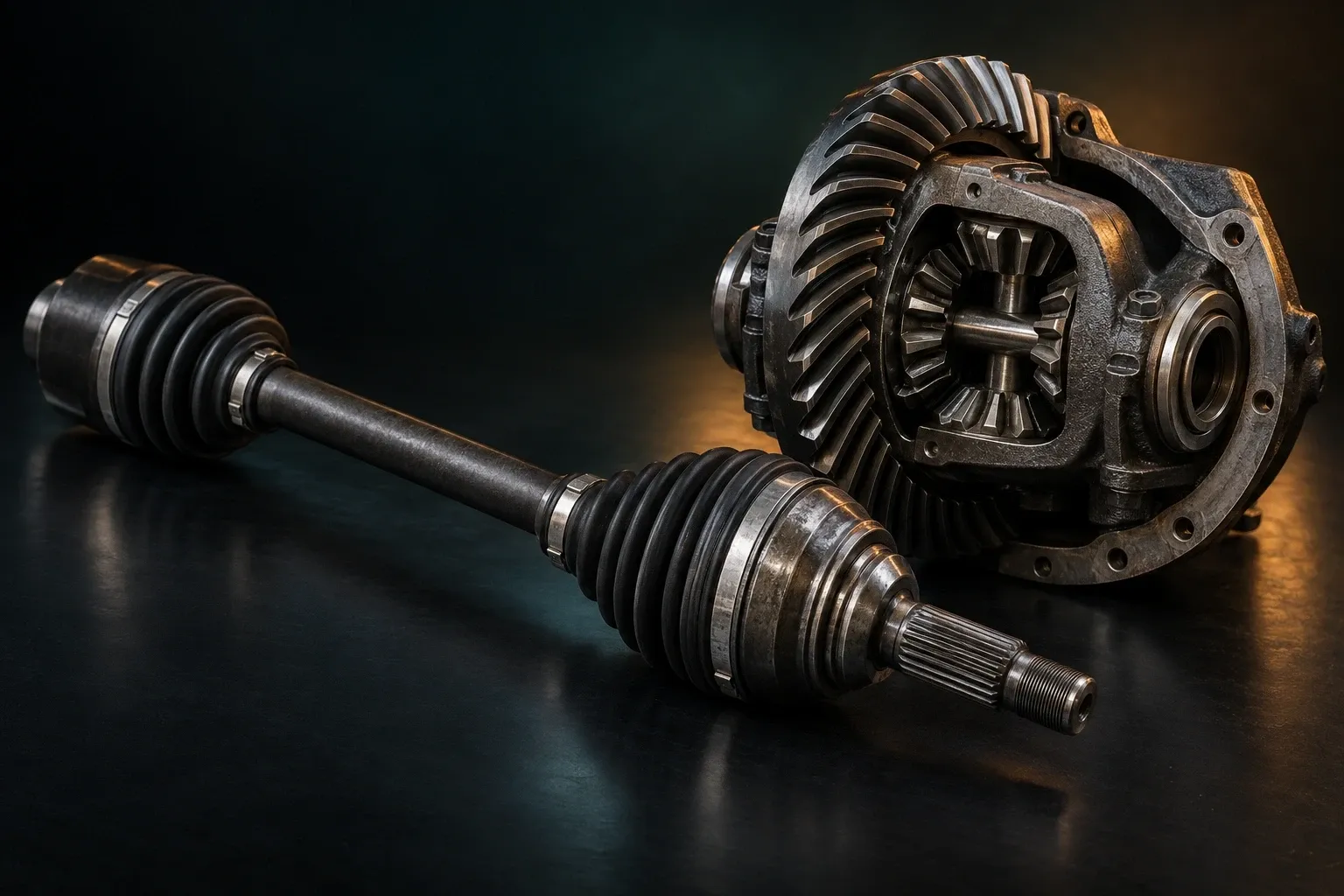
Drivetrain
In a front-wheel-drive car the gearbox turns a differential, which splits the drive between two half-shafts, one to each front wheel.
Read the guideTap a part, learn its job
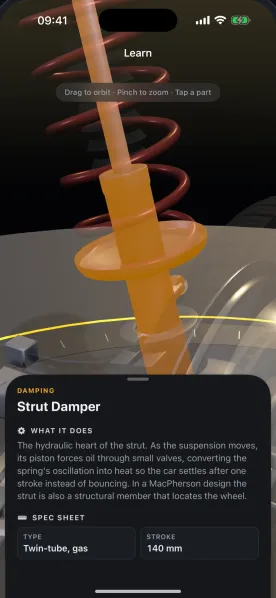
Damping
Strut Damper
What it does
The hydraulic heart of the strut. As the suspension moves, its piston forces oil through small valves, converting the spring's oscillation into heat so the car settles after one stroke instead of bouncing. In a MacPherson design the strut is also a structural member that locates the wheel.
Spec sheet
Build and Quiz
Every part starts on the shop floor. Fit each one in the order a technician would, and the app tells you when you get it wrong.
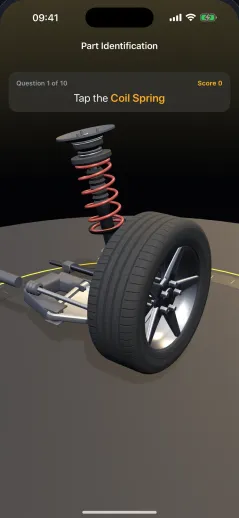
Find the part on the 3D model, then put the whole assembly in fitting order. Your best scores are kept.
Who it's for
Understand what the garage is talking about before you hand over the keys.
Learn car mechanicsSee the parts your IMI, City & Guilds or ASE course describes, working.
For studentsSee how each assembly comes apart and goes back together, in workshop order.
The seven systemsShow a class what a textbook diagram cannot, on an iPad and a projector.
For teachersQuestions
3D Mechanic: How Cars Work is an app for iPhone and iPad that teaches how real car systems work in interactive 3D. It has seven systems, from the MacPherson strut to the clutch, with parts you can tap, live tests, a build mode and quizzes.
MacPherson strut suspension, double wishbone suspension, disc brakes with ABS, rack and pinion steering, the CV axle and open differential, a four-stroke inline-four engine, and a hydraulic clutch from the pedal to the flywheel.
Not at the moment. It is made for iPhone and iPad only.
Yes. Once it is installed, everything works without an internet connection, so it is fine on a plane, in a workshop or in a classroom with poor Wi-Fi.
Each system is a generic compact front-wheel-drive car part, modelled piece by piece with a real layout, and the numbers are teaching values that stay consistent across the app. It is for general education, not a repair manual: on a real car, follow the maker’s procedures and torque values.
3D Mechanic for iPhone and iPad.
Scan with your iPhone camera to open the App Store
