
Brakes · Floating disc caliper
Why are my brakes squeaking?
Brakes squeak when the pads and disc vibrate at a high pitch as they rub. The most common cause is the pads' wear indicator touching the disc, which means new pads are due. Glazed pads, brake dust, a missing anti-squeal shim and a sticking caliper come next. A brief squeak on a damp morning is normal.
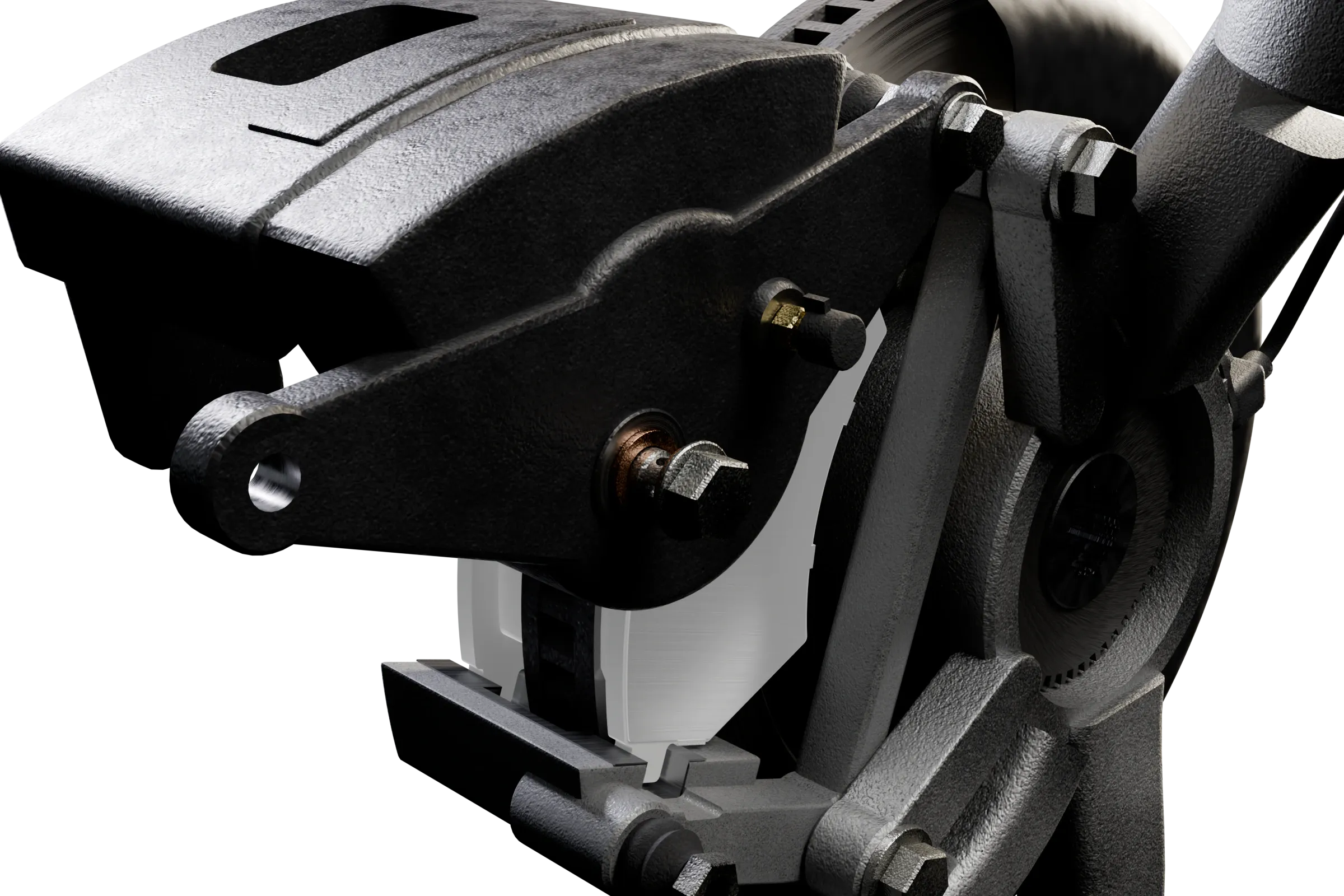
- Acoustic wear indicator
- Anti-squeal shim, inner
- Brake pad, inner
The likely causes, most common first
-
The pads' wear indicator touching the disc
Most likelyHow it shows A high, steady squeal while you drive that stops or changes when you brake harder.
Check Have the pad thickness checked: a squeal that goes when you brake harder, with pads near their limit, confirms it.
Fix it soon
-
Glazed pads or discs
CommonHow it shows A squeal under light braking, often with less bite than before, after hard use or a brake that dragged.
Check Shiny, glassy pad faces and a mirror-smooth or blue-tinged disc point to it. Glazed pads are replaced, and the discs often with them.
Fix it soon
-
Brake dust or grit in the brake
CommonHow it shows A squeak or light scrape that comes and goes, often after dusty or gravel roads.
Check A garage can take the wheel off and clean the pads, caliper and disc with brake cleaner, never with an air line.
Fix it soon
-
Missing shims or grease after new pads
CommonHow it shows A squeal that started after the pads were changed, mostly in slow, gentle stops.
Check Have the pads checked for their anti-squeal shims and a smear of brake grease on the backing plates and ears.
Fix it soon
-
A sticking caliper or pads stuck in their slots
Less likelyHow it shows A squeal or chirp that carries on after you let go of the pedal, with a hot wheel or a burning smell.
Check After a drive, hold a hand near each wheel without touching it: one much hotter than the others has a brake that drags.
Have it checked soon
-
A worn disc with a deep lip
Less likelyHow it shows A squeal or scraping as the pads ride against the ridge at the disc's outer edge.
Check Look for a raised lip at the edge of the disc, and have it measured against the minimum stamped on it.
Fix it soon
How to narrow it down
- Note when it happens: only on the first few stops of a damp morning, all the time while driving, or only when you brake gently.
- Work out which wheel: on a quiet road with the windows down, brake gently at low speed and listen for the side the squeal comes from.
- Look at the outer pad through the spokes of that wheel. Friction material thinner than about 3 mm means the pads are due.
- Look at the discs for a raised lip at the edge, deep grooves or blue patches.
- If the squeal started after new pads, ask the garage that fitted them to check the shims and the grease.
Is it safe to drive with squeaking brakes?
Fix it soon
Usually, for a short while. A squeak on the first stops of a damp morning is harmless, and the wear indicator squeals while there is still some friction material left. Have the pads checked soon, though: an ignored squeal turns into grinding, and grinding means stop driving. If the squeak comes with a pull to one side, a hot wheel, a burning smell or a soft pedal, have the brakes checked before you drive far.
Why do brakes squeak after rain or first thing in the morning?
Discs are bare cast iron, and a night of damp or a shower leaves a thin film of rust on their faces within hours. The first few stops wipe it off, often with a squeak or a short scrape, and then the noise goes. That is normal and needs no fixing. A car that stands for a week or more grows heavier rust that takes longer to clear, and the rear discs, which do less work, show it most.
Why do new brake pads squeak?
New pads touch the disc only on their high spots until they bed in, which takes a few hundred miles of normal driving, and some noise in that time is common. A squeal that lasts beyond that usually means something was missed: the anti-squeal shims behind the pads, grease on the backing plates, or a disc with a lip that the new pads ride on. Harder pad compounds, especially metallic ones, are noisier by nature.
Questions people ask
Why do my brakes squeak when I am not braking?
Usually it is the wear indicator: its steel tab rubs the disc as the wheel turns, and the pads are due. A stone caught by the dust shield, or a brake that is not letting go fully, can make a similar noise with your foot off the pedal.
Why do my brakes squeak when I reverse?
When the car changes direction, the pads shift slightly in their slots and meet the disc at a new angle, and a light lip of rust at the disc's edge can catch them. It is common and usually harmless, but a loud squeal in reverse can also come from worn pads.
Can you put lubricant on squeaky brakes?
Never on the pads or the disc. Oil or spray soaks into the friction material and the brakes stop gripping, and contaminated pads have to be replaced. The only grease in a brake is brake grease, used sparingly on the pads' backing plates and ears and on the guide pins.
Related
The parts
- What do brake pads do? Brake pads are the friction blocks the caliper squeezes against the brake disc, turning the car's movement into heat to slow it down.
- What do brake pads do? Brake pads are the friction blocks the caliper squeezes against the brake disc, turning the car's movement into heat to slow it down.
- What does a brake caliper do? A brake caliper is the clamp at each disc brake. When you brake, fluid pressure pushes its piston out and the caliper squeezes the two pads against the disc.
- What do brake discs do? Brake discs (US: rotors) are the iron discs that turn with the wheels.
Similar symptoms
- What causes a grinding noise when braking? A grinding noise when you brake usually means the brake pads have worn through their friction material, so their steel backing plates are scraping the discs.
- Why does my car pull to one side when braking? A car that pulls to one side when braking usually has a brake that grips harder on one side than the other.
- Why does my steering wheel shake when braking? A steering wheel that shakes when you brake usually means the front brake discs have worn unevenly, which is often called warped.
- What causes a knocking noise over bumps? A knocking or clunking noise over bumps usually comes from a worn joint in the front suspension.
Explained
- Disc vs drum brakes: what's the difference? A disc brake squeezes pads against a disc that turns with the wheel; a drum brake pushes curved shoes outwards against the inside of a drum.
