
What causes a knocking noise over bumps?
A knocking or clunking noise over bumps usually comes from a worn joint in the front suspension. The most common cause is a worn drop link; worn anti-roll bar bushes, top mounts, ball joints and control arm bushes come next. A shock absorber that has lost its damping can knock too, and so can a broken coil spring.
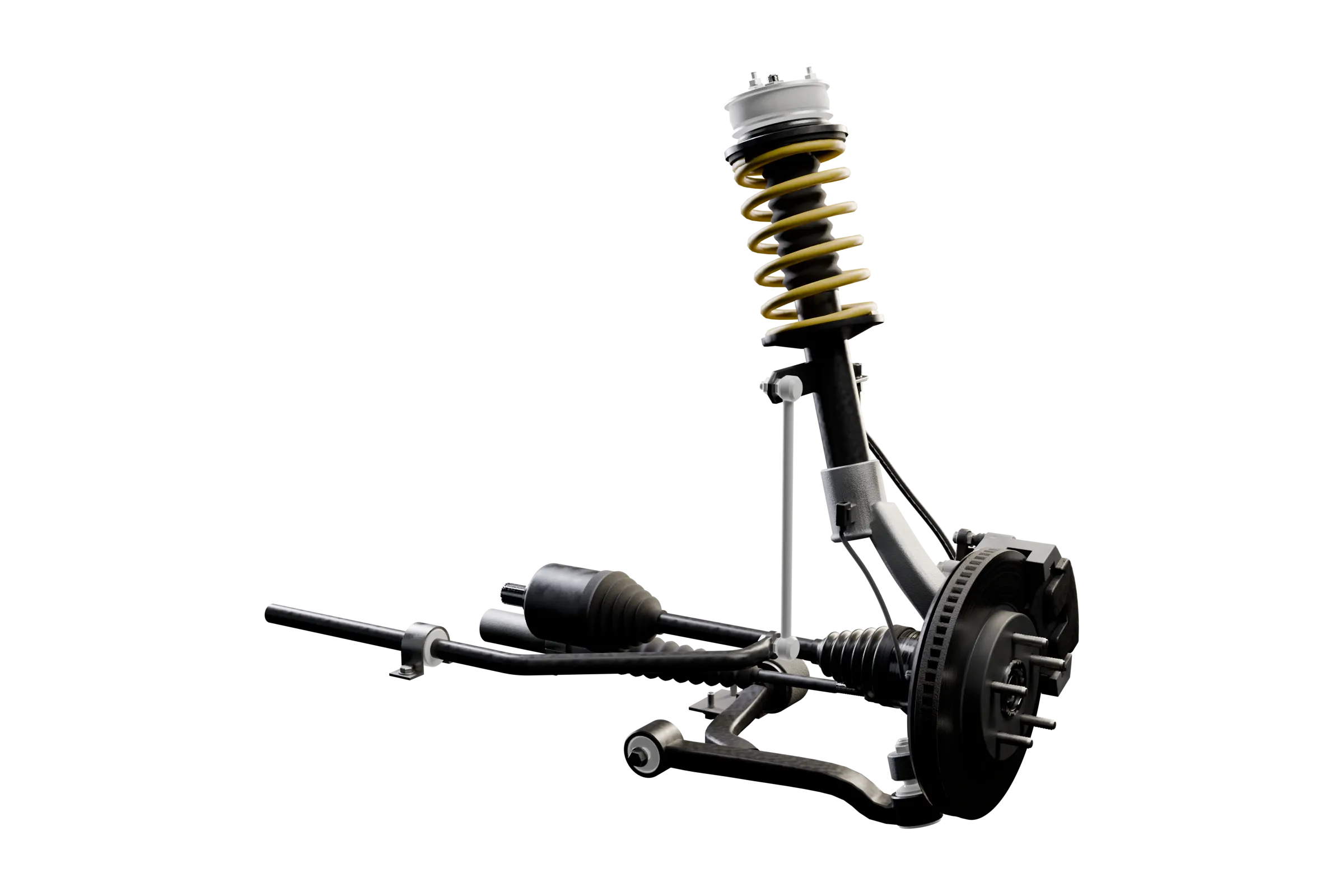
- Drop link US: Sway bar link
- Anti-roll bar bush US: Sway bar bushing
- Top mount US: Strut mount
- Lower ball joint
The likely causes, most common first
-
Worn drop links
Most likelyHow it shows A light knock or rattle over broken roads and speed bumps, often at low speed.
Check With the car safely raised, rock each link by hand: any play or knock means it is worn.
Fix it soon
-
Worn anti-roll bar bushes
CommonHow it shows A dull clunk or creak over bumps and as the car rolls into a corner.
Check Look at the rubber bushes where the bar is clamped to the subframe: cracks or a loose fit point to them.
Fix it soon
-
A worn top mount or strut bearing
CommonHow it shows A thud from the top of the strut over bumps, sometimes with a creak or crunch as you turn the wheel slowly.
Check With the car on its wheels, have a helper turn the steering while you listen and feel at the top of the strut.
Have it checked soon
-
A worn lower ball joint
CommonHow it shows A knock from low down at the wheel, often with vague steering or uneven tyre wear.
Check With the wheel off the ground, rock it top to bottom: movement at the ball joint means it is worn.
Have it checked soon
-
Worn control arm bushes
CommonHow it shows A clunk over bumps and under braking, sometimes with the car pulling or wandering.
Check Look for cracked or split rubber, or the arm shifting in its bush when it is levered gently.
Have it checked soon
-
Worn shock absorbers
Less likelyHow it shows A hollow knock over big bumps, with the car bouncing more than it should.
Check Push down hard on the corner and let go: it should rise and settle at once, not bob. Look for oil on the strut.
Fix it soon
-
A broken coil spring
Less likelyHow it shows A sudden clunk, a corner sitting lower than the others, sometimes a scraping sound.
Check Look at the spring, especially its bottom coil, for a break.
Have it checked soon
How to narrow it down
- Note when it happens. Small bumps at low speed point to drop links and bushes; big bumps to the dampers, top mounts or springs.
- Find the side: drive slowly over a speed bump one wheel at a time with the windows down, with a helper listening outside if you can.
- Push down hard on each front corner and let go. Listen for a knock and watch that the car settles at once.
- Look at the springs and the tops of the struts, and under the car for oil on a strut or a split rubber boot.
- With the car safely on axle stands, rock each drop link and each wheel by hand: any play is a worn joint. A garage can check every joint on a lift in a few minutes.
Is it safe to drive with a knocking noise over bumps?
Have it checked before you drive far
Usually for a short while, but find the cause soon. A worn drop link or bush is more a nuisance than a danger. A worn ball joint, a broken spring or a damper that no longer controls the wheel is a safety problem: the car can wander, a broken spring can damage the tyre, and a ball joint that fails can let the wheel collapse. If the knock is new, getting louder or comes with vague steering, have it checked before you drive far.
Questions people ask
Why does my car only knock over bumps?
Because a worn joint only moves when the suspension does. Over a bump the wheel rises and the arms, links and anti-roll bar move, and any free play in a joint is taken up with a knock.
Can a loose wheel knock over bumps?
Yes, and it is serious. If the knock started soon after the wheels were off, stop and check the wheel nuts are tight before you drive any further.
Is a knock over bumps an MOT failure?
The noise is not tested, but its cause often is. Excessive play in a suspension joint, a fractured spring or a leaking damper fails, while slightly worn rubber bushes may only be an advisory.
Can the knock come from the back of the car?
Yes. The rear suspension has its own bushes, links and dampers, and something loose in the boot can sound like a knock too. Find the end and the side first.
Related
The parts
- What is a drop link? A drop link (US: sway bar link) is a short rod with a ball joint at each end that connects the anti-roll bar to the suspension, so the bar can resist body roll in corners.
Similar symptoms
- What causes a grinding noise when braking? A grinding noise when you brake usually means the brake pads have worn through their friction material, so their steel backing plates are scraping the discs.
- What causes uneven tyre wear? Uneven tyre wear usually means the wheel alignment is out, the tyre pressures are wrong or a suspension part is worn, and the pattern points to which.
- Why are my brakes squeaking? Brakes squeak when the pads and disc vibrate at a high pitch as they rub.
- Why does my car click when turning? A clicking noise when you turn, loudest on full lock as you pull away, is usually a worn outer CV joint on a front driveshaft, most often after its boot has split.
