
Why does my car make a noise when I press the clutch?
A whirr, squeal or chirp that starts when you press the clutch pedal is usually a worn release bearing (US: throw-out bearing), which works only while the pedal is down. A squeaking pedal, a worn spigot bearing and a dry release fork are the other suspects. A noise that stops when you press the pedal is in the gearbox.
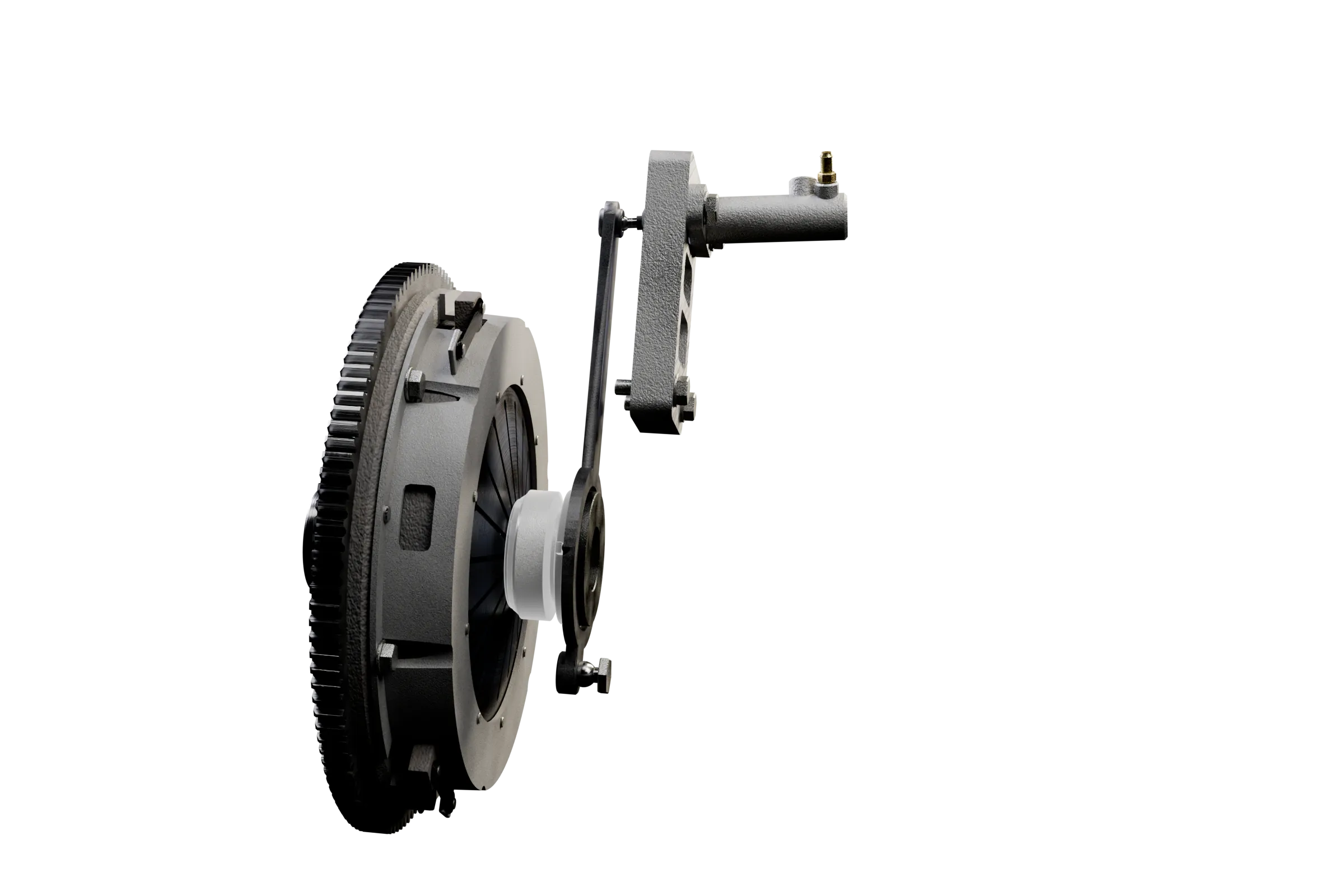
- Release bearing US: Throwout bearing
The likely causes, most common first
-
A worn release bearing
Most likelyHow it shows A whirr, squeal or chirp that starts as the pedal goes down and stops when you let it up, sometimes with a faint hum with the pedal up that grows as you press.
Check With the engine idling in neutral, press the pedal slowly and hold it: a noise that comes in with the pedal is the bearing.
Fix it soon
-
A squeaking pedal or linkage
CommonHow it shows A squeak or creak in time with the pedal's movement, just the same with the engine off.
Check Press the pedal with the engine off. If it still squeaks, the noise is in the pedal box: the pivot, the helper spring or the master cylinder's push rod.
Fix it soon
-
A worn gearbox input shaft bearing
CommonHow it shows A rumble or whirr in neutral with the pedal up that goes quiet as soon as you press it, the opposite pattern to a release bearing.
Check Listen in neutral at idle, then press the pedal. If the noise stops, the input shaft has stopped turning, and its bearing is the likely source.
Fix it soon
-
A dry release fork pivot
Less likelyHow it shows A creak or groan from the bellhousing as the pedal goes down, often with a notchy feel.
Check Have the fork checked: its ball stud and pads need a little grease, which on many cars means taking the gearbox out.
Fix it soon
-
A worn spigot bearing
Less likelyHow it shows A whine or growl with the pedal held down, on cars that have one: this bearing in the end of the crankshaft (US: pilot bearing) only spins when the clutch is released.
Check Hard to tell from a release bearing by ear, and both are reached with the gearbox out. Many front-wheel-drive gearboxes have none.
Fix it soon
-
Worn or broken diaphragm spring fingers
Less likelyHow it shows A scrape or rattle as the pedal goes down, where the bearing has worn grooves into the fingers or a finger has cracked.
Check Only seen with the gearbox out. The clutch cover is then replaced, normally as part of a full kit.
Have it checked soon
How to narrow it down
- Start with the engine off: press the pedal and let it up. A squeak now is in the pedal box or its linkage, not the clutch.
- With the engine idling in neutral and the handbrake on, listen with the pedal up, then press it slowly to the floor, hold it, and let it up.
- A noise that appears or grows as the pedal goes down is the release bearing, or on cars that have one, the spigot bearing.
- A noise with the pedal up that stops as soon as you press it is in the gearbox: the input shaft bearing, or gear rattle at idle.
- Note whether it changes as the engine warms up, then have a garage confirm it: both bearings are reached by taking the gearbox out.
Is it safe to drive with a noise when you press the clutch?
Fix it soon
Usually, for a while. A whirr with the pedal down means a worn bearing that is still working, and a squeaky pedal is only a nuisance. Have it looked at soon all the same: a bearing that starts to grind can break up and stop the clutch releasing, leaving you unable to change gear. In the meantime, sit at junctions in neutral with your foot off the pedal, so the bearing turns unloaded.
Why does the noise only come when the pedal is down?
Because that is the only time the release bearing works hard. With the pedal up it either stands just clear of the diaphragm spring’s fingers, or rests on them with a light preload and turns with them, carrying almost nothing. Press the pedal and it pushes the fingers with a load that peaks at 742 N in the app’s model, about halfway down. Worn races and dried-out grease make themselves heard under that load, and fall quiet as soon as it is taken off.
What about a rattle that stops when you press the clutch?
That is the gearbox, not the clutch. With the pedal up, the input shaft and every gear on it turn with the engine even in neutral, and the engine’s firing pulses can make the gears rattle gently against each other at idle. Pressing the pedal stops the shaft, and the rattle with it. A little is normal on many cars, diesels especially; a rattle that has grown louder over time can mean a worn input shaft bearing, or a dual-mass flywheel that no longer smooths the pulses. The manual gearbox guide shows why the gears keep turning in neutral.
Questions people ask
Why does my clutch squeak when I press it?
If it squeaks with the engine off as well, it is the pedal: a dry pivot bush, the helper spring or the master cylinder's push rod. If it only squeals with the engine running, it is the release bearing turning against the diaphragm spring's fingers.
Can a dual-mass flywheel make a noise when you press the clutch?
It usually works the other way round. A worn dual-mass flywheel rattles or knocks at idle with the pedal up, often quietening when you press it, and may clunk as you switch off or judder as you pull away.
Does a noisy clutch mean the clutch plate is worn?
Not directly: a worn plate slips rather than making a noise when you press the pedal. But the release bearing and the plate have usually done the same miles, so when the bearing is replaced the whole clutch kit normally goes in.
How do you stop a clutch pedal squeaking?
Find where it comes from first, with the engine off and someone listening under the dashboard as you press. A dry pivot bush or helper spring usually goes quiet with a little grease; a squeak from inside the master cylinder can mean a worn seal.
Related
The parts
- What is a clutch release bearing? A clutch release bearing (US: throw-out bearing) presses the clutch's diaphragm spring when you push the pedal.
Similar symptoms
- How can you tell if a clutch is slipping? A slipping clutch lets the engine's revs rise without the car speeding up to match, most clearly when you accelerate hard in a high gear or climb a hill.
- Why does my gearbox grind when I change gear? A gearbox grinds when the gear you select is still turning at a different speed from the shaft it is being locked to.
- What causes a grinding noise when braking? A grinding noise when you brake usually means the brake pads have worn through their friction material, so their steel backing plates are scraping the discs.
- What causes a knocking noise over bumps? A knocking or clunking noise over bumps usually comes from a worn joint in the front suspension.
