
What does a crankshaft position sensor do?
A crankshaft position sensor reads a toothed ring on the crankshaft and tells the engine computer how fast the engine is turning and exactly where each piston is. The computer times every spark and every squirt of fuel from it. A failing sensor causes stalling, hard starting or no start at all, usually with the check engine light.
Also called crank sensor, CKP sensor
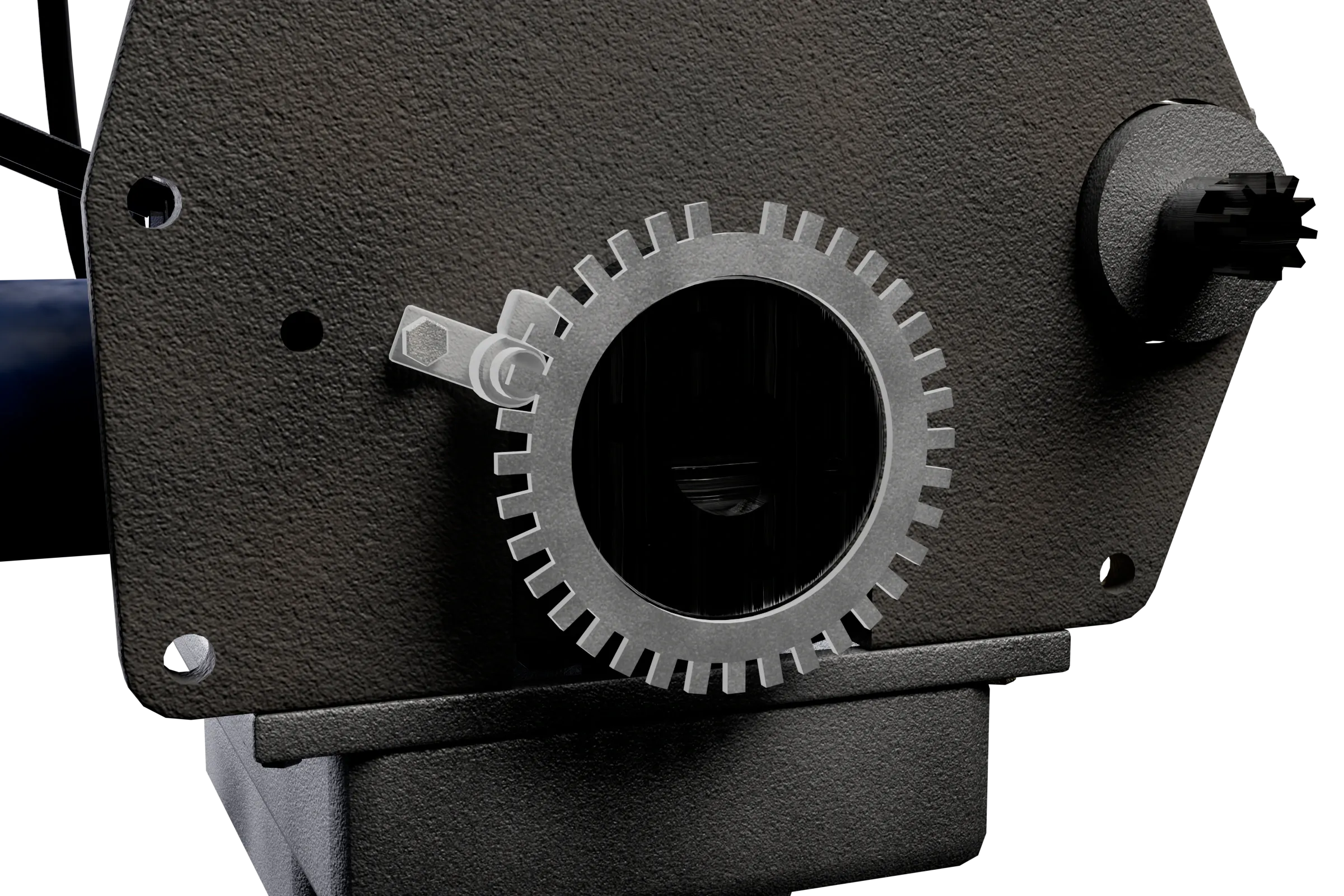
- Crankshaft position sensor
- Crank reluctor ring
- Crankshaft
How does a crankshaft position sensor work?
In the app's engine the sensor faces a reluctor ring on the crankshaft with 36-1 teeth: room for 36, with one left out. Each tooth that passes the sensor's tip makes a pulse, so the pulses give the engine speed, and the gap marks one known angle of the crankshaft every turn, from which the engine computer counts every other position.
That angle is what the engine runs on. The computer fires each coil and opens each injector a set number of degrees from top dead center, and adjusts both many times a second. With no crankshaft signal most engines will not fire at all, which is why a dead sensor so often means a car that cranks but will not start.
Some sensors are magnetic pickups that make their own signal; others are Hall-effect sensors, powered by the computer, which switch on and off as each tooth passes. Both are sealed and have no moving parts, so most failures come from heat, a cracked housing, damaged wiring or a gap to the ring that has grown.
What are the symptoms of a bad crankshaft position sensor?
- The engine cranks but will not start. With no signal the computer cannot time the sparks or the fuel, so the engine turns over normally but never fires.
- Stalling, often once the engine is hot. A sensor with a heat-damaged winding can cut out when the engine warms up, then work again once it has cooled.
- A tachometer that drops to zero. On many cars the tachometer reads engine speed from this sensor, so the needle can fall to zero while the engine is still running, just before it stalls.
- Stumbling and jerking. A patchy signal makes the computer fire the plugs at the wrong moment, so the engine stumbles or jerks, most of all as it speeds up.
- Long cranking before it starts. A weak signal, from a sensor set too far from its ring or caked in debris, can make the engine crank for longer than usual before it fires.
- The check engine light. A code for the sensor's circuit, or for the crankshaft and camshaft signals disagreeing, is often the first sign.
Can you drive with a bad crankshaft position sensor?
Have it checked before you drive far
Have it fixed before you drive far. A failing sensor gives little warning before it cuts out, and when it does the engine stops at once, wherever you are: in traffic or on the highway you lose power, and with the engine off the steering and the brakes take much more effort. If the engine has started stalling or cutting out, have the car towed or drive it only as far as you must, gently and away from busy roads.
Where is the crankshaft position sensor located?
Low on the engine, wherever it can see a toothed ring that turns with the crankshaft. On many engines it sits in the side of the block, reading a ring on the crankshaft itself; on others it faces teeth on the back of the harmonic balancer at the front, or on the flywheel at the transmission end. It is usually held by one bolt, with a short wire to its connector, and it is often easier to reach from under the car than from above.
What is the difference between the crankshaft and camshaft position sensors?
The crankshaft sensor tells the engine computer how fast the engine turns and where the pistons are. The camshaft sensor tells it which stroke each one is on: a piston at the top of its travel could be finishing its compression stroke or its exhaust stroke, and only the camshaft, turning at half speed, can tell them apart. In the app’s engine the camshaft sensor reads a target with three teeth on the exhaust camshaft.
Most engines will start and run with a faulty camshaft sensor, in a fallback mode with the check engine light on, but few will run at all without the crankshaft sensor. The four-stroke engine guide explains how the engine uses both to time each spark.
What does replacing a crankshaft position sensor involve?
- Read the fault codes, and check the sensor's wiring and connector, which fail as often as the sensor itself.
- Disconnect the battery and reach the sensor. On many engines that means raising the car safely onto jack stands and taking off a splash shield.
- Unplug the connector, take out the bolt that holds the sensor and ease it out of its bore with a slight twist.
- Look through the hole at the ring where you can, for missing or damaged teeth and packed dirt.
- Install the new sensor with a new O-ring, fully seated, and reconnect it, keeping its wire clear of the exhaust and the belt.
- Clear the codes and start the engine. Some cars also need a relearn with a scan tool, so the computer learns the new sensor's signal.
Tighten every nut and bolt to the torque spec in the manufacturer's service manual for your car.
On many engines a short, simple repair; on some the sensor sits behind the transmission or under the intake manifold and takes much longer. The sensor has to be the one made for the engine, because the length of its tip sets its gap to the ring.
Questions people ask
Can a bad crankshaft position sensor cause a no start?
Yes. It is one of the most common causes of an engine that cranks normally but never fires. Without its signal the engine computer cannot time the sparks or the fuel, so it gives neither.
Will a bad crankshaft position sensor always turn on the check engine light?
Not always. A sensor that cuts out only when hot can stall the engine without leaving a code, which is why a tachometer that drops to zero just before a stall is a useful clue.
What causes a crankshaft position sensor to fail?
Heat, mostly, since it lives low on a hot engine, often near the exhaust. Oil soaking into a cracked housing and wiring that rubs through or breaks do the rest. A damaged ring, or metal debris stuck to a magnetic tip, can make a good sensor read badly.
Related
Parts nearby
- What does a camshaft do? A camshaft opens the engine's valves. It is a shaft with an egg-shaped lobe for each valve, turned by the timing chain or belt at half the crankshaft's speed, so each valve opens once per four-stroke cycle at exactly the right moment.
- What does an ignition coil do? An ignition coil turns the car's 12 volts into the tens of thousands of volts a spark plug needs to fire.
- What does a timing chain do? A timing chain links the crankshaft to the camshafts, so the valves open and close in step with the pistons.
- What do piston rings do? Piston rings are the split metal rings in grooves around each piston.
The whole system
- How does a four-stroke engine work? The four-stroke engine, part by part, with an interactive diagram.
