
What causes clutch chatter?
Clutch chatter (judder) is a shudder as the clutch takes up, felt most when pulling away from a stop or backing up. The usual cause is oil or grease on the clutch disc's facings, then glazed or hot-spotted friction faces on the flywheel or pressure plate, and worn engine or transmission mounts.
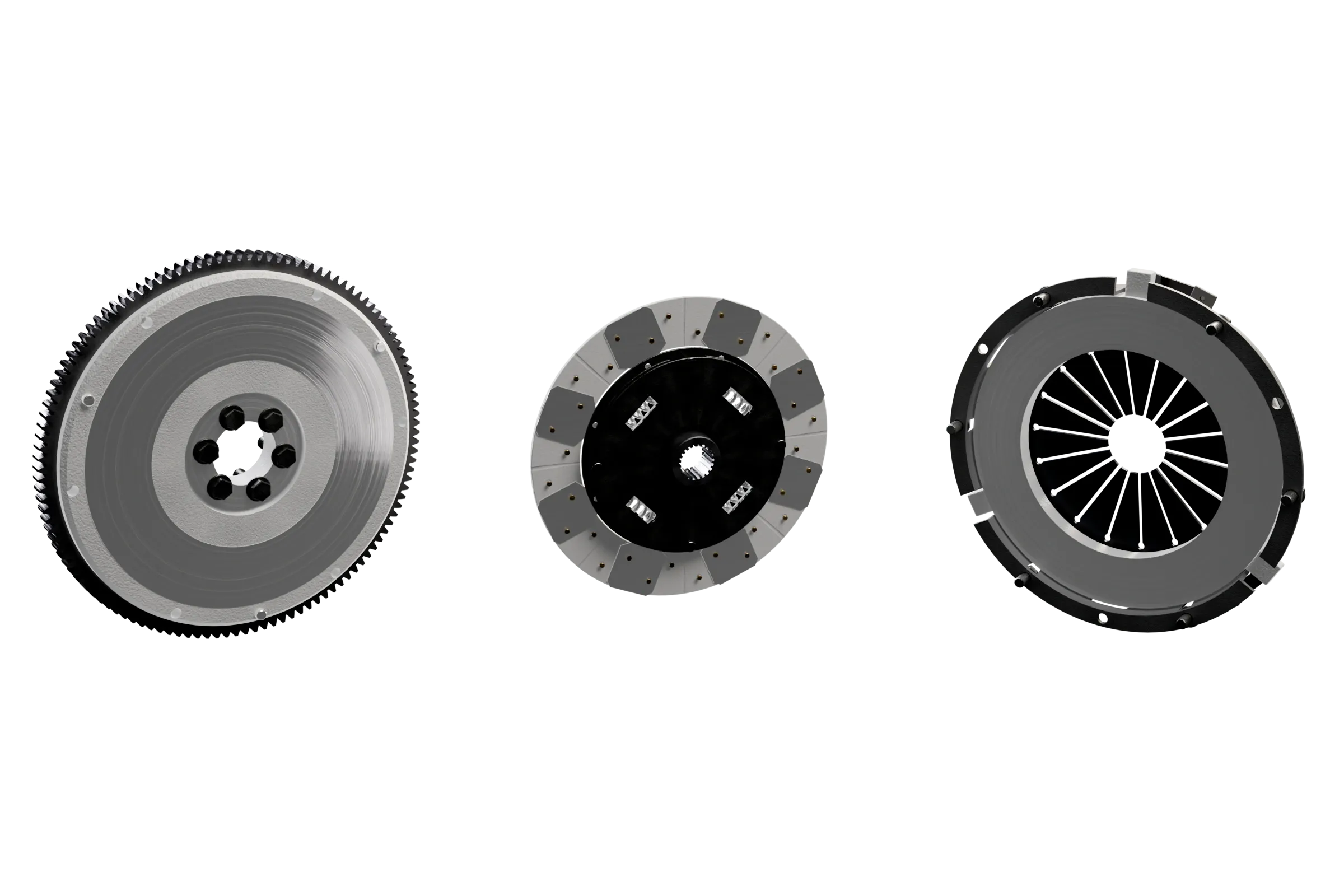
- Cushion segments
- Damper spring
- Flywheel
- Pressure plate
The likely causes, most common first
-
Oil or grease on the clutch disc
Most likelyHow it shows A shake through the car from the first moment of take-up, often worse once the clutch is hot, and sometimes with slip when you accelerate hard.
Check From below, look at the seam between the engine and the transmission (gearbox). Oil there usually comes from the crankshaft's rear main seal or the input shaft seal, and the disc is replaced along with the seal.
Fix it soon
-
A glazed or hot-spotted flywheel or pressure plate
CommonHow it shows Chatter that started after the clutch was overheated, towing a trailer or holding the car on a hill with the pedal, and that grows as the clutch heats up.
Check Only seen with the transmission out: hard, bluish spots or a mirror shine on the friction faces. A solid flywheel can usually be resurfaced, a worn dual-mass flywheel is replaced, and the pressure plate comes with the new clutch kit.
Fix it soon
-
Worn engine or transmission mounts
CommonHow it shows The engine rocks as the clutch takes up, so the shake comes with a thump on and off the gas, and is often worst backing up.
Check Look at the rubber in each mount for splits, cracks or an engine sitting low on one side, and have a shop check them on a lift, where any play shows as the engine is levered.
Fix it soon
-
Tired cushion segments or damper springs in the disc
Less likelyHow it shows Grab and shudder with no oil anywhere and sound mounts, sometimes with a rattle or clunk as the clutch engages.
Check Confirmed only with the transmission out: flattened segments leave the disc flat and harsh, and loose or broken damper springs can be seen moving in the hub.
Fix it soon
-
A new clutch that has not bedded in
Less likelyHow it shows Chatter that appeared as soon as a new clutch went in.
Check Some take-up shudder fades over the first few hundred miles. If it stays, ask whether the flywheel was resurfaced or replaced, and whether the leak that ruined the old disc was fixed.
Fix it soon
-
Worn or dry splines on the disc hub or input shaft
Less likelyHow it shows A shudder or clunk as the clutch engages, sometimes with a clutch that is slow to release when cold.
Check Seen only with the transmission out: the disc should slide freely along the shaft. Rust or worn splines stop it moving smoothly, and a very light film of grease goes on with every new clutch.
Fix it soon
How to narrow it down
- Note when it happens. Pulling away from a stop and backing up are the clutch's hardest take-ups; chatter that shows only there points to the friction faces or the mounts, not the rest of the drivetrain.
- Notice whether it changes with heat. Chatter that builds in stop-and-go traffic or after a hill start, then eases once the car has cooled, points to glazed faces or oil on the disc.
- Look under the car where the engine meets the transmission for oil, and at each engine and transmission mount for split or sagging rubber.
- If the clutch is new, give it a few hundred miles of gentle starts before judging it. If the chatter stays, take it back to the shop that installed it.
Is it safe to drive with clutch chatter?
Fix it soon
Usually, yes. Chatter makes pulling away rough, but the clutch still releases and the car still stops, so it is a fault to fix soon rather than a reason to park the car. It rarely clears up by itself, though: oil on the disc tends to end in slip, and the shaking works the mounts and the disc's springs harder. Until it is fixed, let the pedal up smoothly and avoid holding the car on the clutch on hills.
Why does a clutch chatter instead of taking up smoothly?
A clutch is built to take up gradually. In the app’s model, eight wavy cushion segments between the facings flatten over the last 0.6 mm of the pressure plate’s travel, so the grip builds over a stretch of pedal instead of arriving all at once, and four damper springs in the hub soak up the engine’s firing pulses.
Chatter is what happens when the grip stops building evenly. Oil patches and hard spots grip less in some places than in others, a flattened disc grabs, and a loose engine rocks on its mounts, so the clutch grabs and lets go many times a second and the car shakes with it.
Chatter is not slip. A slipping clutch lets the revs run ahead of the road speed; a chattering one grips unevenly while it takes up, then drives normally once the pedal is all the way up.
Why is it worst pulling away and in reverse?
Because that is when the clutch slips the longest, and when the gearing multiplies every tremor. First and reverse are the lowest ratios in the transmission, so an uneven grip at the clutch reaches the wheels several times over, and the car rocks on its tires.
Reverse adds a second reason. It twists the engine and transmission the other way on their mounts, against the parts of each mount that do little work going forward, so a tired mount often shows up there first. The clutch guide shows where the cushion segments and damper springs sit in the disc.
Questions people ask
Why does my clutch chatter when it is hot?
Heat changes how the friction faces grip. Glazed or hot-spotted faces, and facings with oil on them, grab and slip unevenly once they are hot, which is why chatter often builds in traffic or after a hill start and fades after the car has cooled.
Can a new clutch chatter?
Yes. New facings take a few hundred miles to bed in, and a little shudder can fade in that time. Chatter that stays usually means the flywheel went back in without being resurfaced, oil from the old leak has reached the new disc, or the clutch is a performance type with ceramic or metallic pads, which grab harder by design.
Can clutch chatter damage the transmission?
Not quickly, but it does no good. Each shudder sends a jolt through the input shaft, the gears and the mounts, and it wears the disc's damper springs and the mounts faster than smooth starts would.
Will adjusting the clutch stop chatter?
Rarely. Chatter comes from the friction faces, the disc or the mounts, none of which an adjustment changes, and most clutches adjust themselves anyway. On older cars with a clutch cable, a sticking cable can make the take-up jerky, and that is worth checking.
Related
The parts
- What does a clutch disc do? A clutch disc is the friction disc clamped between the engine's flywheel and the pressure plate.
Similar symptoms
- How can you tell if a clutch is slipping? A slipping clutch lets the engine's revs rise without the car speeding up to match, most clearly when you accelerate hard in a high gear or climb a hill.
- Why does my clutch engage so high? A clutch that engages high, gripping only near the top of the pedal, usually has a worn clutch disc, above all if it also slips in high gears.
- Why does my car make a noise when I press the clutch? A whir, squeal or chirp that starts as you press the clutch is usually a worn throwout bearing, which works only with the pedal down.
- Why does my steering wheel shake when braking? A steering wheel that shakes when you brake usually means the front brake rotors have worn unevenly, which is often called warped.
