
Why does my clutch engage so high?
A clutch that engages high, gripping only near the top of the pedal, usually has a worn clutch disc (clutch plate), above all if it also slips in high gears. On a new clutch, a part or an adjustment that differs from the old one is more likely. Air in the hydraulics does the opposite and makes it engage low.
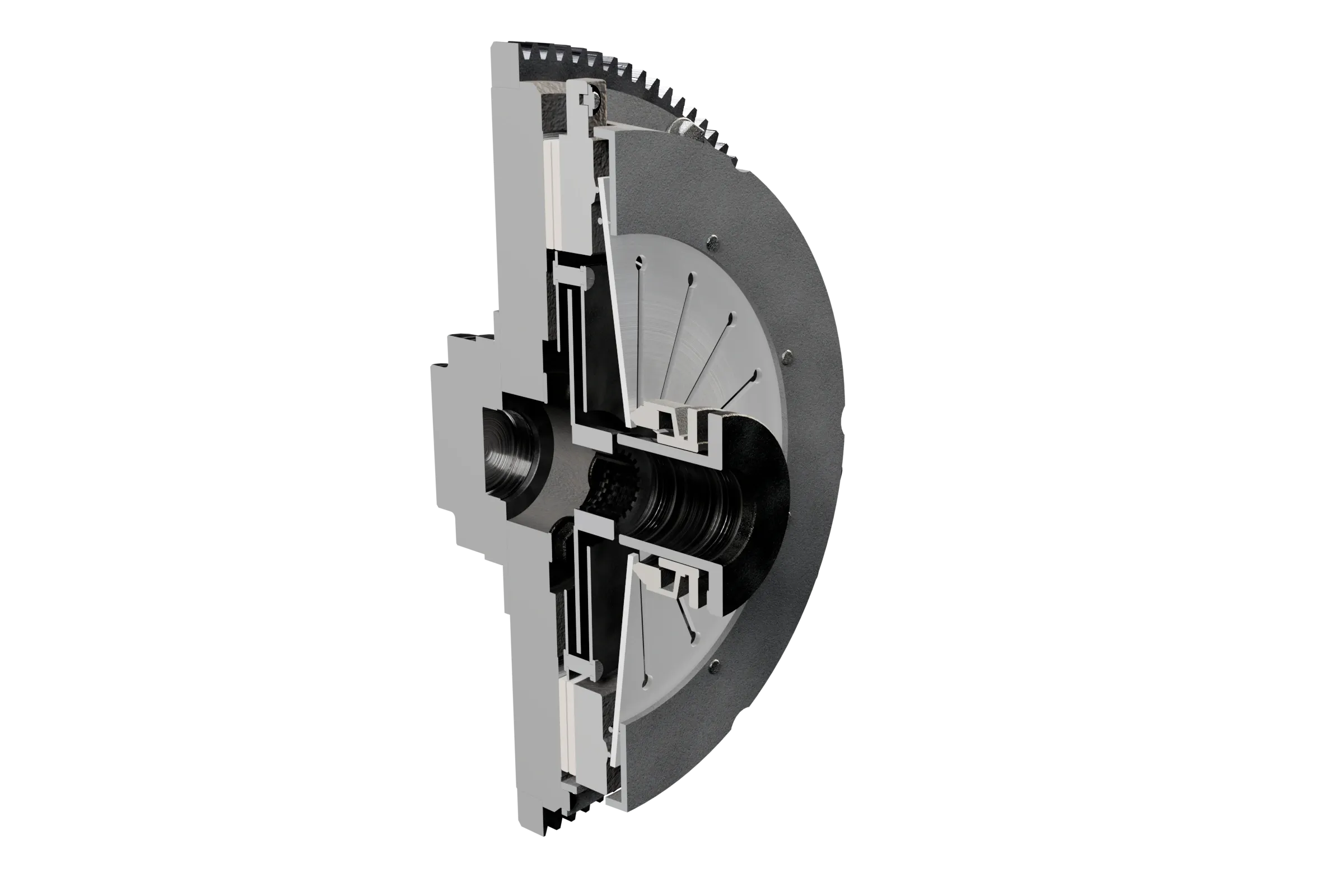
- Friction facing
- Diaphragm spring
- Throwout bearing UK: Release bearing
- Pressure plate
The likely causes, most common first
-
A worn clutch disc
Most likelyHow it shows The point where the car starts to move has crept toward the top of the pedal over months, on a clutch with a lot of miles, often with the revs flaring when you accelerate hard in a high gear.
Check A high take-up with slip in the high gears means the disc is near the end of its life. Without slip, it is a sign of wear worth watching rather than an urgent repair.
Have it checked soon
-
A new clutch with different parts or settings
CommonHow it shows The take-up moved up the moment a new clutch went in, and the clutch does not slip.
Check Ask the shop to compare the new parts with the old ones: a pressure plate whose fingers stand at a different height, or a throwout bearing (release bearing) or guide tube of a different length, moves the take-up. Where the push rod or the pedal stop can be adjusted, check them against the specification.
Fix it soon
-
Too little free play at the pedal
Less likelyHow it shows The take-up is right at the top, the pedal has no slack at all before it meets resistance, and the clutch may begin to slip as the car warms up.
Check Press the pedal gently by hand: it should move a little before you feel the clutch. With no free play, the master cylinder's push rod is too long or a cable is overtightened, and the clutch is held partly released.
Have it checked soon
-
Glazed facings or a weakened diaphragm spring
Less likelyHow it shows Take-up that rose after a hard spell of towing or hill starts, on a clutch that is not old: overheated facings grip less for the same clamp.
Check Only seen with the transmission (gearbox) out: shiny, hardened facings or blue heat marks on the pressure plate. The cure is a new clutch kit.
Have it checked soon
How to narrow it down
- On level ground with the engine idling, let the pedal up slowly from the floor in first and note where the car starts to move. Engagement height varies between models, so compare it with another car of the same model if you can.
- Check for slip on a quiet road: in a high gear at low revs, floor the accelerator and watch the tachometer. If the revs climb faster than the speed, the disc is worn.
- Press the pedal by hand at the top of its travel. A little free play is normal; none at all is not.
- Think back to when it changed. A slow rise over months is wear; a jump right after a new clutch or other work points to the parts or the adjustment.
- If your car has its own clutch fluid reservoir, look at the level: one that has crept up toward MAX with nothing added means the facings have worn.
Can you drive with a clutch that engages high?
Fix it soon
Yes, for now. A high take-up does not stop the clutch from releasing, so you can still shift and stop normally. On an older clutch, though, it usually means the disc is near the end, and once it starts to slip the wear speeds up until the car may struggle on hills or with a load. Have it checked soon, and until then avoid hard acceleration in high gears and long hill starts.
Where should a clutch engage?
There is no single right height, because pedals and clutches differ from car to car. In the app’s clutch model the pedal travels 145 mm. The disc is completely free whenever the pedal is more than 48% of the way down, and by the time it has risen to 18% of the way down, the clutch holds 132 lb-ft (179 N·m), nearly all the engine’s torque. So even a healthy clutch takes up in the upper half of the travel, and many cars take up higher still by design.
What matters is a change. A take-up that has moved toward the top over the months is the clutch showing its wear; one that has always been high, with no slip, is usually just how the car was built.
Why does a worn disc make the clutch engage higher?
As the facings wear, the pressure plate follows them toward the flywheel, and the diaphragm spring, rocking on its fulcrum rings, tips its fingers back toward the throwout bearing. On a clutch with a cable and a fixed adjustment, that uses up the free play at the pedal: the clutch starts to release as soon as the pedal moves, and it grips only near the top.
A hydraulic clutch adjusts for this by itself. The fingers push the slave cylinder’s piston back, and the spare fluid returns through the master cylinder to the reservoir, which is why the level creeps up as the clutch wears. Even so, a disc near the end of its life usually has glazed facings that grip less for the same clamp, so the car moves off only once the pedal is nearly up, and slip is not far behind.
What if it engages near the floor instead?
That is the opposite fault, and usually a hydraulic one. Air in the line compresses before the slave cylinder’s piston moves, and a leak lets fluid escape, so the first part of the pedal’s travel does nothing and the clutch releases only near the floor, often with gears that crunch. The slave cylinder is the usual place to look, then the master cylinder. The clutch guide follows the pedal’s push all the way to the diaphragm spring.
Questions people ask
Can a high clutch be adjusted?
Only where there is something to adjust, such as a cable with a manual adjuster, or a push rod or pedal stop with a lock nut. On a self-adjusting hydraulic clutch the push rod sets the pedal's free play, not the clutch's wear: lengthening it to lower the take-up can block the port to the reservoir and leave the clutch partly released, so it slips.
Is a high clutch bad?
Not in itself. Plenty of cars take up high from new, and a high clutch that does not slip can carry on for a long time. It becomes a problem when the take-up keeps rising or the revs flare in high gears: then the disc is close to the end, and it is best replaced before it overheats the flywheel.
Does driving style make a clutch engage higher?
Indirectly. Slipping the clutch to hold the car on hills, riding it in traffic and hard launches all wear the facings faster, and worn facings are what move the take-up. A gentle driver can see the same clutch last many more miles.
Related
The parts
- What does a clutch disc do? A clutch disc is the friction disc clamped between the engine's flywheel and the pressure plate.
- What does a clutch master cylinder do? A clutch master cylinder turns the push of the pedal into fluid pressure.
Similar symptoms
- How can you tell if a clutch is slipping? A slipping clutch lets the engine's revs rise without the car speeding up to match, most clearly when you accelerate hard in a high gear or climb a hill.
- What causes clutch chatter? Clutch chatter is a shudder as the clutch takes up, felt most when pulling away from a stop or backing up.
- What causes a spongy brake pedal? A spongy or soft brake pedal usually means air in the brake fluid, which compresses where fluid does not.
- Why does my car make a noise when I press the clutch? A whir, squeal or chirp that starts as you press the clutch is usually a worn throwout bearing, which works only with the pedal down.
