
What does an oil filter do?
An oil filter cleans the engine oil on its way from the pump to the bearings, trapping soot, metal particles and grit in a pleated paper element. Change it every time you change the oil, at the interval in your owner's manual. A clogged filter opens its bypass valve, so the engine keeps its oil but gets it unfiltered.
Also called engine oil filter, spin-on oil filter
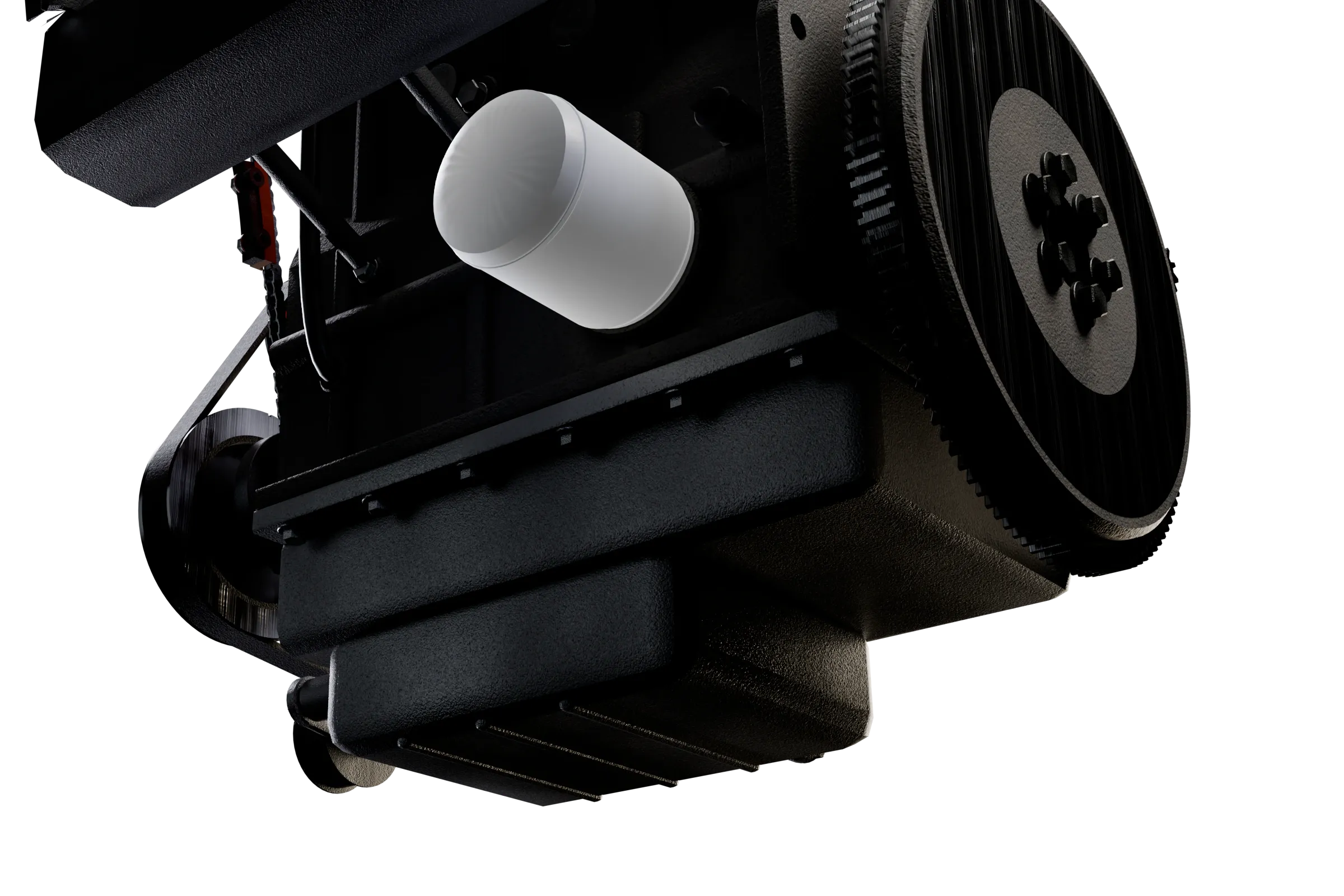
- Oil filter
- Oil pan
- Oil drain plug
- Dipstick tube
How does an oil filter work?
All the oil the pump sends around the engine goes through the filter first. In the app's engine it is a full-flow spin-on filter: a steel can screwed onto a threaded stub on the block, holding a pleated paper element. Oil comes in through the ring of small holes around the center, is pushed through the pleats, which hold back what it carries, and leaves through the center to the main oil gallery that feeds the crankshaft's bearings.
Most filters carry two small valves. The bypass valve opens when the element is clogged, or when thick oil at a cold start cannot pass through it quickly enough, so the engine always gets oil, even unfiltered. The anti-drain-back valve, a rubber flap over the inlet holes, keeps the filter full while the engine is off, so oil reaches the bearings and camshafts a moment after starting.
Some engines use a cartridge filter instead: a bare paper element in a housing on the engine with a screw-on cap, so only the element and its O-rings are replaced.
What are the signs of a clogged oil filter?
- Black, gritty oil on the dipstick. Clean oil is amber and turns dark with use, but oil that feels gritty between your fingers is carrying what the filter should be catching.
- A service long overdue. A clogged filter rarely gives a warning of its own, because the bypass valve keeps the oil flowing. The mileage since the last change is the best guide.
- Ticking from the top of the engine at start-up. A filter whose drain-back valve has failed lets the oil run out, so the valvetrain ticks for a few seconds until the pressure builds. Why is my engine ticking?
- Oil around the filter. A filter that was not tightened, or the old filter's seal left stuck on the engine under the new one, leaks soon after an oil change.
- A flickering oil pressure light. The red oil light means the pressure is too low, from low oil, a blocked pickup or a worn pump. Stop the engine and find out why.
Can you drive with a clogged oil filter?
Fix it soon
For a short distance, but change the oil and filter soon. Once the filter clogs, its bypass valve opens and the oil goes around the engine unfiltered, so the bearings, camshafts and timing chain wear faster without any warning. A red oil warning light is different: it means stop the engine at once. Pull over when it is safe, switch off, check the oil level, and have the car checked before it is driven again.
How often should you change the oil filter?
Every time you change the oil. The filter is made to last one oil change, and putting fresh oil through a used one mixes it with the dirty oil the old filter still holds.
How often to change the oil itself depends on the car, and there is no single interval that suits every engine. The owner’s manual gives it in miles and in months, whichever comes first, and many newer cars have an oil life monitor that works it out from how the car is driven. Most schedules count short trips, towing, dusty roads and very hot or cold weather as severe service, which brings the change around sooner. In the app’s engine the oil pan holds 4.4 quarts (4.2 liters), and the filter adds a little more.
Why does a new oil filter leak?
Most often because the old filter’s rubber seal stayed stuck to the engine, so the new filter sits on two seals and pushes oil out as soon as the pressure rises. A dry seal can also tear or roll as it tightens, which is why it gets a film of clean oil first. A filter left loose, or tightened far past what its instructions say, leaks for the same reason. Run the engine for a minute after a change and look underneath before you drive away. There is more on how the oil reaches every bearing in the four-stroke engine guide.
What does an oil and filter change involve?
- Time
- About 45 minutes
- Difficulty
- Straightforward
- Parts
-
- Engine oil to the maker's grade and amount
- A new oil filter
- A new crush washer for the drain plug
- Run the engine for a few minutes so the oil flows freely, switch it off and raise the car level on ramps or jack stands.
- Take off the oil fill cap, set the drain pan under the drain plug and let the old oil run out.
- Unscrew the old filter with a filter wrench, holding it upright, and make sure its rubber seal came off with it.
- Wipe the engine's sealing face, put a film of clean oil on the new filter's seal and screw the filter on as its instructions say.
- Refit the drain plug with a new crush washer, lower the car and pour in the oil the automaker specifies, checking the dipstick as you go.
- Run the engine briefly, check the filter and the plug for leaks, top up to the full mark and reset the service reminder.
Tools
- Floor jack (UK: trolley jack)
- Jack stand (UK: axle stand)
- Drain pan (UK: drain tray)
- Box-end wrench (UK: ring spanner)
- Torque wrench
- Socket and ratchet
- Oil filter wrench
- Motor oil (UK: engine oil)
Work safely
- Work on firm, level ground. Never work under a car held only by a jack: use ramps or jack stands.
- Warm oil is hot: let the engine run a few minutes only, and wear gloves.
- Take the old oil and filter to a recycling point. Never pour oil down a drain.
Tighten every nut and bolt to the torque spec in the manufacturer's service manual for your car.
One of the simplest pieces of maintenance to do at home, as long as the car is safely supported and the old oil and filter go to a recycling point. On some engines the filter sits on top, which makes it easier still.
Questions people ask
Can you change the oil without changing the filter?
You can, but most automakers say to change both. The old filter still holds dirty oil, which mixes with the new, and it is already loaded with what it has caught, so it clogs sooner.
What happens if an oil filter clogs?
Its bypass valve opens and the oil goes around the engine unfiltered. The engine keeps its oil pressure, but soot and grit circulate with the oil and wear the bearings, the camshafts and the timing chain faster.
Does it matter which oil filter you use?
Yes. Use one made for your engine: the thread, the seal's size, the bypass valve's opening pressure and the anti-drain-back valve differ between engines, even where two filters look alike.
Related
Symptoms
- Why is my engine ticking? An engine ticking noise, a light tapping that speeds up with the engine, most often comes from the valvetrain at the top of the engine: low oil, worn lifters or valve clearances out of adjustment.
Parts nearby
- What does a timing chain do? A timing chain links the crankshaft to the camshafts, so the valves open and close in step with the pistons.
- What do piston rings do? Piston rings are the split metal rings in grooves around each piston.
- What do spark plugs do? Spark plugs light the compressed fuel and air in each cylinder of a gasoline engine.
- What does a camshaft do? A camshaft opens the engine's valves. It is a shaft with an egg-shaped lobe for each valve, turned by the timing chain or belt at half the crankshaft's speed, so each valve opens once per four-stroke cycle at exactly the right moment.
The whole system
- How does a four-stroke engine work? The four-stroke engine, part by part, with an interactive diagram.
