
Why is my engine ticking?
An engine ticking noise, a light tapping that speeds up with the engine, most often comes from the valvetrain at the top of the engine: low oil, worn lifters or valve clearances out of adjustment. An exhaust manifold leak ticks too, loudest when cold. Fuel injectors tick normally. A deep knock from low in the engine is far more serious.
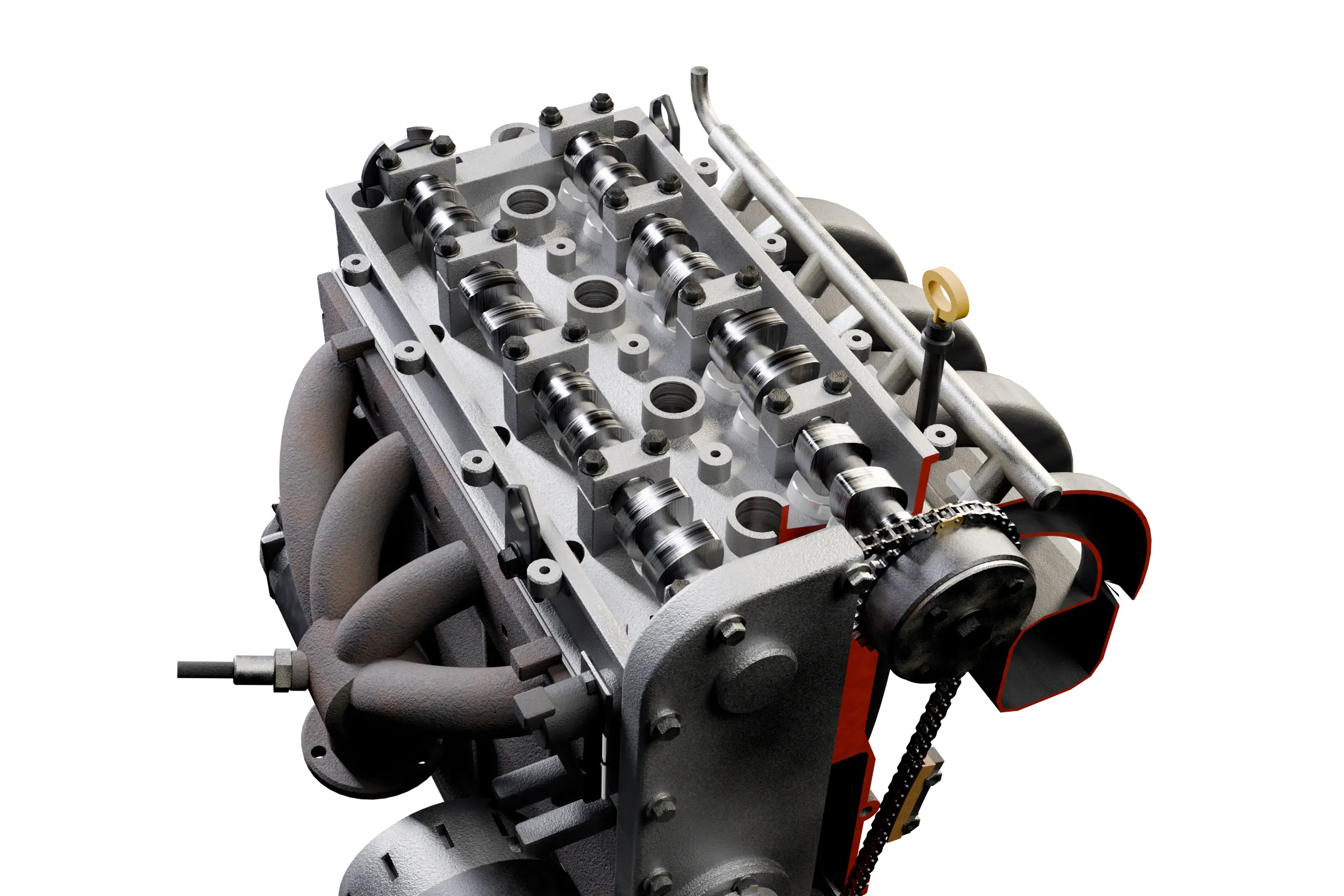
- Intake bucket lifter UK: Intake bucket tappet
- Exhaust camshaft
- Exhaust manifold
- Fuel injector
The likely causes, most common first
-
Low or old oil
Most likelyHow it shows A light ticking from the top of the engine, loudest at start-up and at idle, often with the oil change overdue.
Check With the engine off and the car on level ground, check the dipstick. Oil below the low mark, or black and thin, comes first.
Have it checked soon
-
How it shows A steady tick from under the valve cover that follows engine speed and does not fade as the engine warms.
Check A shop can measure the valve clearances, or on engines with hydraulic lifters, find the one that no longer pumps up.
Have it checked soon
-
An exhaust manifold leak
CommonHow it shows A tick or a puffing sound that is loudest on a cold start and quiets as the metal warms and closes the gap, often louder as you accelerate.
Check With the engine cold, look for black soot around the joint between the exhaust manifold and the cylinder head, and for a cracked manifold or a broken stud.
Have it checked soon
-
A loose spark plug
Less likelyHow it shows A sharp tick or puffing from one cylinder, sometimes with a misfire, often soon after the plugs were changed.
Check Have the plug checked for tightness. A plug that has pulled its threads out of the aluminum head needs the threads repaired.
Have it checked soon
-
A worn rod bearing
Less likelyHow it shows Not a tick but a deeper, heavier knock from low in the engine that grows with speed and load, often after the engine ran low on oil.
Check Stop the engine and check the oil level. A deep knock from the bottom of the engine means do not drive it: have it towed.
Don't drive it
How to narrow it down
- With the engine off and the car on level ground, check the oil on the dipstick and top it up to the mark with the oil the automaker specifies.
- Note when it ticks: only for a few seconds after a cold start, all the time, faster as the engine speeds up, or only when you accelerate.
- With the hood open and the engine idling, listen from the top of the engine and near the exhaust manifold, keeping clear of the belts and the fan and never touching the hot parts.
- Look for black soot around the exhaust manifold's joints and for oil around the valve cover.
- If it is a deep knock from low in the engine, or the red oil warning light comes on, stop the engine and have the car towed.
Is it safe to drive with an engine ticking noise?
Have it checked before you drive far
A light tick, usually, as far as a repair shop, once you have checked the oil. Many ticks come from low oil, and topping it up quiets them. Two things change that. The red oil warning light means stop the engine at once, and a deep knock from the bottom of the engine that grows with speed is a worn bearing. In either case, pull over when it is safe, switch off and have the car towed.
Is engine ticking normal?
Some is. Fuel injectors click as they open and close, a fast, light ticking like a sewing machine that every gasoline engine makes, and engines with direct injection tick louder still, because their high-pressure pump and injectors are louder. A brief tick for a second or two after a cold start, while the oil reaches the top of the engine, is normal on some engines too. A tick that is new, louder than it used to be, or that comes with the check engine light is worth having checked.
Why does my engine tick when it is cold?
Two causes stand out. An exhaust manifold with a cracked flange or a failing gasket leaks most when it is cold, because the gap closes as the metal grows with heat, so the tick fades as the engine warms. Hydraulic lifters that have bled down overnight tick until the oil pressure fills them again, and thick oil in winter takes longer to get there.
In the app’s engine each cam lobe presses on a bucket lifter over its valve, and the thickness of the bucket’s crown sets a small clearance. As that clearance grows with wear, the bucket taps on the lobe with every turn, a tick that stays whether the engine is cold or warm. The four-stroke engine guide shows the camshafts and valves at work.
Questions people ask
What is the difference between an engine tick and a knock?
A tick is light and quick, usually from the top of the engine: the valvetrain, the injectors or an exhaust leak. A knock is deeper and heavier, from low in the engine, and grows with load. A knock from a worn rod or main bearing means stop.
Can low oil cause engine ticking?
Yes, and it is the most common cause. With too little oil, or oil that is old and thin, the valvetrain at the top of the engine gets less of it and starts to tick. Topping up to the mark often quiets it, but find out where the oil went.
Why is my engine ticking after an oil change?
Usually because the level is low, the oil is not the grade the automaker specifies, or the new filter lets the oil drain back while the engine sits, so it ticks at start-up until the pressure builds. Check the level first, then the grade against the owner's manual.
Related
The parts
- What does an oil filter do? An oil filter cleans the engine oil on its way from the pump to the bearings, trapping soot, metal particles and grit in a pleated paper element.
- What does a camshaft do? A camshaft opens the engine's valves. It is a shaft with an egg-shaped lobe for each valve, turned by the timing chain or belt at half the crankshaft's speed, so each valve opens once per four-stroke cycle at exactly the right moment.
- What do spark plugs do? Spark plugs light the compressed fuel and air in each cylinder of a gasoline engine.
Similar symptoms
- Why does my engine rattle on a cold start? A rattle for a few seconds after a cold start usually comes from the timing chain, when a worn chain or tensioner has slack until the oil pressure builds.
- Why is my check engine light flashing? A flashing check engine light means the engine is misfiring badly enough to damage the catalytic converter: fuel that does not burn in a cylinder reaches it and burns inside.
- What causes a grinding noise when braking? A grinding noise when you brake usually means the brake pads have worn through their friction material, so their steel backing plates are scraping the brake rotors.
- What causes a knocking noise over bumps? A knocking or clunking noise over bumps usually comes from a worn joint in the front suspension.
