
Why does my engine rattle on a cold start?
A rattle for a few seconds after a cold start usually comes from the timing chain, when a worn chain or tensioner has slack until the oil pressure builds. A cam phaser that clatters at start-up, low or thin oil, and a loose exhaust heat shield are the other common causes. Have it checked soon: a timing chain that jumps a tooth can wreck the engine.
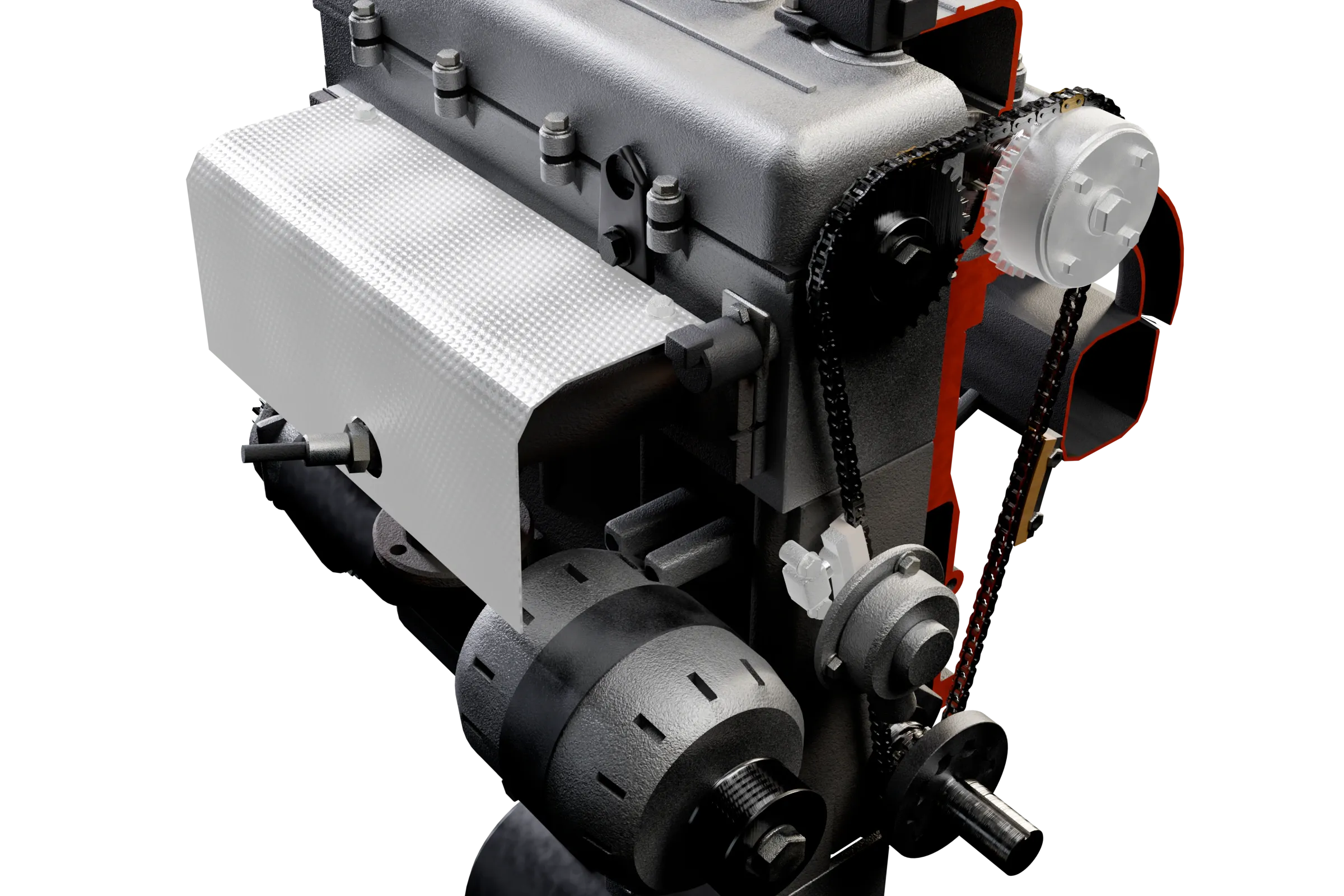
- Hydraulic chain tensioner
- Intake cam phaser + sprocket
- Timing chain
- Exhaust heat shield
The likely causes, most common first
-
A worn timing chain or tensioner
Most likelyHow it shows A rattle from the front of the engine for a few seconds after a cold start that fades as the oil pressure rises, and lasts longer as the wear grows.
Check Note how long it lasts on each cold start. A shop can read how far the camshaft timing has drifted from the engine computer, or check the tensioner.
Have it checked soon
-
A cam phaser
CommonHow it shows A brief clatter or knock from the top front of the engine right at start-up, on engines with variable valve timing, sometimes with a timing code.
Check A shop can read the codes and compare the phaser's commanded angle with the angle it actually reaches.
Have it checked soon
-
Low or thin oil
CommonHow it shows A rattle or tick that is worse when the oil is due or low, and quieter after an oil change with the grade the automaker specifies.
Check With the engine off and the car on level ground, check the oil level, and when the oil was last changed.
Have it checked soon
-
A loose exhaust heat shield
CommonHow it shows A tinny buzz or rattle from near the exhaust manifold or under the car, at start-up or at certain engine speeds, as the thin metal shield vibrates.
Check With the engine off and cold, tap the heat shields you can reach above the exhaust manifold. A loose one rattles.
Fix it soon
-
Piston slap
Less likelyHow it shows A hollow knock from the block for the first minute on a cold morning that fades as the pistons expand, on an engine with many miles on it.
Check A shop can rule out a worn rod or main bearing, whose knock does not fade as the engine warms.
Have it checked soon
How to narrow it down
- Note how long the rattle lasts after a cold start, and whether it fades as the engine warms or stays.
- With the engine off and the car on level ground, check the oil level and the mileage of the last oil change.
- With the hood open and the engine idling, listen for where it comes from: the front of the engine for the timing chain, the top front for a cam phaser, the exhaust for a heat shield. Keep clear of the belts and the fan.
- If the check engine light is on, have the codes read. A code for the camshaft and crankshaft signals disagreeing points to the chain or a phaser.
- If the rattle stays once the engine is warm, or turns into a knock, have the car checked before you drive far.
Is it safe to drive with a rattle on a cold start?
Have it checked before you drive far
Usually, for now, but have it checked soon. A short rattle from a worn chain or tensioner gets longer as the wear grows, and a chain that jumps a tooth throws the valve timing out, which on many engines lets the valves hit the pistons. A rattle that stays once the engine is warm, the check engine light, or a loss of power mean have it checked before you drive far. A heat shield rattle is a nuisance rather than a danger, as long as the shield stays in place.
Why does the rattle stop after a few seconds?
Because the chain’s tensioner runs on oil pressure. While the engine sits, oil drains out of the tensioner, and after a cold start it takes a few seconds for the pump to fill it again. Until it does, a worn chain has slack and slaps its guides. Once the pressure is up, the tensioner takes up the slack and the noise stops. As the chain wears, the tensioner needs more of its travel and the rattle lasts longer, until it is there all the time.
In the app’s engine a 126-link chain turns both camshafts, and a hydraulic tensioner, loaded by a spring and engine oil pressure, presses an arm against its slack side. The four-stroke engine guide shows where the chain and its tensioner sit in the engine.
Is it the timing chain or the cam phaser?
Both rattle at start-up from the front of the engine. A chain sounds like a chain: a fast slapping or clattering from behind the timing cover that fades as the oil pressure builds. A cam phaser makes a sharper knock or clatter higher up, at the end of the camshaft, because its locking pin has worn and the phaser rocks until oil fills it. On many engines the two wear together, and a repair shop reading the camshaft timing in the engine computer can tell which way it has drifted.
Questions people ask
Is a timing chain rattle on a cold start bad?
It is a warning, not an emergency yet. It means the chain or its tensioner has worn, and the rattle will last longer as the wear grows. Have it checked soon, because a chain that jumps a tooth can bend the valves.
Can the right oil stop a cold-start rattle?
Sometimes. Oil of the grade the automaker specifies, changed on time, fills the tensioner and the cam phaser faster, and a rattle caused by low or thin oil goes away. It cannot fix a stretched chain or a worn phaser.
Can a loose heat shield damage anything?
Not on its own, but a shield that has rusted loose can fall off and stop protecting what it was there for, such as the floor and the fuel and brake lines near the exhaust. A new clamp usually fixes it.
Related
The parts
- What does a timing chain do? A timing chain links the crankshaft to the camshafts, so the valves open and close in step with the pistons.
- What does a camshaft do? A camshaft opens the engine's valves. It is a shaft with an egg-shaped lobe for each valve, turned by the timing chain or belt at half the crankshaft's speed, so each valve opens once per four-stroke cycle at exactly the right moment.
- What does an oil filter do? An oil filter cleans the engine oil on its way from the pump to the bearings, trapping soot, metal particles and grit in a pleated paper element.
Similar symptoms
- Why is my engine ticking? An engine ticking noise, a light tapping that speeds up with the engine, most often comes from the valvetrain at the top of the engine: low oil, worn lifters or valve clearances out of adjustment.
- Why is my check engine light flashing? A flashing check engine light means the engine is misfiring badly enough to damage the catalytic converter: fuel that does not burn in a cylinder reaches it and burns inside.
- What causes a grinding noise when braking? A grinding noise when you brake usually means the brake pads have worn through their friction material, so their steel backing plates are scraping the brake rotors.
- What causes a knocking noise over bumps? A knocking or clunking noise over bumps usually comes from a worn joint in the front suspension.
