
Why is my check engine light flashing?
A flashing check engine light means the engine is misfiring badly enough to damage the catalytic converter: fuel that does not burn in a cylinder reaches it and burns inside. The usual causes are a failing ignition coil, a worn spark plug or a faulty fuel injector. Pull over when it is safe, switch off and have the car checked.
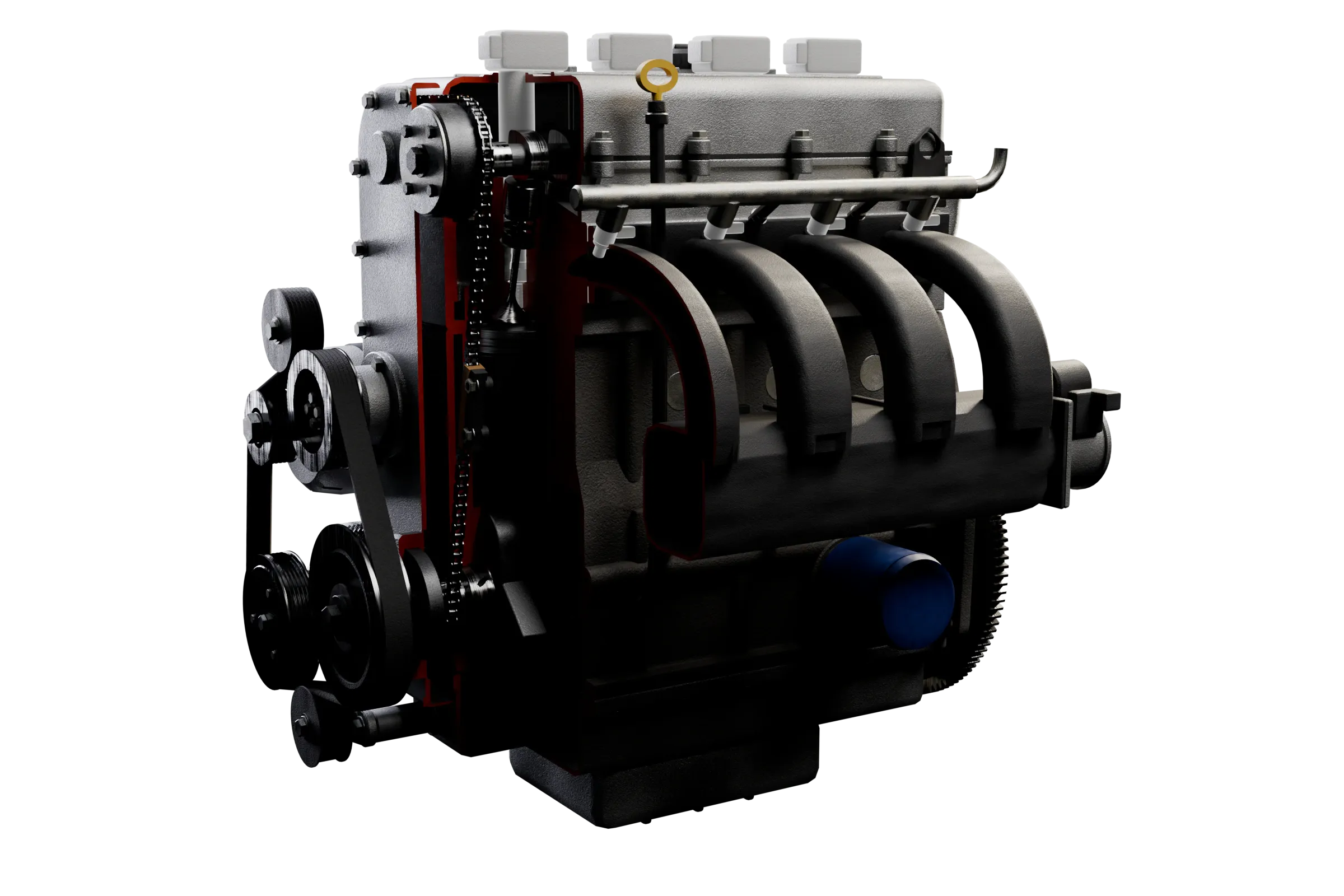
- Ignition coil
- Spark plug
- Fuel injector
- Intake manifold
The likely causes, most common first
-
A failing ignition coil
Most likelyHow it shows The engine shakes and loses power, often on one cylinder and worst when you accelerate, and the misfire code names that cylinder.
Check With the engine off, a code reader shows the cylinder. A shop then swaps that coil with its neighbor to see whether the misfire follows it.
Don't drive it
-
A worn or fouled spark plug
CommonHow it shows Misfires that come and go, worst under load or in damp weather, often on an engine past its spark plug interval.
Check With the engine cold, look at the plug for the cylinder the code names: a worn electrode, a wide gap or a wet, oily or sooty tip points here.
Don't drive it
-
A clogged or leaking fuel injector
CommonHow it shows A misfire on one cylinder that stays put when its coil and plug are swapped, sometimes with a smell of fuel.
Check A shop can test the injector's spray and its wiring.
Don't drive it
-
A vacuum leak at the intake manifold
Less likelyHow it shows A rough, high or hunting idle, sometimes a hiss from the engine, and misfires that are worst at idle.
Check A shop can find the leak with a smoke test of the intake.
Don't drive it
-
Low compression on one cylinder
Less likelyHow it shows A steady misfire on one cylinder that no new coil, plug or injector cures, sometimes with a ticking or a loss of power.
Check A compression or leak-down test shows whether a valve, the piston rings or the head gasket is leaking.
Don't drive it
How to narrow it down
- Ease off the gas, pull over when it is safe and switch the engine off.
- Note whether the light was flashing or steady, and whether the engine was shaking, so you can tell the repair shop.
- Have the codes read with a code reader: misfire codes P0301, P0302 and so on name the cylinder, and P0300 means several or random.
- With the engine off and cold, look at the coil for the cylinder the code names, for oil in its plug tube or a cracked boot.
Can you drive with a flashing check engine light?
Don't drive it
No. A flashing light means a severe misfire: fuel that does not burn in the cylinder goes into the exhaust and burns inside the catalytic converter, which can overheat, melt inside and, in rare cases, set fire to what is under the car. Ease off, pull over when it is safe and switch the engine off, then have the car checked where it is or towed. A steady check engine light is less urgent: have it checked before you drive far.
What does a misfire feel like?
A misfire is a cylinder that fails to burn its charge. The engine shakes or stumbles, worst at idle or when you accelerate, the car feels down on power and may jerk, and you may smell fuel from the exhaust. In the app’s engine the cylinders fire in the order 1-3-4-2, one every half turn of the crankshaft, so one cylinder missing out of four leaves a regular gap in the rhythm, a stumble you feel through the seat.
Why does the light flash and then stop?
Because the engine computer flashes it only while the misfire is severe. A coil that fails under load can misfire badly as you climb a hill or accelerate, then settle when you ease off, and the light goes back to steady. It is the same warning: the misfire is still there, and it comes back the next time the engine works hard. The four-stroke engine guide shows how each cylinder’s spark is timed.
Questions people ask
What is the difference between a flashing and a steady check engine light?
A steady light means the engine computer has stored a fault, anything from a loose gas cap to a failing sensor, and the car is usually fine to drive gently while you have it read. A flashing light is kept for one thing on almost every car: a misfire bad enough to damage the catalytic converter if you keep driving.
Can a loose gas cap make the check engine light flash?
No. A loose gas cap turns the light on steady, for a small leak in the fuel vapor system. A flashing light means a misfire.
Can bad gas cause a flashing check engine light?
It can. Fuel with water in it, or the wrong grade in an engine that needs premium, can make several cylinders misfire at once, usually right after a fill-up.
Related
The parts
- What does an ignition coil do? An ignition coil turns the car's 12 volts into the tens of thousands of volts a spark plug needs to fire.
- What do spark plugs do? Spark plugs light the compressed fuel and air in each cylinder of a gasoline engine.
Similar symptoms
- Why is my car shaking when I accelerate? A car that shakes when you accelerate, and smooths out when you ease off the gas, usually has a worn inner CV joint or worn engine and transmission mounts.
- Why is my engine ticking? An engine ticking noise, a light tapping that speeds up with the engine, most often comes from the valvetrain at the top of the engine: low oil, worn lifters or valve clearances out of adjustment.
- What does white smoke from the exhaust mean? Thin white vapor from the exhaust on a cold morning is water condensing, and it clears as the engine warms.
- Why does my engine rattle on a cold start? A rattle for a few seconds after a cold start usually comes from the timing chain, when a worn chain or tensioner has slack until the oil pressure builds.
