
What does white smoke from the exhaust mean?
Thin white vapor from the exhaust on a cold morning is water condensing, and it clears as the engine warms. Thick white smoke that keeps coming once the engine is warm, often with a sweet smell, is coolant burning in the cylinders, usually from a blown head gasket or a cracked cylinder head. That means stop driving it.
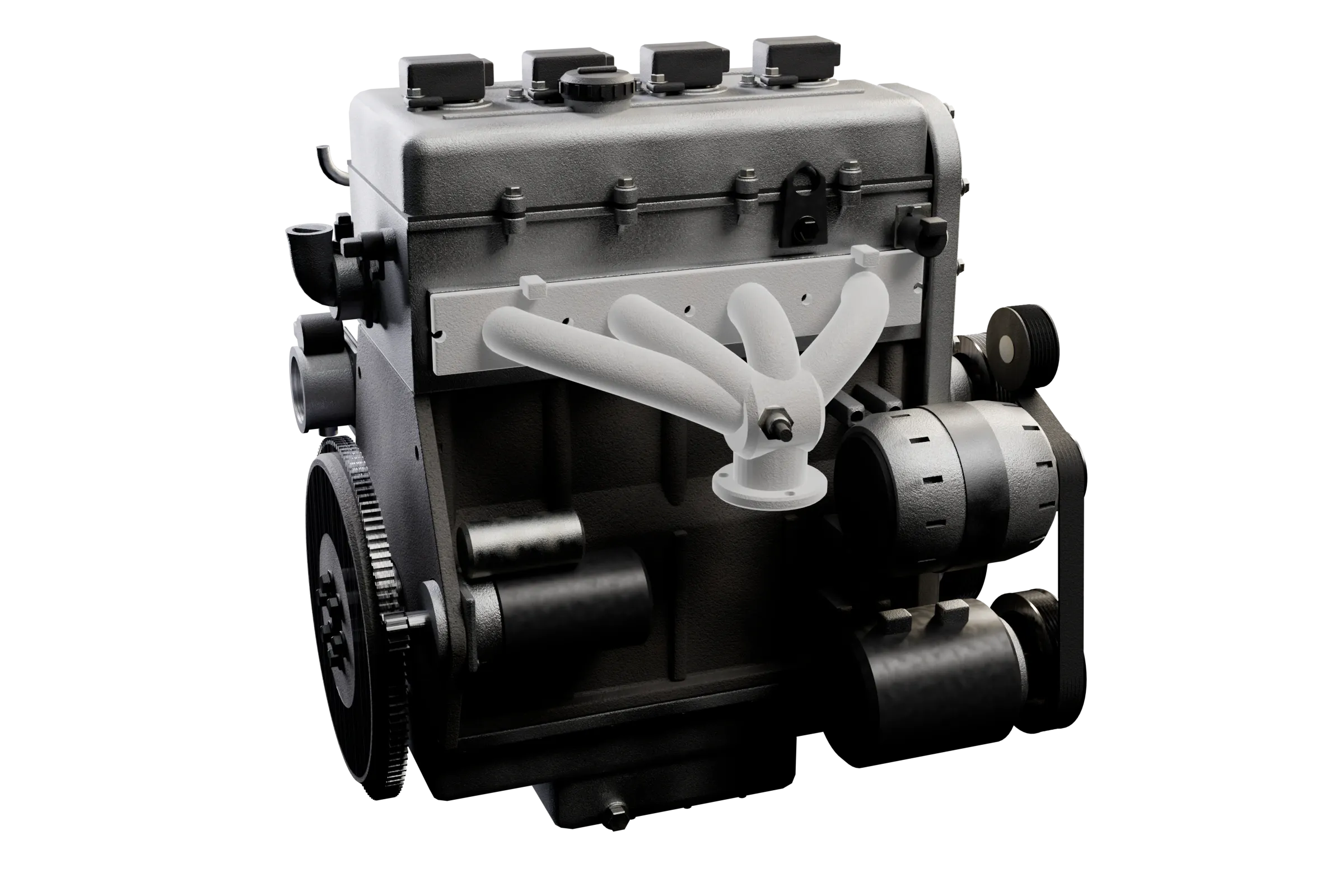
- Head gasket
- Cylinder head
- Exhaust manifold
The likely causes, most common first
-
Coolant past a blown head gasket
Most likelyHow it shows Thick white smoke that stays once the engine is warm, a sweet smell, a coolant level that keeps dropping and often overheating.
Check With the engine cold, check the coolant reservoir's level and look under the oil cap for a milky residue. A shop can run a combustion leak test.
Don't drive it
-
A cracked cylinder head
Less likelyHow it shows The same signs as a blown head gasket, often after the engine has badly overheated.
Check A shop can pressure test the cooling system and, with the head off, test the head itself for cracks.
Don't drive it
-
How it shows Smoke with a blue-gray tint and an acrid smell, a puff after starting or idling for worn valve stem seals, or under hard acceleration for worn piston rings, with the oil level falling.
Check With the engine off and the car level, check the oil on the dipstick, and keep checking it between oil changes.
Have it checked soon
How to narrow it down
- Note when it shows: only for the first few minutes on a cold or damp morning, or all the time once the engine is warm.
- From a safe distance, notice the smell: coolant smells sweet, burning oil acrid.
- With the engine cold, check the coolant level in the reservoir, and look at the oil cap and the dipstick for a milky residue.
- Have the car towed if the coolant level is dropping, the oil cap shows a milky residue or the engine has overheated.
Can you drive with white smoke from the exhaust?
Don't drive it
Not if it is thick and keeps coming once the engine is warm. That is coolant burning, and every mile loses more of it: the engine overheats, the head gasket gets worse, and coolant can ruin the bearings or fill a cylinder and stop the engine from turning. Have the car towed to a repair shop. Thin vapor that clears within a few minutes of a cold start is only water condensing and is nothing to worry about.
Is white smoke from the exhaust normal?
For a few minutes on a cold or damp day, yes. Burning gasoline makes water as well as carbon dioxide, and until the exhaust system heats up, that water condenses into white vapor that thins out and disappears as the engine warms, often with a drip of water from the tailpipe. Cars that only ever make short trips show it more, because their exhaust never gets fully hot. Vapor still pouring out after a long drive, or thick enough to fog the road behind, is not condensation.
What does blue smoke from the exhaust mean?
Oil burning in the cylinders. A puff of blue-gray smoke right after starting, or after the car has idled for a while, usually comes from worn valve stem seals, which let oil run down the valves while the engine sits. Blue smoke when you accelerate hard, with the oil level falling between changes, points to worn piston rings. It is less urgent than thick white smoke, but keep the oil topped up and have it checked, because the oil fouls the spark plugs and can clog the catalytic converter.
What does black smoke from the exhaust mean?
That a gasoline engine is burning more fuel than it can use: a leaking fuel injector, a sensor telling the engine computer the wrong reading, or a badly blocked air filter. It usually smells of fuel and comes with poor gas mileage and the check engine light. The four-stroke engine guide shows where the fuel, the oil and the coolant each belong.
Questions people ask
Why is there white smoke from my exhaust when I start the car?
On a cold start it is usually condensation, which clears within a few minutes as the exhaust warms. If it lasts once the engine is warm, smells sweet, or the coolant level drops, coolant is burning in the engine.
Does white smoke always mean a blown head gasket?
No. Most white vapor is condensation that clears as the engine warms. Thick smoke that stays, smells sweet and comes with a falling coolant level usually does mean coolant is burning, from the head gasket or, less often, a cracked cylinder head.
Is white smoke from a diesel the same?
Not always. A diesel can make white smoke from unburned fuel on a cold start or from a fault in its injection, as well as from coolant. The engine in the app burns gasoline, and the causes on this page are for gasoline engines.
Related
The parts
- What does a head gasket do? A head gasket seals the joint between the cylinder head and the engine block.
- What do piston rings do? Piston rings are the split metal rings in grooves around each piston.
Similar symptoms
- Why is my car overheating? A car usually overheats because it is low on coolant from a leak, or because the coolant is not getting through: a thermostat stuck closed, a failing water pump, a broken belt or a radiator fan that does not run.
- Why is my check engine light flashing? A flashing check engine light means the engine is misfiring badly enough to damage the catalytic converter: fuel that does not burn in a cylinder reaches it and burns inside.
- Why does my engine rattle on a cold start? A rattle for a few seconds after a cold start usually comes from the timing chain, when a worn chain or tensioner has slack until the oil pressure builds.
- Why is my car shaking when I accelerate? A car that shakes when you accelerate, and smooths out when you ease off the gas, usually has a worn inner CV joint or worn engine and transmission mounts.
