
Why is my car overheating?
A car usually overheats because it is low on coolant from a leak, or because the coolant is not getting through: a thermostat stuck closed, a failing water pump, a broken belt or a radiator fan that does not run. A blown head gasket can cause it too. Pull over when it is safe and switch off.
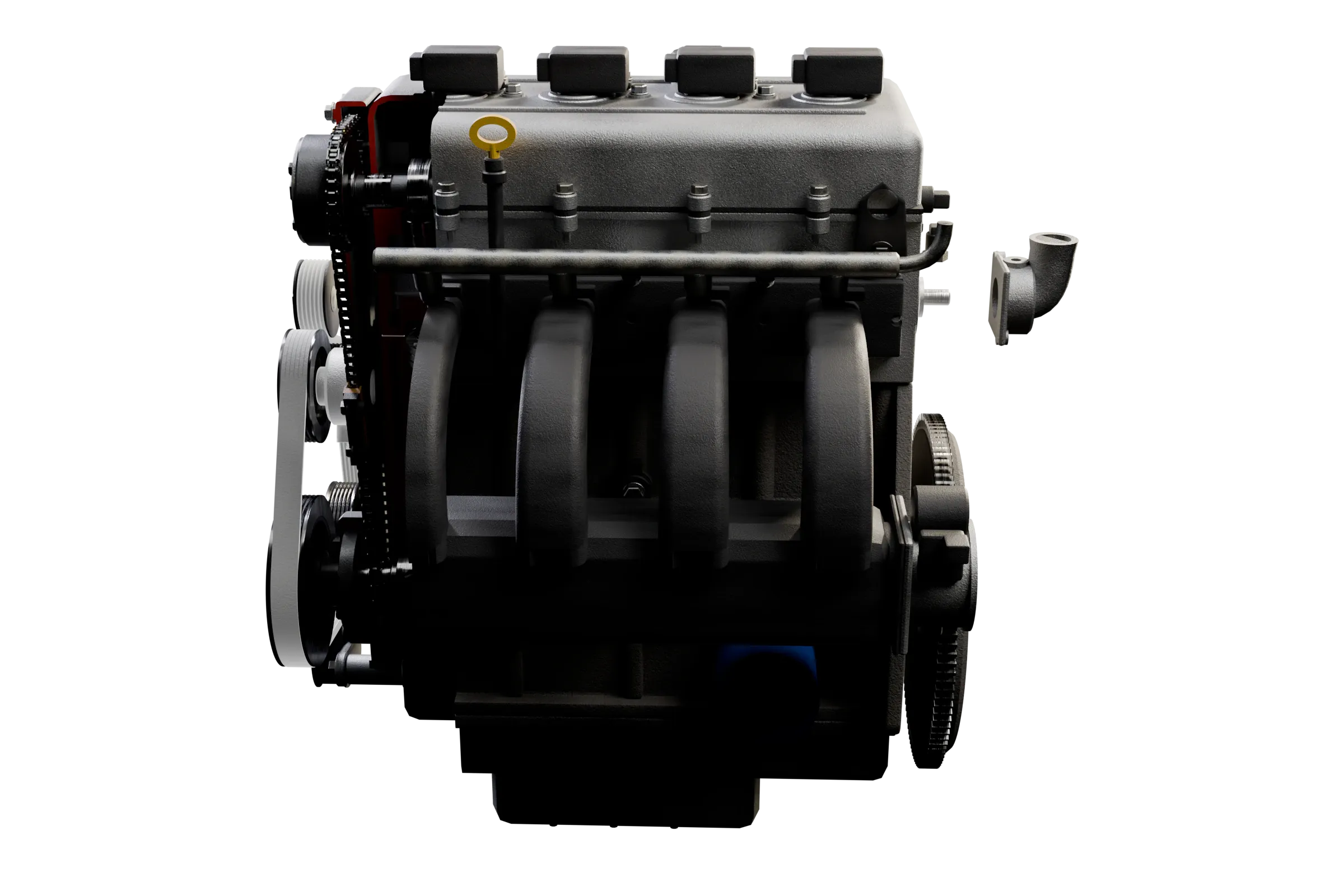
- Thermostat
- Water pump
- Serpentine belt UK: Accessory belt
- Head gasket
The likely causes, most common first
-
Low coolant from a leak
Most likelyHow it shows The gauge climbs, often on a hot day, a long hill or in traffic, and you may see drips under the car, steam, or a crust of dried coolant around a hose.
Check Once the engine is completely cold, look at the level in the coolant reservoir, and for wet patches and dried coolant around the hoses, the radiator and the water pump.
Don't drive it
-
A thermostat stuck closed
CommonHow it shows The engine overheats quickly, within minutes of driving, while the upper radiator hose stays cooler than it should.
Check A shop can confirm it: as the engine warms at idle, the upper radiator hose should turn hot once the thermostat opens.
Don't drive it
-
A failing water pump
CommonHow it shows Coolant leaking from the front of the engine, a whine or grinding from the belt area, and overheating that gets worse over weeks.
Check With the engine cold and off, look for coolant crust at the pump's weep hole and feel whether its pulley rocks.
Don't drive it
-
A radiator fan that does not run
CommonHow it shows The engine overheats in traffic or at idle, and cools again once the car is moving and air is pushed through the radiator.
Check A shop can check it with the car parked: on most cars the fan starts within a minute of switching on the A/C. If it does not, the fuse, the relay and the fan motor come next.
Don't drive it
-
A broken or slipping serpentine belt
Less likelyHow it shows The battery warning light comes on as the temperature gauge climbs: on engines like the app's, the belt that turns the alternator also turns the water pump.
Check With the engine off, look at the belt: it should be there, tight, and free of cracks and shiny glazing.
Don't drive it
-
A blocked radiator
Less likelyHow it shows Overheating that builds slowly, on long climbs and in hot weather, on an older car whose coolant has not been changed for years.
Check A shop can look for cold spots across the radiator and flush the system. Leaves and bugs packed into the fins in front of it block the air too.
Don't drive it
-
A blown head gasket
Less likelyHow it shows Overheating with white exhaust smoke, coolant that disappears with no leak in sight, or bubbles in the reservoir.
Check A shop can run a combustion leak test on the coolant and a pressure test of the cooling system.
Don't drive it
How to narrow it down
- Pull over when it is safe and switch the engine off. Until you can stop, turning the heater to hot with the fan on full draws some heat away from the engine.
- Leave the hood shut until any steam stops, then let the engine cool for at least half an hour. Never open the radiator cap or the coolant reservoir cap on a hot engine: the coolant is under pressure and can spray out and scald you.
- When it is cold, look at the coolant level in the reservoir and top it up to the mark with the coolant the automaker specifies, then look for leaks around the hoses, the radiator and the water pump.
- Look at the serpentine belt, and remember whether the battery warning light came on too.
- Have the car towed to a repair shop: topping up does not fix whatever made the engine overheat.
Is it safe to drive an overheating car?
Don't drive it
No. Pull over when it is safe and switch the engine off as soon as the gauge reaches the red or the temperature warning light comes on. An engine that keeps running hot can warp its cylinder head, blow its head gasket or seize, and the damage can start within minutes. Never open the radiator or coolant reservoir cap on a hot engine: the coolant is under pressure and can spray out and scald you. Let it cool, then have the car checked where it is or towed.
Why does my car overheat when idling?
Because at idle, and in slow traffic, nothing pushes air through the radiator except its fan. A fan that does not switch on, a weak fan motor or a failed relay shows up first at idle, and the car cools again on the open road. Low coolant and a slipping belt show here too, because at idle the water pump turns slowly and moves less coolant.
In the app’s engine the thermostat keeps the coolant inside the engine until it reaches about 190 °F (88 °C), then opens to the radiator. From then on the radiator, its fan and the water pump decide whether the engine stays at that temperature or climbs past it.
Why is my car overheating when the coolant is full?
A full reservoir does not always mean a full engine. An air pocket left after the coolant was changed, or a leak that draws air in, can starve the water pump while the reservoir looks fine. With the coolant where it should be, look at the parts that move it: a thermostat stuck closed, a water pump with a worn or broken impeller, a broken belt, a fan that does not run or a radiator blocked inside.
A blown head gasket can leave the reservoir full, or even overflowing, while the engine overheats, because it pushes combustion gas into the coolant. The four-stroke engine guide shows how the coolant runs around the cylinders and through the cylinder head.
Questions people ask
Can you top up with water instead of coolant?
Plain water carries heat away, but it does not protect against freezing or corrosion, so top up with the coolant the automaker specifies, mixed as its label says, and only on a cold engine. If water is all you have, have the system drained and refilled with the right coolant once the fault is fixed.
Why does my car overheat when the A/C is on?
The A/C condenser sits in front of the radiator and adds its heat to the air flowing through, and the compressor adds load to the engine. A cooling system that is only just coping, from low coolant, a weak fan or a partly blocked radiator, tips over into overheating when the A/C runs, most of all in traffic.
Can overheating damage an engine?
Yes. A few minutes of running hot can warp an aluminum cylinder head and blow the head gasket, and an engine that keeps going can scuff its pistons or seize. That is why the advice is to stop as soon as the gauge climbs.
Related
The parts
- What does a thermostat do in a car? A car's thermostat is a valve in the cooling system that keeps the coolant inside the engine until it is warm, then opens to send it through the radiator.
- What does a water pump do in a car? A car's water pump circulates coolant through the engine block, the cylinder head and the radiator, carrying heat out of the engine.
- What does a head gasket do? A head gasket seals the joint between the cylinder head and the engine block.
Similar symptoms
- What does white smoke from the exhaust mean? Thin white vapor from the exhaust on a cold morning is water condensing, and it clears as the engine warms.
- Why is my check engine light flashing? A flashing check engine light means the engine is misfiring badly enough to damage the catalytic converter: fuel that does not burn in a cylinder reaches it and burns inside.
- Why does my engine rattle on a cold start? A rattle for a few seconds after a cold start usually comes from the timing chain, when a worn chain or tensioner has slack until the oil pressure builds.
- Why is my ABS light on? An ABS light on the dash means the ABS unit has found a fault and switched anti-lock braking off.
