
Drivetrain · CV axle and differential
Why is my car shaking when I accelerate?
A car that shakes when you accelerate, and smooths out when you ease off the gas, usually has a worn inner CV joint or worn engine and transmission mounts. A shake with a stumble and the check engine light on is usually a misfire. A shake that grows with speed whatever you do points to the wheels and tires.
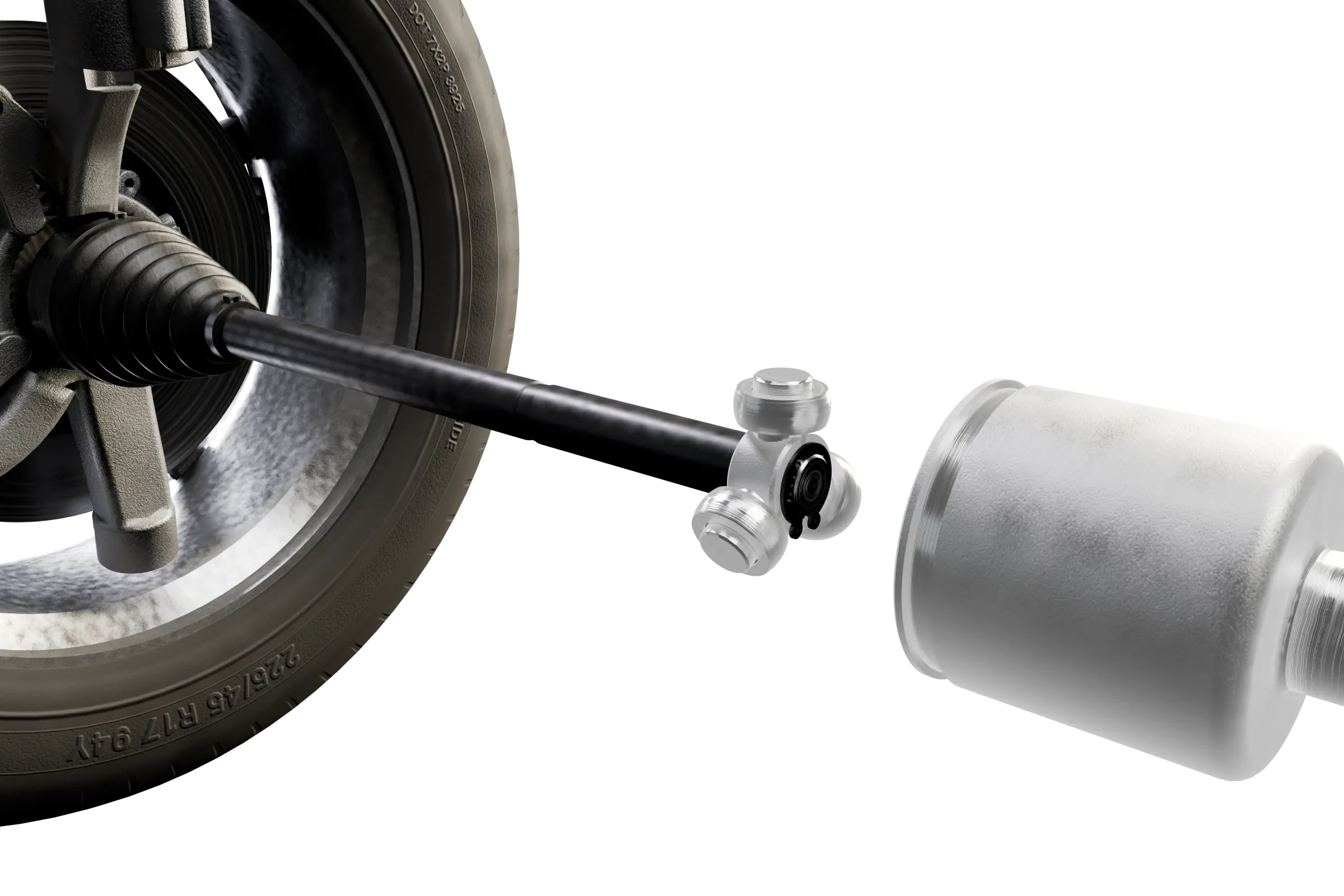
- Tripod housing
- Tripod spider
- Half-shaft
- Tire 225/45 R17
The likely causes, most common first
-
A worn inner CV joint
Most likelyHow it shows A shudder or side-to-side shake under firm acceleration, worst pulling away hard or climbing a hill, that fades the moment you ease off the gas.
Check On a straight, empty road, accelerate firmly, then ease off. A shake that comes and goes with the gas points here. Look at the inner boots for tears and flung grease.
Have it checked soon
-
Worn engine or transmission mounts
CommonHow it shows A thump or shudder as you pull away, a clunk as you get on or off the gas, and more vibration than usual at idle in gear.
Check With your foot hard on the brake, have a helper standing to the side watch the engine as you shift from drive to reverse, or gently let the clutch out in first. A big lurch means a worn mount.
Fix it soon
-
An engine misfire
CommonHow it shows A stumble or jerking that is worst under load, uphill or at low speed in a high gear, with the check engine light on or flashing.
Check Have the codes read: a misfire code names the cylinder. If the check engine light is flashing, slow down and have the car checked soon.
Have it checked soon
-
A wheel or tire out of balance or damaged
CommonHow it shows A shake through the steering wheel or the seat that starts at one speed, usually on the highway, and stays whether you accelerate, cruise or coast.
Check Coast in neutral at the speed where it shakes. If the shake stays, have the wheels balanced and look at each tire for a bulge and each rim for a bend.
Fix it soon
-
A bent half-shaft
Less likelyHow it shows A vibration that rises with road speed and grows under power, often starting after the car hit a curb or a deep pothole.
Check With the car raised, a mechanic can turn the shaft slowly and watch its middle for wobble.
Have it checked soon
-
Loose lug nuts
Less likelyHow it shows A wobble or shake that started soon after a wheel was off, sometimes with a click or knock from that corner.
Check Stop and check the lug nuts on every wheel before you drive any farther.
Don't drive it
How to narrow it down
- Note exactly when it shakes: pulling away from a stop, accelerating hard at speed, or at one speed whatever you do with the gas.
- While it shakes, ease off the gas. A shake that stops at once is in the drivetrain or the mounts; one that stays while you coast is in the wheels and tires.
- Look at the dash. A check engine light, steady or flashing, points to a misfire before anything else.
- If a wheel has been off lately, check that the lug nuts are tight.
- With the car safely raised, look at the CV boots and the rubber in the mounts, and have a shop check the CV joints for play and the wheels for balance.
Is it safe to drive if your car shakes when accelerating?
Have it checked before you drive far
Usually for a short while, gently, but have it checked before you drive far. A worn inner CV joint or a tired mount only gets worse, and a joint that breaks up leaves the car without drive. A flashing check engine light means a misfire bad enough to overheat the catalytic converter, so slow down and have it seen to soon. If the shake started soon after the wheels were off, or comes with a loud clunk, stop and check before you go on.
Why does a worn inner CV joint shake only under power?
Because only power loads it. On a front-wheel-drive car each CV axle has a tripod joint at the transmission end: three rollers on a spider run in three straight tracks inside a housing, so the shaft can slide in and out as the suspension moves, by up to 15 mm each way in the app’s model. At an angle, the spider’s center orbits a little, 1.2 mm at its full angle in the model, three times every turn.
In a healthy joint that motion is too small to feel. Once the rollers and their tracks wear, the load of hard acceleration turns it into a push on the shaft three times a turn, and the car shudders from side to side. Ease off and the load goes, so the shake goes with it. The CV axle guide shows both joints moving.
How do you tell a worn mount from a worn CV joint?
By timing. A worn mount shows as the load changes: a thump as you pull away, a clunk as you get on or off the gas, a shake in gear at a standstill. A worn inner CV joint shakes for as long as you keep accelerating hard, and is quiet at a standstill.
The two often come together. A tired mount lets the engine move further, which swings the inner joints through bigger angles and wears them faster.
Why does the shake start at highway speed?
If it starts at one speed and is there whether you accelerate, cruise or coast, look at the wheels and tires first. A wheel out of balance, a tire with a bulge or a broken belt, or a bent rim shakes once every turn, and at one road speed that matches the rate at which the suspension and steering shake most easily. Balancing the wheels and a close look at each tire is the simple first step. A shake at speed that comes only when you accelerate is more often the inner CV joint again, or a bent half-shaft.
If the car shakes when you brake rather than when you accelerate, the front rotors are the usual cause, covered in why a steering wheel shakes when braking.
Questions people ask
Why does my car shake when accelerating but not when coasting?
Because only accelerating loads the drivetrain. The engine pushes back on its mounts, and the CV axles carry its torque, only while you ask for power, so worn mounts and a worn inner CV joint show up then and go quiet as you coast. A wheel out of balance shakes with or without power.
Why does my car shake when accelerating from a stop?
At low speed the usual causes are worn engine or transmission mounts, which let the engine rock as it takes up the load, and a worn inner CV joint, which shudders most when you pull away hard. On a manual car, a clutch that grabs or shudders as it takes up can feel much the same.
Can a misfire make a car shake when accelerating?
Yes. A cylinder that fails to fire under load leaves a gap in the engine's power strokes, which you feel as a stumble or shake, worst uphill or when you accelerate in a high gear. The check engine light usually comes on, and the stored code names the cylinder.
Related
The parts
- What does a CV joint do? A CV (constant velocity) joint lets a shaft drive a wheel through an angle without the speed pulsing.
- What do spark plugs do? Spark plugs light the compressed fuel and air in each cylinder of a gasoline engine.
Similar symptoms
- Why does my steering wheel shake when braking? A steering wheel that shakes when you brake usually means the front brake rotors have worn unevenly, which is often called warped.
- Why does my car click when turning? A clicking noise when you turn, loudest at full lock as you start moving, is usually a worn outer CV joint on a front CV axle, most often after its boot has torn.
- Why is my car humming when I drive? A humming noise that rises with road speed is usually a worn wheel bearing, especially if it changes as you go around a curve.
- What causes clutch chatter? Clutch chatter is a shudder as the clutch takes up, felt most when pulling away from a stop or backing up.
