
Why won't my manual car go into gear?
When a manual car won't go into gear, the usual cause is a clutch that isn't fully releasing, so the input shaft keeps turning and the synchros can't line the gear up. Low clutch fluid, air in the hydraulics, a worn linkage or cold, thick transmission oil come next; worn synchros make one gear hard rather than all.
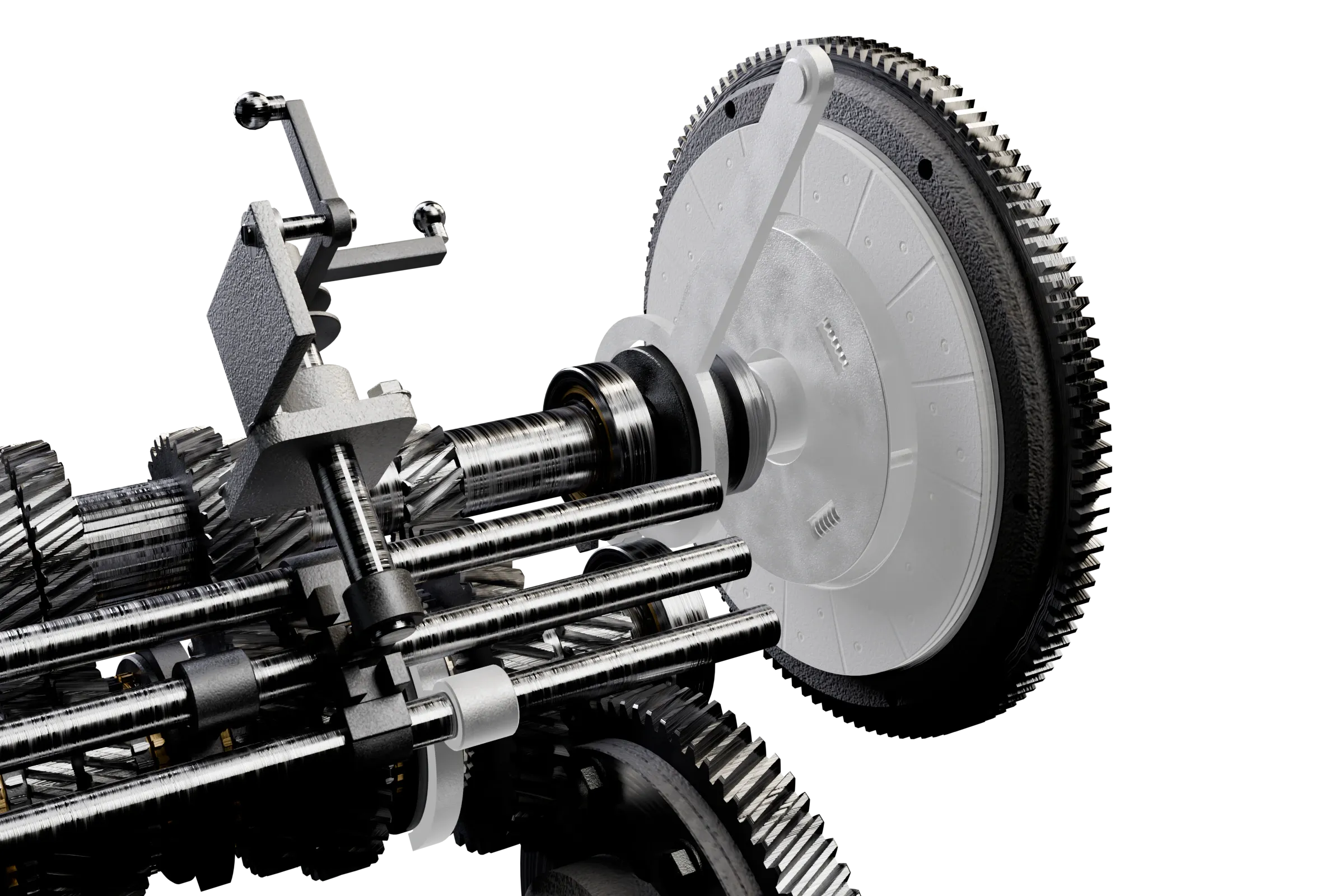
- 1st/2nd blocker ring
- 1st/2nd shift fork
- Clutch fork UK: Release fork
- Clutch disc
The likely causes, most common first
-
Low fluid or air in the clutch hydraulics
Most likelyHow it shows Every gear is hard to engage with the engine running, first and reverse the worst, and the pedal may feel soft or travel farther than it did.
Check Look at the reservoir level and the pedal feel. Then turn the engine off: if every gear goes in easily, the clutch is the cause.
The fix The leak found and fixed, then a bleed. A worn master or slave cylinder is replaced.
Have it checked soon
-
A clutch disc that drags
CommonHow it shows Gears grind going in even with a firm pedal, and the car creeps or the engine labors with the pedal held down at a stop.
Check With the engine running in neutral, press the pedal, wait a few seconds, then select reverse. A grind every time means the disc is not freeing from the flywheel.
The fix A new clutch kit, usually with the flywheel checked or resurfaced, since the transmission has to come out.
Fix it soon
-
A binding or worn shift linkage
CommonHow it shows The shifter feels stiff or vague with the engine off as well as on, or will not reach one end of the gate.
Check Have a helper move the shifter while you watch the linkage or the cables at the transmission for binding, play or a broken bushing.
The fix New linkage bushings or shift cables, adjusted.
Have it checked soon
-
Cold, thick or low transmission oil
CommonHow it shows Hard to shift for the first few minutes on a cold morning, easier once the car warms up.
Check Have the oil level checked at the transmission's fill plug, and compare the oil used with the grade the owner's manual calls for.
The fix The oil topped off, or drained and refilled with the specified grade.
Fix it soon
-
Worn synchro rings
Less likelyHow it shows One gear is hard to engage or crunches while the others are fine, worst on quick shifts.
Check Note which gear it is. A single hard gear points to its synchro, which means opening the transmission.
The fix The transmission rebuilt with new synchro rings, or replaced.
Fix it soon
-
A stretched clutch cable or worn pedal bushings
Less likelyHow it shows On a cable clutch, the pedal moves farther before anything happens, and the bite point drifts toward the floor.
Check Compare the free play at the top of the pedal with the figure in the owner's manual.
The fix The cable adjusted or replaced, with new pedal bushings if they are worn.
Have it checked soon
How to narrow it down
- With the engine off and the car parked, try each gear. If they all go in easily now, the clutch is not releasing fully when the engine runs.
- Look at the clutch fluid reservoir and press the pedal: a low level or a soft pedal points to the hydraulics.
- With the engine running, press the clutch, wait three seconds, then select reverse. A grind every time points to a dragging clutch.
- Note whether it is every gear or one gear, and whether it is worse when the car is cold.
Can you drive a car that won't go into gear?
Have it checked before you drive far
If the gears are hard to engage but do go in, you can usually drive gently to a shop, shifting slowly and never forcing the lever, which wears the synchros. If it will not go into any gear with the clutch pressed, or the pedal stays down, don't drive it. The car may creep with the pedal down, and you may not be able to shift out of gear.
Why does it go into gear with the engine off but not with it running?
With the engine off, nothing inside the transmission is turning, so a synchro has no speed difference to match and the gear slides in. With the engine running, a clutch that does not fully release keeps the input shaft and its gears spinning. The synchro then has to stop that shaft on its own every time you shift, and the gear stays blocked or grinds. That one comparison separates a clutch fault from a transmission fault: easy with the engine off points to the clutch, hard either way points to the linkage or the transmission itself.
Questions people ask
Why is it hard to shift into first gear?
First has the biggest speed difference to match when the car is stopped, so its synchro works hardest. A clutch that drags even slightly makes first hard to engage. Pressing the pedal a second or two before you shift usually helps. If it is hard every time, have the clutch checked.
Why is my car hard to get into gear when it is cold?
Cold transmission oil is thick, so the synchros take longer to match speeds and the shifter feels notchy until the oil warms up. The wrong grade of oil makes it worse. If it eases after a few minutes and shifts normally once warm, that is usually all it is.
Can low clutch fluid stop a car going into gear?
Yes. With too little fluid, or air in it, the slave cylinder cannot push the release fork far enough, so the clutch keeps turning the input shaft and the gears will not engage cleanly. Check the reservoir, then look for the leak.
Related
The parts
- What does a clutch master cylinder do? A clutch master cylinder turns the push of the pedal into fluid pressure.
- What does a clutch disc do? A clutch disc is the friction disc clamped between the engine's flywheel and the pressure plate.
Similar symptoms
- Why does my transmission grind when I shift? A manual transmission grinds when the gear you select is still turning at a different speed from the shaft it locks to.
- Why does my clutch pedal feel spongy? A spongy clutch pedal almost always points to the hydraulics: air in the fluid, a slow leak, or worn seals in the master or slave cylinder.
- Why is my gear shifter loose? A loose or sloppy gear shifter in a manual car usually comes from worn plastic or rubber bushings in the linkage between the shifter and the transmission, or from stretched shift cables.
- Why does my manual transmission whine? A whine from a manual transmission usually comes from worn bearings, low or wrong gear oil, or worn gear teeth.
