
What do steering rack bushings do?
Steering rack bushings are the rubber or polyurethane mounts that clamp the steering rack's housing to the subframe. They hold the rack in place while keeping road shock and noise out of the steering wheel. Worn bushings let the rack shift as you steer, which gives a knock, a delay before the car responds and vague steering.
UK steering rack mounting bushes Also called rack mount bushings, rack and pinion bushings
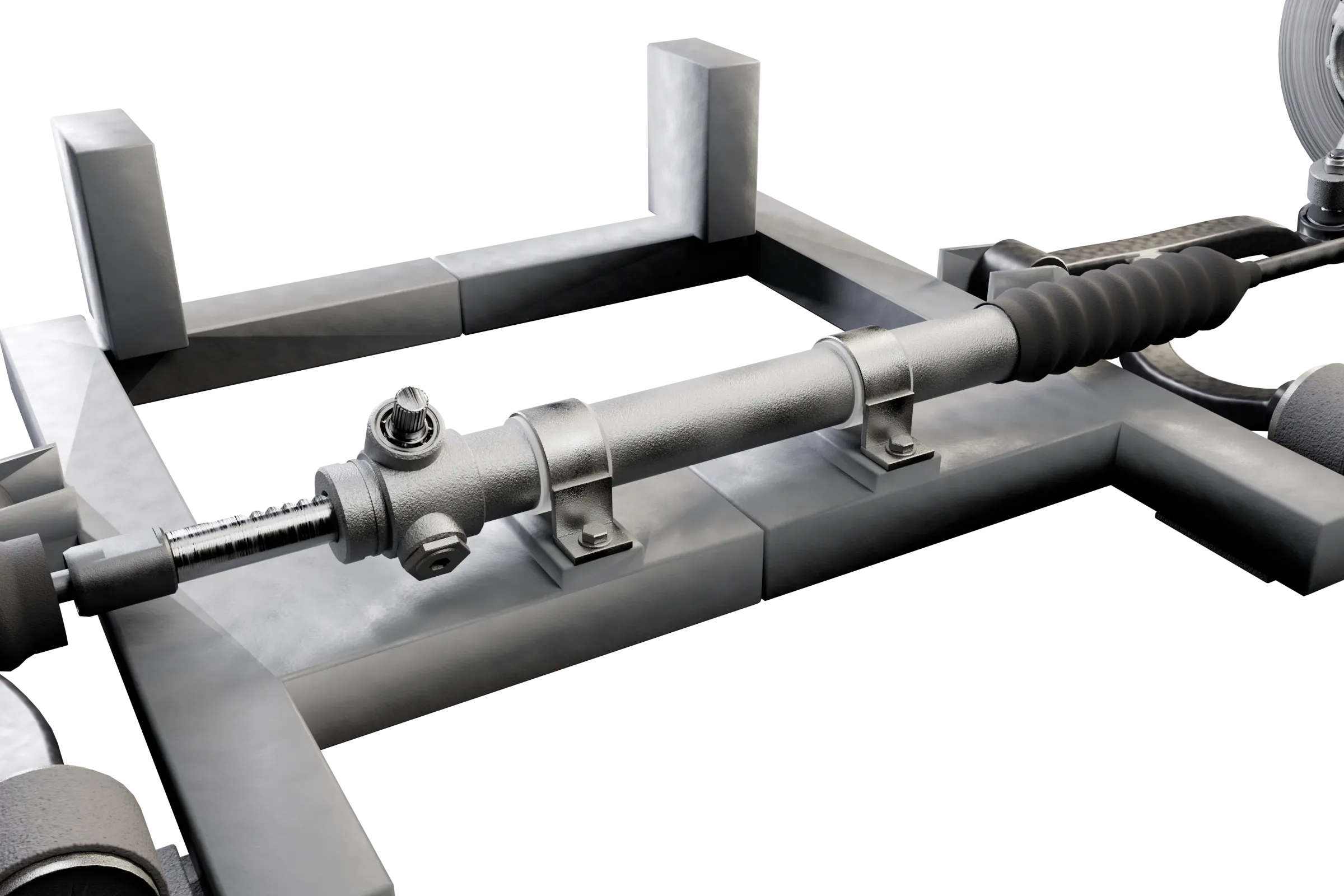
- Rack mount bushing UK: Rack mounting bush
- Rack mount bracket UK: Rack mounting clamp
- Rack-and-pinion housing UK: Steering rack housing
- Front subframe
- Rack bar UK: Steering rack
What do steering rack bushings do?
They mount the rack. The rack housing sits across the subframe in two or more clamps, and a bushing wraps the housing inside each clamp. When you steer, the tie rods push against the rack with the force needed to turn the wheels, and the bushings have to hold the housing still against that push, so the rack's movement goes to the wheels instead of moving the rack itself.
The rubber also isolates the steering. Bumps and vibration from the road travel up the tie rods into the rack, and the bushings soak up part of it before it reaches the steering wheel. Firmer polyurethane bushings sharpen the steering but pass more noise through; the original rubber ones are a compromise between the two.
What are the symptoms of bad steering rack bushings?
- A knock from the front as you start to turn. A clunk as the rack shifts in its mounts at the start of a turn, often loudest when turning the wheel back and forth at low speed. Why does my car clunk when I turn the steering wheel?
- A delay before the car responds. You turn the wheel and the car takes a moment to follow, because the rack moves in its clamps before the tie rods move the wheels.
- Vague steering on the highway. The car wanders and needs small corrections, much like worn tie rods.
- Rack housing movement you can see. With the engine off, have a helper rock the steering wheel while you watch the rack housing: it should stay put, not slide or rock in its clamps.
- A knock over bumps. A dull knock from the front on rough roads as the loose rack shifts. What causes a knocking noise over bumps?
Can you drive with bad steering rack bushings?
Have it checked before you drive far
For a short while, carefully. Worn bushings rarely cause a sudden failure, but the play adds to every other joint's and makes the steering slower and less precise, which matters in an emergency move. A bushing that has broken up completely or a loose clamp bolt can let the rack shift a long way, so have worn bushings replaced before you drive far.
How do you tell rack bushings from tie rods?
By where the movement is. With the car on its wheels and the engine off, have a helper turn the steering wheel a little each way while you watch from under the front. If the rack housing itself slides or rocks in its clamps, the bushings are worn. If the housing stays still but a tie rod moves before the wheel does, the play is in a joint: the outer tie rod end or the inner tie rod.
Rack bushings, tie rods and control arm bushings can all knock over bumps, so a shop checks them in that order on a lift, each with the wheels on the ground and off it. On some cars the bushing on the pinion side wears first, because it takes the twist of the steering shaft as well as the push of the tie rods.
What does replacing steering rack bushings involve?
- Raise the front of the car onto jack stands and remove any underbody tray covering the rack.
- Support the rack and undo the clamp bolts on one side at a time.
- Pry the old bushing off the housing, clean the housing where it sat and fit the new bushing in its place.
- Refit the clamp and do the other side, keeping the rack in the same position.
- On some cars the subframe has to be lowered a little to reach the clamps.
- Tighten the clamp bolts to the torque in the car's service manual and check the steering for play and noise.
Tighten every nut and bolt to the torque spec in the manufacturer's service manual for your car.
On many cars this is quick to do with the rack left in place; on others the subframe must be lowered first. Bushings are inexpensive, so both sides are usually done together.
Questions people ask
Can rack bushings cause a clunk when turning?
Yes, it is one of the classic causes. The rack shifts in its mounts as the steering force builds at the start of a turn, and the clunk comes back each time the direction changes.
Are polyurethane rack bushings worth it?
For a sharper feel, many drivers think so: they hold the rack more firmly and last longer. The trade is more road noise and vibration through the steering wheel, so the original rubber type is the usual choice for an everyday car.
Do bad rack bushings affect the alignment?
They can make it inconsistent. The toe changes slightly as the rack moves in worn mounts, so the alignment can read differently from one check to the next and tires can wear unevenly.
Related
Symptoms
- Why does my car clunk when I turn the steering wheel? A clunk when you turn the steering wheel usually means something in the steering or front suspension has worn loose: a tie rod end or inner tie rod, the steering rack's mounting bushings, a U-joint on the intermediate shaft or a strut mount bearing.
- What causes a knocking noise over bumps? A knocking or clunking noise over bumps usually comes from a worn joint in the front suspension.
Parts nearby
- What does a steering rack do? A steering rack is a toothed steel bar that slides sideways in a housing across the front of the car.
- What is an inner tie rod? An inner tie rod is the rod that screws onto each end of the steering rack, with a ball joint at its inner end, under the rack boot.
- What do control arm bushings do? Control arm bushings are the rubber mountings where a control arm pivots on the subframe.
- What does a power steering motor do? A power steering motor is the electric motor that helps you turn the steering wheel on cars with electric power steering.
The whole system
- How does rack and pinion steering work? The rack and pinion steering, part by part, with an interactive diagram.
