
Why does my steering wheel shake at high speeds?
A steering wheel that shakes at highway speeds, usually from around 50 to 60 mph (80 to 100 km/h) and easing as you go faster, most often has a front wheel out of balance after losing a weight. A bent rim, a tire with a damaged belt and worn steering or suspension joints come next. Have the wheels balanced first.
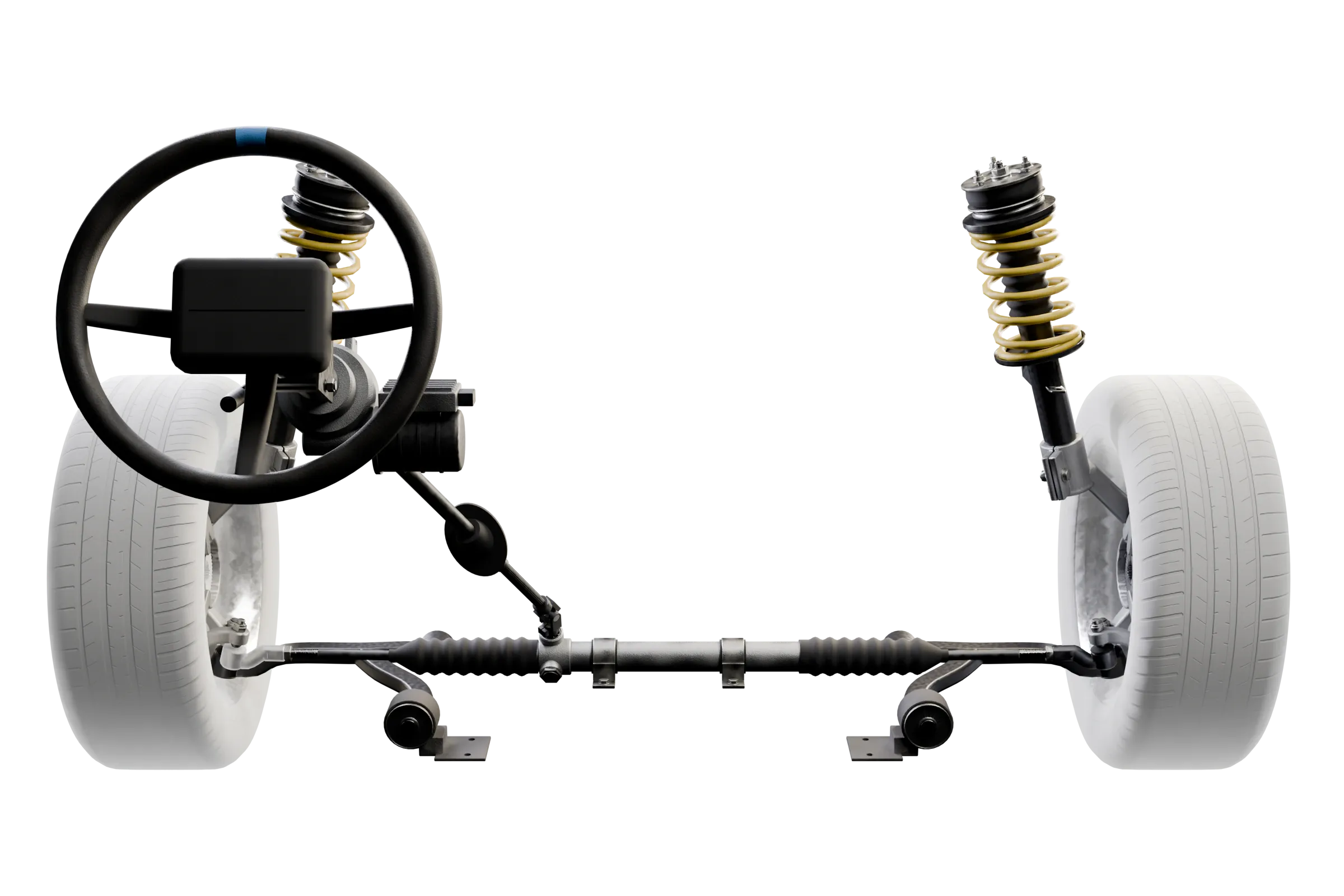
- Wheel and tire UK: Road wheel and tyre
- Wheel and tire UK: Road wheel and tyre
- Outer tie rod end UK: Track rod end
- Hub and brake rotor
The likely causes, most common first
-
A front wheel out of balance
Most likelyHow it shows A shimmy in the steering wheel that starts in one speed band and may ease above it, often after new tires or a pothole.
Check Look for a clean patch on the rim where a balance weight used to be, then have both front wheels balanced.
The fix The wheels balanced on a machine. Road-force balancing also finds a tire that is slightly out of round.
Fix it soon
-
A damaged or out-of-round tire
CommonHow it shows A shake that grows with speed, sometimes a thump at low speed, and a bulge or flat spot on the tire.
Check Look along each front tire's tread and sidewalls for a bulge or lump. A belt that has shifted inside the tire shows as a wobble when the wheel spins.
The fix A new tire. A bulge means the tire's structure is damaged and it can fail.
Have it checked soon
-
A bent rim
CommonHow it shows A shake that started after hitting a pothole or a curb, sometimes with a tire that slowly loses air.
Check With the car safely raised, spin each front wheel by hand and watch the edge of the rim for a wobble.
The fix The rim straightened by a wheel shop, or replaced.
Fix it soon
-
Worn tie rod ends or ball joints
Less likelyHow it shows A shake that is worse over bumps, with play in the steering and uneven wear on the tire edges.
Check With the front safely raised, rock each wheel side to side and top to bottom for play.
The fix The worn joints replaced, then an alignment.
Have it checked soon
-
A worn wheel bearing
Less likelyHow it shows A hum or growl that rises with speed along with the shake, and changes as you weave gently.
Check Rock the raised wheel at the top and bottom for play, and spin it by hand, listening for roughness.
The fix A new wheel bearing or hub assembly.
Have it checked soon
-
Loose lug nuts
Less likelyHow it shows A shake that came on suddenly after a tire change, often with a clunk or a wobble at low speed.
Check Stop somewhere safe and check that every lug nut on the wheel that was changed is tight.
The fix The nuts tightened in a star pattern to the spec in the owner's manual, then checked again after a short drive.
Don't drive it
How to narrow it down
- Note the speed where the shake starts and stops. A band that begins around 50 to 60 mph (80 to 100 km/h) and fades above it points to balance.
- Look at each front rim for a missing weight, and each tire for a bulge or uneven wear.
- If a tire was changed recently, check that the lug nuts are tight.
- Have the wheels balanced, or swap the front and rear wheels. If the shake moves to the seat and floor, it was a wheel or a tire.
Is it safe to drive with the steering wheel shaking?
Have it checked before you drive far
At lower speeds, usually, but have it checked before you drive far at highway speed. A wheel out of balance wears the tires and the steering joints faster, and a damaged tire or a loose wheel can fail suddenly. If the shake started after a tire change or hitting something hard, slow down and check that wheel before going on.
How can you tell a front problem from a rear one?
By where you feel it. A shake in the steering wheel almost always starts at the front: a front wheel, tire or steering joint. A shake through the seat and floor, with the steering wheel calm, usually comes from a rear wheel or tire. Swapping the front wheels to the back is the quickest test. If the shake moves from the steering wheel to the seat, the fault traveled with the wheel, and balancing or a new tire fixes it. If it stays in the steering wheel, look at the steering joints and the wheel bearings next.
Questions people ask
Why does my steering wheel shake at 60 mph but not at 70?
Each wheel and tire has a speed where an imbalance shakes the most, often between 50 and 65 mph (80 and 105 km/h). Above it the shake can fade, which is typical of a wheel out of balance rather than a worn part.
Can bad alignment make the steering wheel shake?
Not by itself. A bad alignment makes the car pull or the steering wheel sit off center. It wears the tires unevenly, though, and a tire worn that way can then start a shake.
Why did my steering wheel start shaking after new tires?
Usually because a wheel was not balanced well, a weight fell off, or a lug nut is not fully tight. Have the shop rebalance the wheels and check the nuts. A new tire can also be slightly out of round, which road-force balancing finds.
Related
The parts
- What is a tie rod end? A tie rod end is the ball joint at the outer end of each tie rod, where the steering connects to the front wheel.
- What does a wheel bearing do? A wheel bearing lets the wheel spin freely while carrying the car's weight and the cornering and braking loads.
Similar symptoms
- Why does my steering wheel shake when braking? A steering wheel that shakes when you brake usually means the front brake rotors have worn unevenly, which is often called warped.
- Why is my car shaking when I accelerate? A car that shakes when you accelerate, and smooths out when you ease off the gas, usually has a worn inner CV joint or worn engine and transmission mounts.
- Why is my car humming when I drive? A humming noise that rises with road speed is usually a worn wheel bearing, especially if it changes as you go around a curve.
- Why is there play in my steering wheel? Play in the steering wheel, where it turns a little before the wheels respond, comes from wear somewhere between the wheel and the tires: most often the tie rod ends, then the inner tie rods, the universal joints on the intermediate shaft, a worn rack or loose rack mounts.
