
Why is there play in my steering wheel?
Play in the steering wheel, where it turns a little before the wheels respond, comes from wear somewhere between the wheel and the tires: most often the tie rod ends (track rod ends), then the inner tie rods, the universal joints on the intermediate shaft, a worn rack or loose rack mounts. Have it checked before you drive far.
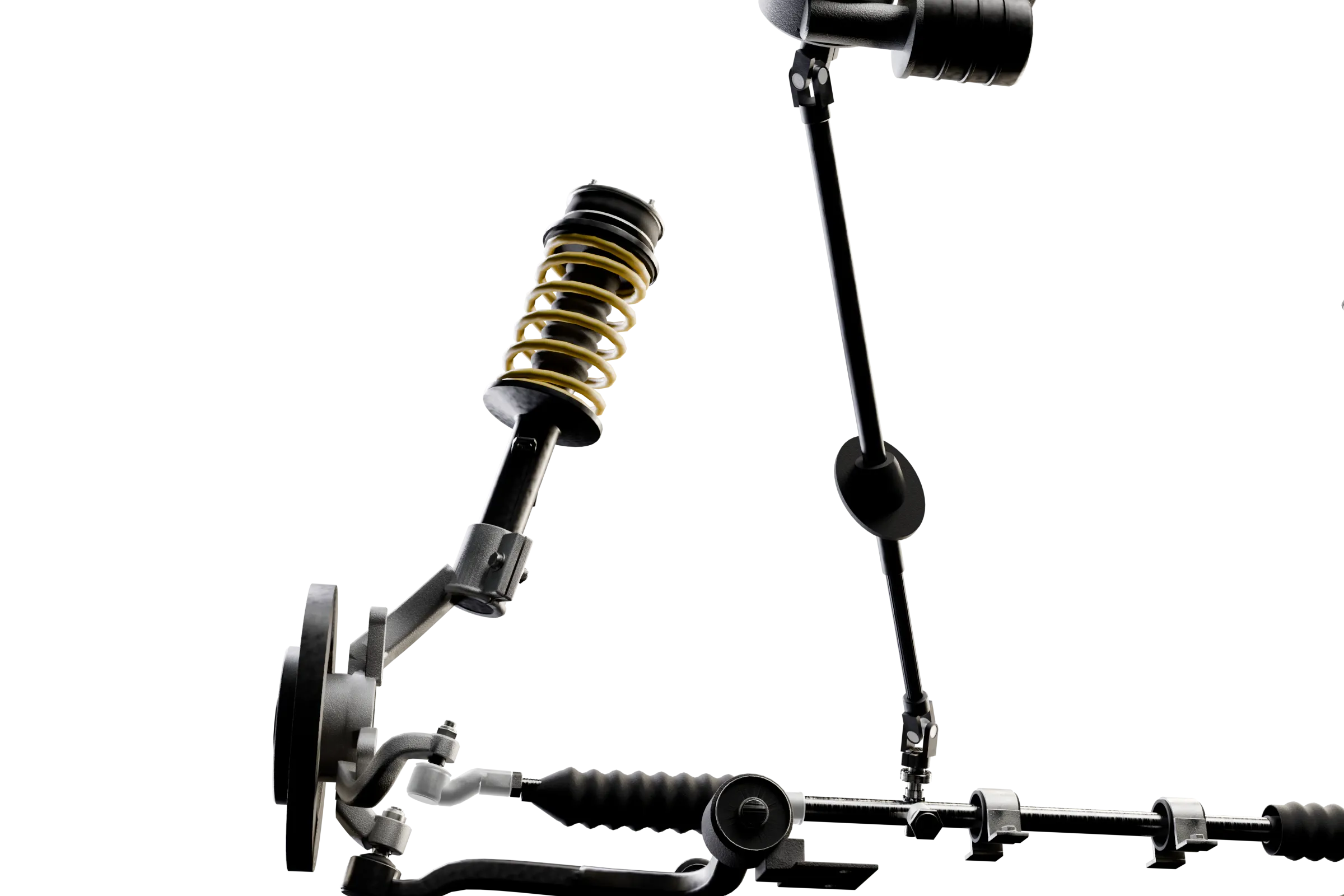
- Rack support yoke UK: Rack yoke
- Inner tie rod socket UK: Inner track rod joint
- Outer tie rod end UK: Track rod end
- Upper u-joint cross UK: Upper universal joint spider
- Lower u-joint cross UK: Lower universal joint spider
The likely causes, most common first
-
Worn tie rod ends
Most likelyHow it shows A small knock or free movement as you rock the wheel, vague steering on the highway and, often, wear on one edge of the front tires.
Check With the front wheels off the ground, grip a tire at the sides and rock it in and out: movement you can see at the tie rod end means it is worn.
The fix New tie rod ends, then a wheel alignment, because replacing them moves the toe.
Have it checked soon
-
Worn inner tie rods
CommonHow it shows Play like a worn tie rod end, often with a clunk over bumps, but no movement you can see at the outer joint.
Check Squeeze the rack boot over the inner joint while a helper rocks the wheel: a joint you can feel moving inside the boot is worn.
The fix New inner tie rods and boots, then an alignment.
Have it checked soon
-
Worn universal joints on the intermediate shaft
CommonHow it shows Play right at the steering wheel, a clunk as you turn at parking speed, and sometimes a notchy feel.
Check With the engine off, have a helper rock the steering wheel a little each way while you feel each joint on the shaft for play.
The fix A new intermediate shaft, which comes with both joints.
Have it checked soon
-
A worn steering rack or a loose rack yoke
Less likelyHow it shows Play that is worst straight ahead, with a knock through the wheel on rough roads.
Check Have a shop check for movement between the rack and its housing as the wheel is rocked.
The fix The rack yoke adjusted on racks that allow it, or a new or remanufactured rack.
Have it checked soon
-
Loose or worn rack mounting bushings
Less likelyHow it shows A clunk at the start of each turn and a short delay before the car responds, as the whole rack shifts sideways.
Check Watch the rack housing on its subframe while a helper turns the wheel each way: the housing should not move.
The fix New rack bushings, with the mounting bolts tightened to the manufacturer's spec.
Have it checked soon
-
Worn ball joints or wheel bearings
Less likelyHow it shows Play you can feel when you rock the wheel top to bottom rather than side to side, often with a knock over bumps.
Check With the wheel off the ground, rock it at the top and bottom: movement points to a ball joint or a wheel bearing.
The fix A new ball joint or wheel bearing, then an alignment check.
Have it checked soon
How to narrow it down
- With the car parked and the wheels straight, have a helper watch a front tire while you turn the steering wheel slowly each way. Note how far the wheel turns before the tire moves.
- Have the helper watch each tie rod end and the joints on the steering shaft while you rock the wheel. The worn joint moves before the part beyond it.
- With the front of the car safely raised, rock each front wheel side to side, then top to bottom. Side to side points to the steering joints; top to bottom to a ball joint or wheel bearing.
- Look at the edges of the front tires for uneven wear.
Is it safe to drive with play in the steering wheel?
Have it checked before you drive far
Have it checked before you drive far. A little play makes the car wander and need constant correction, and a worn joint wears faster the longer it goes. A tie rod end or ball joint that separates leaves that wheel free to steer by itself. If the play came on suddenly, or comes with a clunk, a pull or a knock through the wheel, don't drive it until it has been checked.
How do you tell which steering joint is worn?
Watch the joints, not the wheel. With the car parked, the wheels straight and the engine off, have a helper rock the steering wheel gently a little each way while you look at each joint in turn, from the column down: the universal joints on the intermediate shaft, the point where the shaft enters the rack, each inner tie rod through its boot, then each tie rod end. A worn joint moves before the part beyond it does. Doing it with the engine off matters on a car with electric power steering, because the assist motor can take up a little play and hide it. Then raise the front and rock each wheel side to side for the steering joints, and top to bottom for the ball joints and wheel bearings.
Questions people ask
How much play in a steering wheel is normal?
Very little. On a car with rack and pinion steering, the front wheels should start to move almost as soon as the steering wheel does. Any free movement you can feel as a clunk, or see before the tires respond, is worth having checked.
Can a bad alignment cause play in the steering?
No. Alignment changes where the wheels point, not how loose the steering is. A car with play often needs an alignment after the worn parts are replaced, though, because new tie rods move the toe.
Why does my steering wheel move up and down?
Up and down movement at the wheel itself comes from the steering column: a worn column bearing, or a tilt or telescope adjuster that no longer clamps. It is separate from play in turning, and it is checked at the column under the dash.
Related
The parts
- What is a tie rod end? A tie rod end is the ball joint at the outer end of each tie rod, where the steering connects to the front wheel.
- What is an inner tie rod? An inner tie rod is the rod that screws onto each end of the steering rack, with a ball joint at its inner end, under the rack boot.
- What does a steering rack do? A steering rack is a toothed steel bar that slides sideways in a housing across the front of the car.
- What do steering rack bushings do? Steering rack bushings are the rubber or polyurethane mounts that clamp the steering rack's housing to the subframe.
- What does a ball joint do? A ball joint is the ball-and-socket joint that connects a suspension arm to the wheel's steering knuckle.
Similar symptoms
- Why is my steering wheel off center? A steering wheel that sits off center while the car drives straight usually means the front toe is out of adjustment, or the tie rods were set unevenly at the last alignment.
- Why is my car pulling to one side? A car that pulls to one side on a straight, level road usually has a tire problem or wheels out of alignment.
- What causes a knocking noise over bumps? A knocking or clunking noise over bumps usually comes from a worn joint in the front suspension.
- Why doesn't my steering wheel return to center? After a turn, the front wheels' caster and the way the tires grip the road should pull the steering wheel back to center on their own.
