
Brakes · Floating disc caliper
Why is my brake warning light on?
The red brake warning light, usually BRAKE or a circle with an exclamation point, means the parking brake is on, the brake fluid is low, or the system has found a fault, often together with the ABS light. With the parking brake fully off, a light that stays on usually means low fluid from worn pads or a leak.
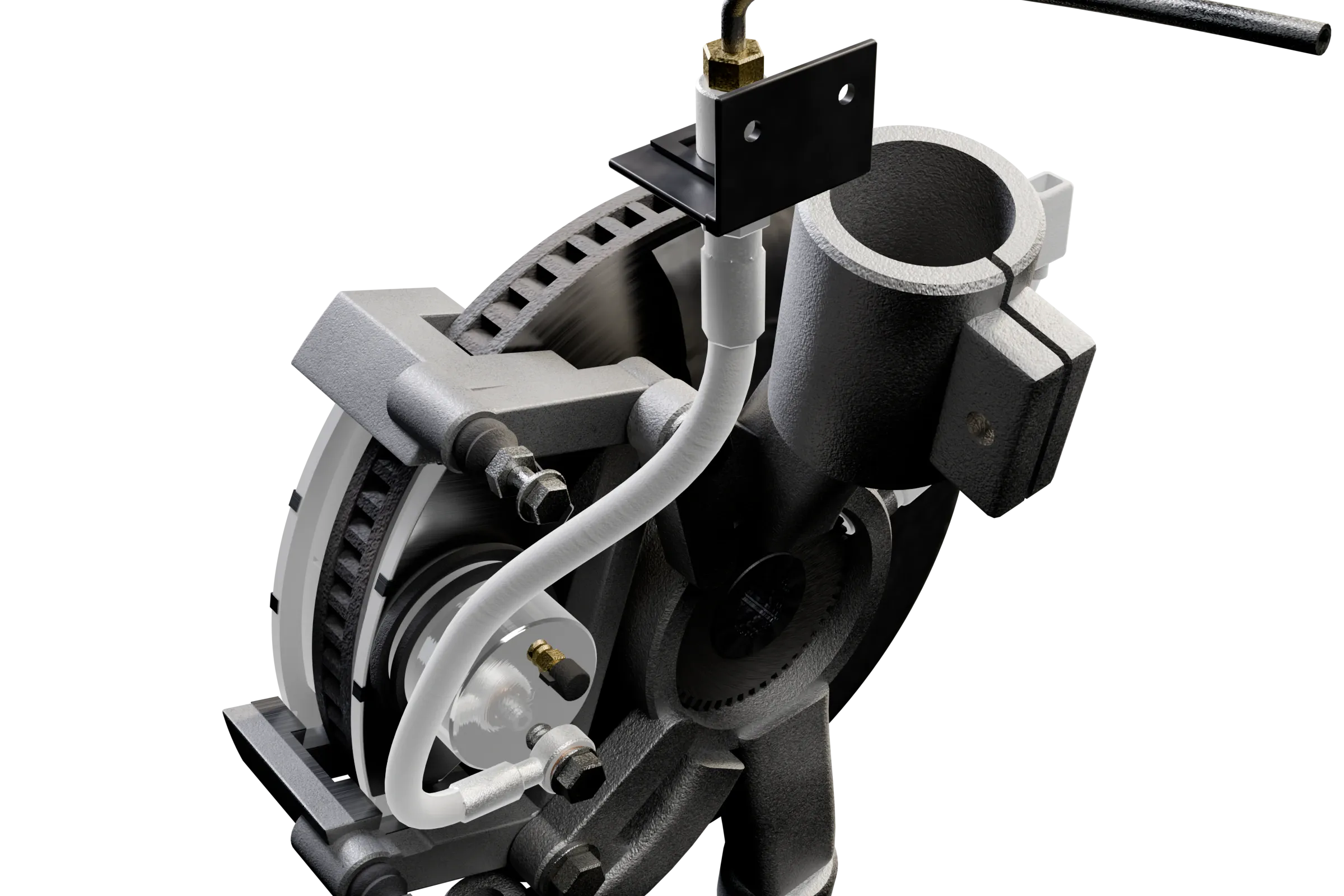
- Brake pad, inner
- Brake pad, outer
- Caliper piston
- Brake hose UK: Flexible brake hose
- ABS wheel-speed sensor
The likely causes, most common first
-
The parking brake on, or its switch out of adjustment
Most likelyHow it shows The light goes out when the parking brake (handbrake) is fully released, or flickers as you move the lever or pedal.
Check Release the parking brake fully and watch the light. If it goes out, that was all; if it only goes out with the lever pushed right down, the switch needs adjusting.
The fix None if it goes out. A switch that keeps the light on with the brake released is adjusted or replaced.
Have it checked soon
-
How it shows The light comes on in corners or under braking at first, then stays on, with the reservoir near MIN and the pads thin.
Check Look at the reservoir level and at the pads' thickness through the wheel. As pads wear, the caliper pistons move out and take fluid with them, so the level drops without a leak.
The fix New pads, which push the pistons back and bring the level up again.
Have it checked soon
-
A brake fluid leak
CommonHow it shows The light with a pedal that feels softer or sinks, and wet fluid inside a wheel or under the car.
Check Look inside each wheel, at each caliper and along the lines for wet, oily fluid.
The fix The leak repaired, then the brakes bled.
Don't drive it
-
An ABS or brake force distribution fault
Less likelyHow it shows The red brake light together with the amber ABS light, sometimes with the rear wheels locking early in a hard stop.
Check Have the fault codes read. Many cars light the red warning when the ABS can no longer share the braking between front and rear.
The fix The faulty wheel speed sensor, its wiring or the ABS unit repaired.
Have it checked soon
-
A faulty fluid level sensor
Less likelyHow it shows The light on with the reservoir at MAX and the pedal firm, or flickering over bumps.
Check Have the sensor and its plug on the reservoir checked.
The fix A new level sensor or reservoir cap.
Have it checked soon
How to narrow it down
- Make sure the parking brake is fully released. If the light goes out, that was all.
- With the car parked on level ground, look at the brake fluid reservoir and compare the level with MIN and MAX.
- Press the brake pedal with the engine running. It should stop high and feel firm.
- Note whether the amber ABS light came on with it.
- Look at the pad thickness through the wheel spokes, and for wet fluid inside each wheel.
Is it safe to drive with the brake warning light on?
Don't drive it
Not until you know why. If the light goes out when the parking brake is released, it was only the parking brake. If it stays on, the fluid may be low or the system may have found a fault, and the brakes can get worse without more warning. If the level is low, the pedal feels soft or sinks, or the ABS light is on too, don't drive it.
Why do worn pads make the brake fluid level drop?
Each caliper piston sits behind a pad. As the pads wear thinner, the pistons move out to keep them against the rotor (disc), and the space behind each piston fills with fluid from the reservoir. By the time the pads are near their limit, the level can sit near MIN with no leak at all. That is why the light often comes on first in corners or under braking, as the fluid sloshes away from the level sensor, and why new pads, which push the pistons back, bring the level back up. A level that drops while the pads are still thick is a leak.
Questions people ask
Why is my brake light on when the parking brake is off?
Usually because the brake fluid is low, from worn pads or a leak, or the parking brake switch is out of adjustment. On many cars the same light also shows a brake force distribution fault, often with the ABS light. Check the fluid level first.
Should you add brake fluid when the brake light comes on?
Only after finding out why it is low. If the pads are worn, the level dropped because the caliper pistons moved out, and new pads push it back up, so topping off now overfills it later. If the pads are fine, a low level means a leak that needs fixing.
Is the red brake light more serious than the ABS light?
Usually. The red light covers the parking brake, the fluid level and faults in the hydraulics that stop the car. The amber ABS light means the anti-lock system is off while the normal brakes still work.
Related
The parts
- What do brake pads do? Brake pads are the friction blocks the caliper squeezes against the brake rotor, turning the car's movement into heat to slow it down.
- What does brake fluid do? Brake fluid carries the push from the brake pedal to the calipers.
- What does an ABS sensor do? An ABS sensor, or wheel speed sensor, measures how fast its wheel is turning by reading a toothed or magnetic ring that turns with the hub.
Similar symptoms
- Why is my ABS light on? An ABS light on the dash means the ABS unit has found a fault and switched anti-lock braking off.
- What causes a spongy brake pedal? A spongy or soft brake pedal usually means air in the brake fluid, which compresses where fluid does not.
- Why does my brake pedal go to the floor? A brake pedal that sinks to the floor means the system cannot hold pressure: fluid is escaping through a leak, or getting past a worn seal inside the master cylinder.
- What causes a grinding noise when braking? A grinding noise when you brake usually means the brake pads have worn through their friction material, so their steel backing plates are scraping the brake rotors.
