
Brakes · Floating disc caliper
Why does my brake pedal go to the floor?
A brake pedal that sinks to the floor means the system cannot hold pressure: fluid is escaping through a leak, or getting past a worn seal inside the master cylinder. A leaking brake hose, line or caliper is the most common cause. Don't drive the car: pump the pedal, use the parking brake and stop safely.
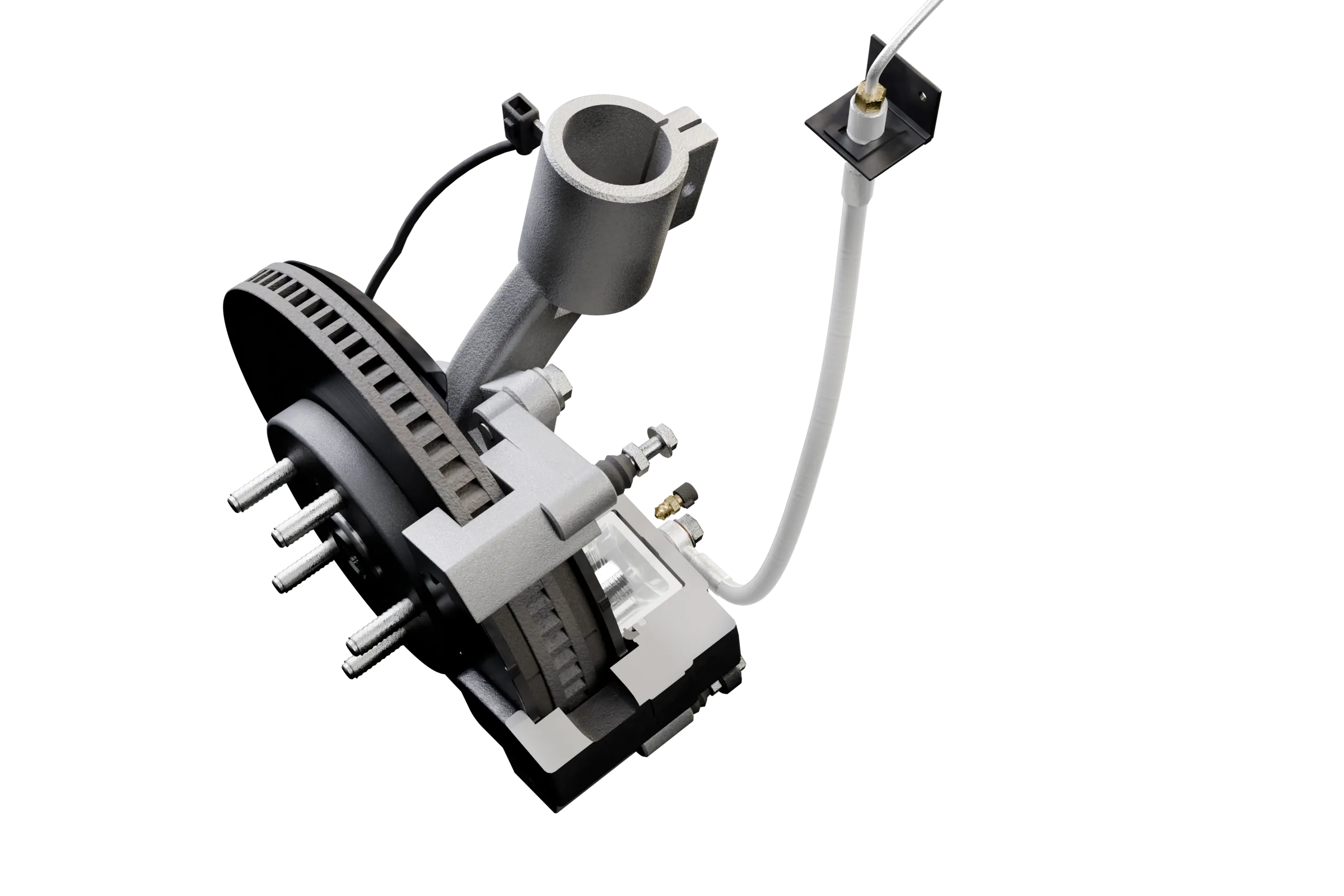
- Caliper piston
- Piston seal
- Brake hose UK: Flexible brake hose
- Brake line
The likely causes, most common first
-
A leaking brake hose or line
Most likelyHow it shows A pedal that goes lower each time, the red brake warning light, and wet, oily patches inside a wheel or under the car.
Check Look at the reservoir level, then along the brake lines and at each flexible hose for fluid. Brake fluid is clear to amber and feels slippery.
The fix The leaking hose or line replaced, then the brakes bled.
Don't drive it
-
How it shows Fluid on the inside of one wheel and its tire, a sinking pedal and often a pull to one side when braking.
Check Look at the inner side of each wheel and the back of each caliper for wet fluid or a wet dust boot around the piston.
The fix A new or rebuilt caliper, then a bleed.
Don't drive it
-
Worn seals inside the master cylinder
CommonHow it shows A pedal that slowly sinks under steady pressure at a standstill, with no fluid missing anywhere.
Check At a standstill with the engine running, keep a steady, firm push on the pedal for 30 seconds. If it creeps down and the reservoir stays full, fluid is getting past the master cylinder's seals.
The fix A new master cylinder, then a full bleed.
Don't drive it
-
A lot of air in the system
Less likelyHow it shows A pedal that goes to the floor right after brake work and comes up for a moment when you pump it.
Check If the brakes were just worked on, the system may not have been bled properly.
The fix A full bleed of every corner.
Don't drive it
-
Pistons pushed back after new pads
Less likelyHow it shows The first press after a pad change goes almost to the floor, then the pedal firms up.
Check Pump the pedal several times before moving the car. If it stays firm after that, it was only the pistons coming out to meet the new pads.
The fix None, once the pedal is firm.
Have it checked soon
-
Boiling fluid after a long descent
Less likelyHow it shows On a long downhill or after hard braking, the pedal sinks and the brakes fade, then return once they cool.
Check Find out when the fluid was last changed. Water absorbed over the years lowers its boiling point.
The fix A fluid change, and lower gears to hold the car on long descents.
Don't drive it
How to narrow it down
- Look at the brake fluid reservoir. A level well below MIN means a leak.
- Look inside each wheel, behind each caliper and along the lines under the car for wet, oily fluid.
- With the engine running and the car parked, hold steady pressure on the pedal for 30 seconds and note whether it creeps down.
- Look for the red brake warning light on the dash.
- If the brakes were just worked on, pump the pedal a few times and note whether it comes up.
Is it safe to drive with a brake pedal that goes to the floor?
Don't drive it
No. A pedal that sinks means the brakes can fail completely on the next stop. Most cars have two hydraulic circuits, so one leak usually leaves some braking on two wheels, but stopping distances grow sharply. If it happens while you are driving, pump the pedal, shift down, apply the parking brake gently and steer to a safe stop. Then have the car towed.
What happens inside when the pedal sinks?
Pressing the pedal pushes two pistons along the master cylinder, and the fluid ahead of them carries the push through the lines to every caliper. Brake fluid does not compress, so a healthy system stops the pedal high and firm. A leak lets fluid out of one circuit, so its pistons move farther with nothing to push against. A worn seal in the master cylinder lets fluid slip back past the piston instead, which is why the pedal can sink with the reservoir still full. Either way the pressure that clamps the pads never builds. The second circuit usually keeps two wheels braking, which is the reason a sinking pedal still slows the car, but far too little to rely on.
Questions people ask
Why does my brake pedal go to the floor when the fluid is full?
Because the fluid is getting past a worn seal inside the master cylinder instead of leaving the system, so the reservoir stays full. The pedal sinks slowly under steady pressure. The master cylinder needs replacing, and the car should not be driven until it is.
How do you stop a car when the brake pedal goes to the floor?
Pump the pedal quickly, because it may build some pressure. Shift down through the gears so the engine slows the car, then apply the parking brake (handbrake) gradually, keeping the wheel straight, and steer away from traffic to stop. Pulling the parking brake hard at speed can lock the rear wheels.
Will a brake pedal that goes to the floor fix itself?
No. The causes are a leak or a worn seal, and both get worse. Topping off the fluid can bring the pedal back for a while, but the next stop can still fail. Have the car towed to a shop.
Related
The parts
- What does a brake caliper do? A brake caliper is the clamp at each disc brake. When you brake, fluid pressure pushes its piston out and the caliper squeezes the two pads against the brake rotor.
- What does brake fluid do? Brake fluid carries the push from the brake pedal to the calipers.
- What do brake pads do? Brake pads are the friction blocks the caliper squeezes against the brake rotor, turning the car's movement into heat to slow it down.
Similar symptoms
- What causes a spongy brake pedal? A spongy or soft brake pedal usually means air in the brake fluid, which compresses where fluid does not.
- Why is my brake warning light on? The red brake warning light, usually BRAKE or a circle with an exclamation point, means the parking brake is on, the brake fluid is low, or the system has found a fault, often together with the ABS light.
- Why does my car pull to one side when braking? A car that pulls to one side when braking usually has a brake that grips harder on one side than the other.
- How do you know if a brake caliper is seized? A seized brake caliper cannot let go or cannot clamp. One stuck on keeps braking its wheel, so the car pulls to that side even off the brakes and the wheel runs hot with a burning smell.
Explained
- Disc vs drum brakes: what's the difference? A disc brake squeezes pads against a rotor that turns with the wheel; a drum brake pushes shoes outward against the inside of a drum.
