
Brakes · Floating disc caliper
How do you know if a brake caliper is seized?
A seized brake caliper cannot let go or cannot clamp. One stuck on keeps braking its wheel, so the car pulls to that side even off the brakes and the wheel runs hot with a burning smell. One stuck off makes the car pull away from it when you brake. Rusted slide pins and a corroded piston are the usual causes.
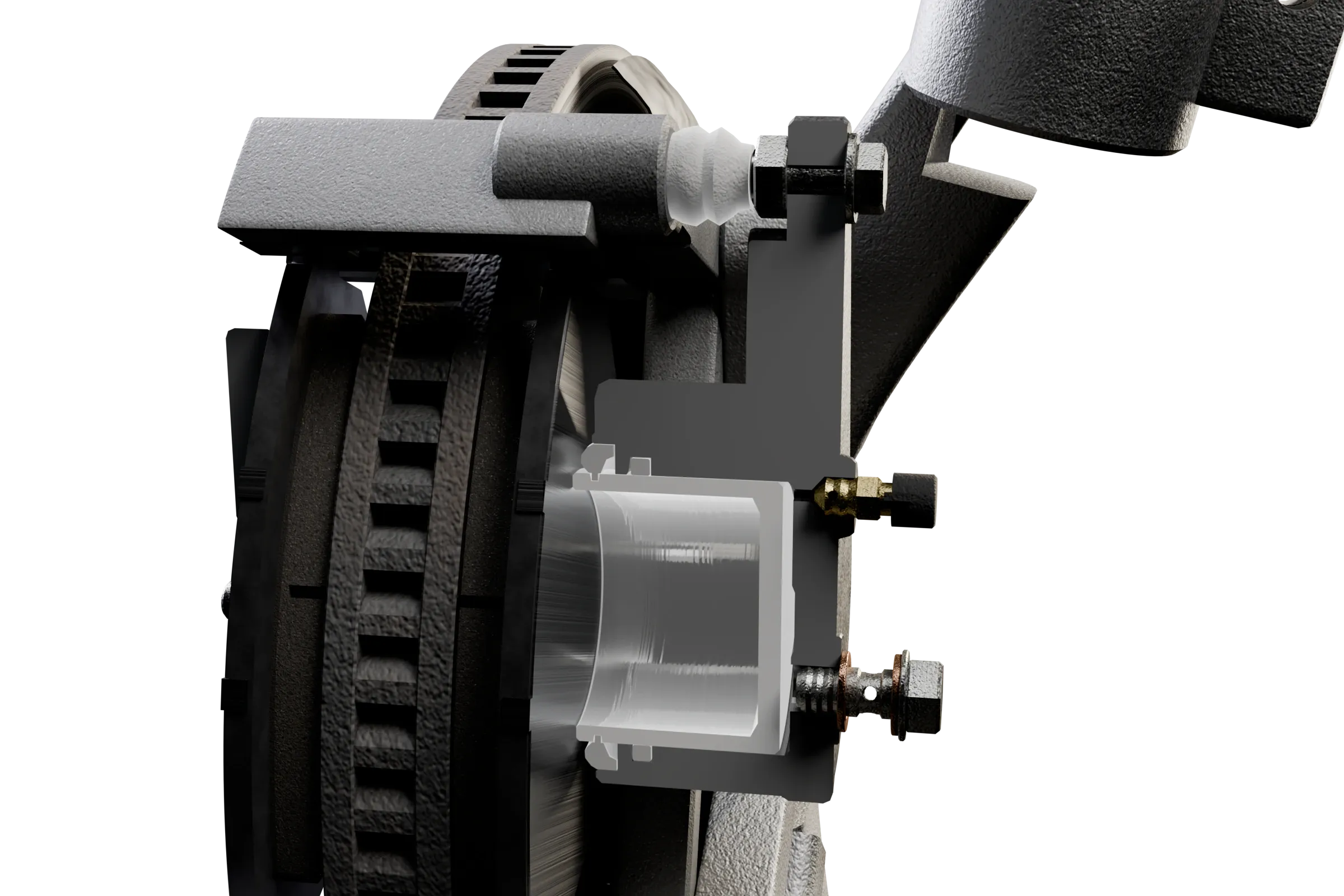
- Caliper piston
- Piston seal
- Piston dust boot
- Slide pin, upper UK: Guide pin, upper
The likely causes, most common first
-
Rusted or dry slide pins
Most likelyHow it shows One pad worn much thinner than the other or worn to a wedge, a pull when you brake, and a brake that drags a little after you let go.
Check A shop takes the caliper's bolts out and checks that each pin slides in and out of its bore by hand, smoothly and with only light resistance.
Have it checked soon
-
A corroded caliper piston
CommonHow it shows The brake on one wheel stays on: a hot wheel, a burning smell, a pull toward that side even off the brakes, and a car that feels held back.
Check After a normal drive, hold a hand near each wheel without touching it. One far hotter than the others is dragging; a torn dust boot around the piston is the usual start.
Have it checked soon
-
Pads stuck in the bracket
CommonHow it shows A drag or a pull that began after a pad change, or after a wet winter, as rust builds under the pad ears in the bracket.
Check With the wheel off, a shop looks at the pad ears and the clips they slide on for rust and swelling.
Have it checked soon
-
A collapsed brake hose
Less likelyHow it shows One wheel's brake stays on after you release the pedal, because the hose's inner lining lets the fluid in but not back out.
Check A shop can open the bleed screw on the dragging caliper: if the wheel frees at once, the hose was holding the pressure.
Have it checked soon
-
Old brake fluid
Less likelyHow it shows Corrosion inside the caliper on an older car whose fluid has not been changed for years, often with a soft or slow pedal.
Check A shop can test the fluid's water content. Dark fluid in the reservoir is a hint.
Have it checked soon
-
A sticking parking brake on a rear caliper
Less likelyHow it shows A rear wheel that drags after the parking brake has been used, worst in cold or wet weather.
Check A shop checks that the parking brake cable and the lever on the caliper return freely.
Have it checked soon
How to narrow it down
- After a normal drive, park on level ground and hold a hand near each wheel without touching it. One much hotter than the others is dragging.
- Notice any sharp, acrid smell of hot brakes or smoke from one wheel, and look for brake fluid on the inside of the wheel or tire.
- Look through the wheel at the pads where you can see them. One pad worn much thinner than its partner, or a rotor tinted blue by heat, points to a sticking caliper.
- Have a shop raise the car and turn each wheel by hand: one held by a seized caliper drags or will not turn.
Can you drive with a seized brake caliper?
Have it checked before you drive far
Only gently, and only as far as a repair shop. A caliper stuck on keeps braking its wheel, so the pads and the rotor overheat, the brakes fade and the fluid in that caliper can boil. One stuck off leaves its wheel doing less of the braking, so the car pulls when you brake hard and takes longer to stop. If a wheel is smoking, the smell is strong or the pedal goes soft, stop and have the car towed.
Why do brake calipers seize?
Mostly from corrosion. Most cars use a floating caliper, which slides on two greased pins so it can squeeze both pads with one piston. Each pin moves in its bore under a rubber boot, and once the boot splits, water gets in, the grease washes out and the pin rusts in place, so the caliper stops floating. The piston has a dust boot of its own, and if that tears, its chrome corrodes and it sticks in its bore. Old fluid that has absorbed water corrodes the bore from the inside as well.
When the brake is released, the piston’s square-section seal springs back and draws the piston in, by about 0.1 mm in the app’s model, so the pads stop touching the rotor. A piston that has started to corrode cannot slide back that far, and the pads keep rubbing. Cars that sit for weeks, especially through a wet winter, are most at risk, and so are slide pins that are never cleaned and greased when the pads are changed.
Can a seized caliper be freed?
Seized slide pins often can. The pins are pulled out, they and their bores are cleaned with brake parts cleaner, and they go back in with fresh high-temperature brake grease made for rubber parts and new boots. Ordinary grease swells the boots until the pins bind again. A seized or pitted piston is a different matter: the caliper is usually replaced with a new or remanufactured one, or rebuilt with a new piston and seals if the bore is still smooth. Either way, the brakes are bled afterward.
How a caliper clamps and lets go, and what its slide pins do, is on the brake caliper page. If the car pulls only when you brake, why a car pulls to one side when braking covers the other causes.
Questions people ask
What does a sticking caliper smell like?
A sharp, acrid smell of hot brakes, a little like burning carpet, from one wheel after a drive. It is the pads and rotor overheating. Some smell after a long, steep descent is normal; from one wheel after a level drive it is not.
Can a seized caliper make a car pull?
Yes, both ways. A caliper stuck on pulls the car toward its own side, even when you are not braking. One stuck off pulls the car away from its side when you brake, because the wheel opposite brakes harder.
What happens if you keep driving on a seized caliper?
The stuck brake keeps heating its pads and rotor, which can glaze the pads, warp or crack the rotor and boil the brake fluid, so the pedal goes soft. The heat can also cook the grease in the wheel bearing behind it.
Related
The parts
- What does a brake caliper do? A brake caliper is the clamp at each disc brake. When you brake, fluid pressure pushes its piston out and the caliper squeezes the two pads against the brake rotor.
- What do brake pads do? Brake pads are the friction blocks the caliper squeezes against the brake rotor, turning the car's movement into heat to slow it down.
- What does brake fluid do? Brake fluid carries the push from the brake pedal to the calipers.
Similar symptoms
- Why does my car pull to one side when braking? A car that pulls to one side when braking usually has a brake that grips harder on one side than the other.
- What causes a grinding noise when braking? A grinding noise when you brake usually means the brake pads have worn through their friction material, so their steel backing plates are scraping the brake rotors.
- Why is my car pulling to one side? A car that pulls to one side on a straight, level road usually has a tire problem or wheels out of alignment.
- What causes a spongy brake pedal? A spongy or soft brake pedal usually means air in the brake fluid, which compresses where fluid does not.
Explained
- Disc vs drum brakes: what's the difference? A disc brake squeezes pads against a rotor that turns with the wheel; a drum brake pushes shoes outward against the inside of a drum.
