
Why is my power steering light on?
On most modern cars the power steering light, often a steering wheel with an exclamation point, means the electric power steering has found a fault and may have reduced or switched off its assist. Low voltage from a weak battery or alternator is a common trigger, then a sensor, wiring or motor fault. The car still steers, but heavily.
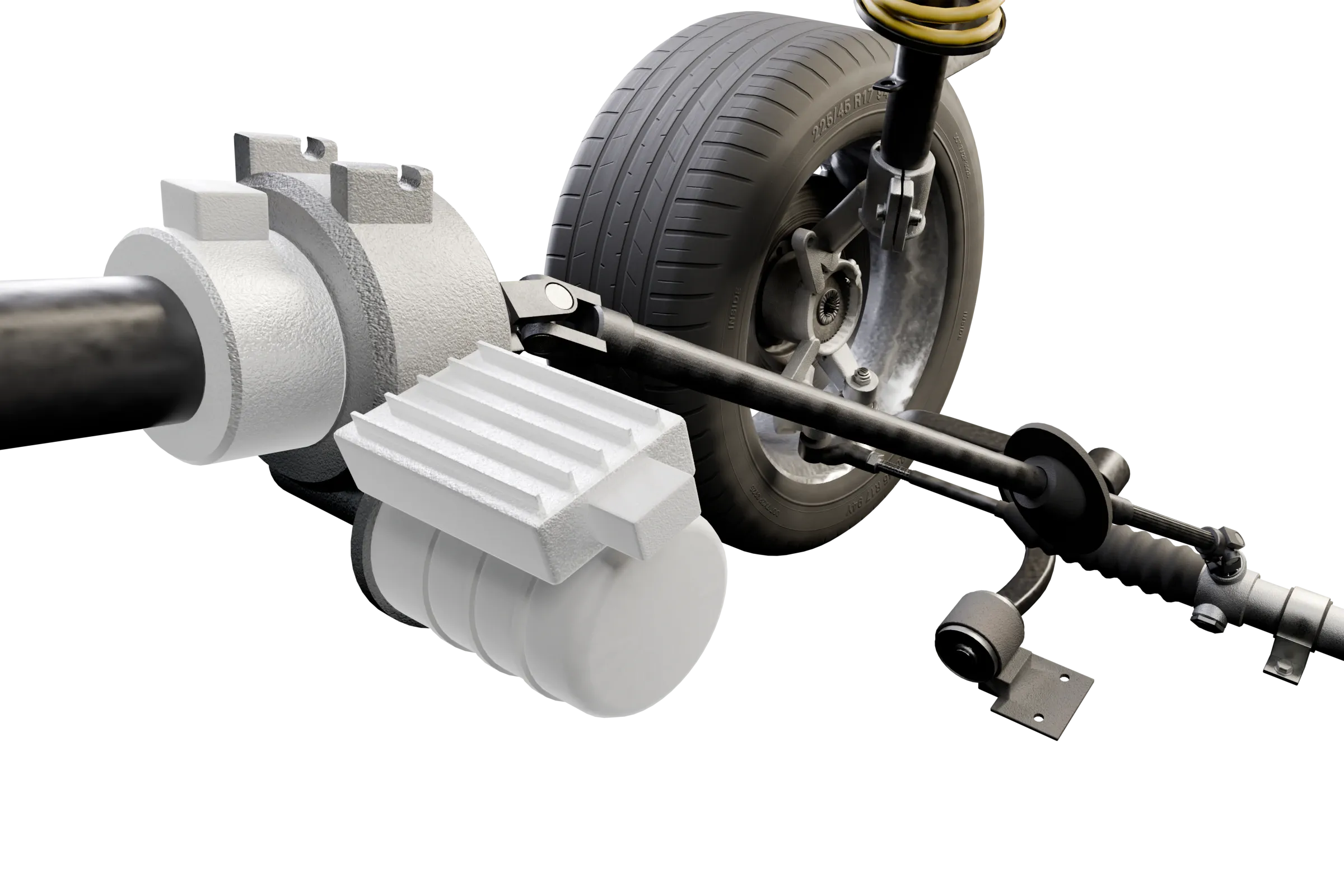
- Power steering control module UK: EPS control unit
- Power steering motor UK: EPS motor
- Steering torque sensor
The likely causes, most common first
-
Low voltage from a weak battery or alternator
Most likelyHow it shows The light at startup, or at idle with many electrical loads on, sometimes with the battery light or slow cranking, and it may go out once the engine revs.
Check Have the battery and the charging system tested. The steering motor draws a heavy current, so the system protects itself when the voltage drops.
The fix A new battery or alternator, or clean, tight battery terminals.
Have it checked soon
-
How it shows The light with the steering suddenly heavy, uneven assist from one side to the other, or a pull to one side with your hands off the wheel.
Check Have the fault codes read with a scan tool. A sensor fault sets its own code.
The fix The sensor recalibrated or replaced. On many cars the torque sensor comes only with the steering column or the rack.
Have it checked soon
-
A wiring or connector fault
CommonHow it shows A light that comes and goes, often over bumps or in wet weather, with the assist dropping out for a moment.
Check Have a shop check the connectors at the steering motor and its control unit for corrosion or a loose plug.
The fix The connector cleaned and secured, or the wiring repaired.
Have it checked soon
-
A failing power steering motor or control unit
Less likelyHow it shows Steering that is heavy all the time, sometimes with a grinding sound or a whine from the column or the rack.
Check Fault codes point to the motor or its control unit, and a shop confirms with a test.
The fix A new or remanufactured motor and control unit, often sold with the column or the rack.
Have it checked soon
-
Steering calibration lost after a battery change
Less likelyHow it shows The light right after the battery was disconnected or replaced, with the steering otherwise normal.
Check On many cars, turning the wheel from lock to lock with the engine running relearns the center. The owner's manual gives the steps.
The fix A relearn, by hand or with a scan tool.
Fix it soon
-
Low fluid in a hydraulic system
Less likelyHow it shows On a car with a power steering pump, a whine when turning and heavy steering, with a warning light only on some models.
Check Check the fluid level in the power steering reservoir and look for leaks at the pump, the hoses and the rack.
The fix The leak fixed and the reservoir topped off with the fluid its cap names.
Have it checked soon
How to narrow it down
- Turn the engine off, wait a minute and restart. A light that stays out may have been a voltage dip; one that comes back is a stored fault.
- Check that the battery terminals are clean and tight, and whether the battery light or slow cranking came with it.
- Turn the wheel at a standstill and while rolling slowly. Note whether it is heavy all the time, heavy one way only, or normal.
- Have the fault codes read. Auto parts stores and any shop can do it.
Is it safe to drive with the power steering light on?
Have it checked before you drive far
Usually, with care, as far as a shop. The car still steers without the assist, but it takes much more effort, most of all at parking speed, and the assist can drop out without warning. Leave extra room, slow down for turns and don't set off on a long trip until it has been checked. If the steering feels stiff and notchy rather than just heavy, or binds, don't drive it.
Electric or hydraulic: which power steering does my car have?
Most cars built in the last decade or so have electric power steering: a motor on the steering column or on the rack, driven by a control unit that reads a torque sensor in the column. There is no fluid to check. A hydraulic system has a pump driven by the engine’s belt, a fluid reservoir with a cap, and hoses running to the rack, and its warning light, where fitted, usually means low fluid or pressure. If there is no power steering reservoir in the engine bay, the car’s steering is electric, and its warning light means a sensor, wiring, motor or voltage fault that a scan tool can read.
Questions people ask
What does a steering wheel with an exclamation point mean?
On most cars with electric power steering it is the power steering warning. Its color and wording vary by make, and the owner's manual says what each one means. Either way the car still steers, with more effort.
Can a weak battery turn on the power steering light?
Yes. Electric power steering needs a steady voltage, and when it drops, at startup or with a weak battery or alternator, the system can cut its assist and light the warning. Testing the battery and the charging system is the first check.
Can you reset the power steering light?
Sometimes. A light from a voltage dip often clears after a restart, and a calibration lost after a battery change can be relearned by turning the wheel from lock to lock with the engine running. A light that keeps coming back is a stored fault and needs a scan tool.
Related
The parts
- What does an alternator do? An alternator is a generator driven by the engine's belt. While the engine runs, it powers the lights, the engine computer and everything else electrical, and recharges the battery after each start.
- What does a steering torque sensor do? A steering torque sensor measures how hard you are turning the steering wheel, from the twist of a slim torsion bar in the column or the rack.
- What does a power steering motor do? A power steering motor is the electric motor that helps you turn the steering wheel on cars with electric power steering.
Similar symptoms
- Why is my steering wheel hard to turn? A steering wheel that is hard to turn usually means the power steering assist has failed or been cut back.
- Why is my ABS light on? An ABS light on the dash means the ABS unit has found a fault and switched anti-lock braking off.
- Why doesn't my steering wheel return to center? After a turn, the front wheels' caster and the way the tires grip the road should pull the steering wheel back to center on their own.
- What causes uneven tire wear? Uneven tire wear usually means the wheel alignment is off, the tire pressures are wrong or a suspension part is worn, and the pattern points to which.
