
Why is my steering wheel hard to turn?
A steering wheel that is hard to turn usually means the power steering assist has failed or been cut back. On electric systems that is a fault in the motor, the torque sensor or their power supply, often with a warning light; on hydraulic systems it is low fluid or a failing pump. Low tire pressure and a seized joint can make the steering heavy too.
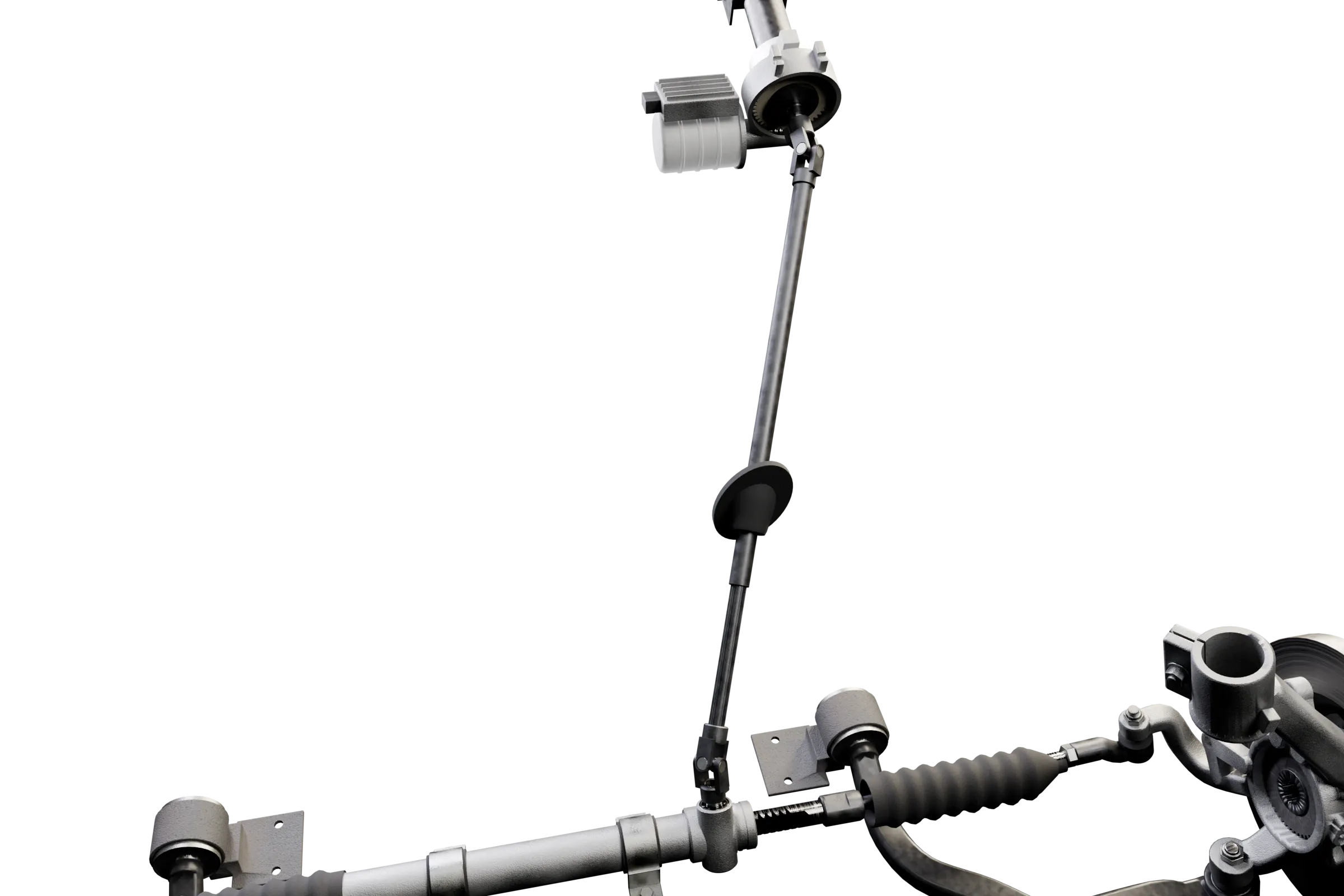
- Power steering motor UK: EPS motor
- Steering torque sensor
- EPS worm wheel
- Power steering control module UK: EPS control unit
- Rack bar UK: Steering rack
The likely causes, most common first
-
An electric power steering fault
Most likelyHow it shows The steering goes heavy, often suddenly and with a power steering warning light, worst when parking.
Check Have the power steering module scanned for codes, and check the battery and charging voltage first.
Have it checked soon
-
Low power steering fluid or a failing pump
CommonHow it shows On hydraulic systems, heavy steering with a whine or groan that is loudest at full lock, sometimes worse when cold.
Check Check the fluid level with the engine off and look for leaks at the pump, the hoses and the rack's boots.
Have it checked soon
-
Low battery voltage
CommonHow it shows The assist drops out after many parking maneuvers or at idle with lights and fans on, then returns once the engine revs.
Check Have the battery and alternator tested; a weak battery is one of the commonest causes on electric systems.
Fix it soon
-
A faulty torque sensor
CommonHow it shows Steering heavy one way and light the other, a pull to one side, or assist that comes and goes.
Check A scan shows the sensor's live reading; it should sit near zero with your hands off and rise evenly each way.
Have it checked soon
-
Low tire pressure in the front
CommonHow it shows Steering heavier than usual all the time, with the car feeling slow to turn in.
Check Check the front tires cold against the pressure on the label in the driver's door frame.
Fix it soon
-
A binding rack or seized joint
Less likelyHow it shows A tight spot at one point in the turn, or steering that does not return to center on its own.
Check With the front wheels off the ground, turn the steering lock to lock and feel for a catch; a shop can check each joint and the rack.
Have it checked soon
-
A seized strut mount bearing or ball joint
Less likelyHow it shows Stiff steering with a creak or a bang as you turn, from a front corner rather than the column.
Check Have the strut mounts and ball joints checked for binding with the car on the ground and turned lock to lock.
Have it checked soon
How to narrow it down
- Note when it is heavy. All the time points to tires or a seized part; suddenly, with a warning light, points to the electric assist; only at full lock with a whine points to hydraulic fluid or the pump.
- Look for a power steering or steering wheel warning light, and restart the car once: some systems reset after a voltage dip.
- Check the front tire pressures, and on hydraulic power steering the fluid level and any leaks.
- Have the battery and charging system tested, then the power steering module scanned for codes.
- If the steering binds at one point, catches or does not return to center, have the rack and joints inspected before you drive far.
Is it safe to drive with heavy steering?
Have it checked before you drive far
Only if you can steer comfortably and you drive with care. Without assist the car still steers through a direct mechanical link, but it takes far more effort at low speed, and losing it partway through a turn can catch you out. If the steering binds, catches or will not return to center, stop driving and have it checked where the car is: that points to a mechanical fault, not just a lack of assist.
How do you tell an assist fault from a mechanical one?
By how it feels in motion. A failed assist makes the steering uniformly heavy, worst when parking and lighter as the car picks up speed, but smooth all the way from lock to lock. The wheel still returns toward center after a turn, just more slowly. That is the power steering motor, its sensor, its power supply or, on older cars, the pump.
A mechanical fault feels different: a tight spot at one point in the turn, a catch, a creak or bang from a front corner, or a wheel that stays turned after a corner. Those come from the steering rack, a dry joint on the intermediate shaft, a seized strut mount or a ball joint, and they need checking before you drive far.
Questions people ask
Why is my steering wheel hard to turn when the car is stopped?
Turning the wheel while stopped needs the most effort, because the tires are not rolling, so any weakness in the assist shows there first. On electric systems the motor can also cut back after a lot of parking to protect itself from overheating.
Why is my steering hard to turn when it is cold?
On hydraulic systems thick, old fluid and a tired pump struggle until they warm up. On electric systems cold weather adds to a weak battery's voltage drop, and some intermediate shafts stick when their grease is cold.
Can low power steering fluid make the steering heavy?
Yes, on hydraulic systems: the pump draws in air and cannot build pressure, so the steering goes heavy and the pump whines. Electric power steering has no fluid, so the cause there is electrical.
Can an alignment fix heavy steering?
Only if the alignment is far out, for example too much caster after a curb strike. Most heavy steering comes from the assist, tires or a binding part, which an alignment does not fix.
Related
The parts
- What does a power steering motor do? A power steering motor is the electric motor that helps you turn the steering wheel on cars with electric power steering.
- What does a steering torque sensor do? A steering torque sensor measures how hard you are turning the steering wheel, from the twist of a slim torsion bar in the column or the rack.
- What does a steering rack do? A steering rack is a toothed steel bar that slides sideways in a housing across the front of the car.
Similar symptoms
- Why does my car clunk when I turn the steering wheel? A clunk when you turn the steering wheel usually means something in the steering or front suspension has worn loose: a tie rod end or inner tie rod, the steering rack's mounting bushings, a U-joint on the intermediate shaft or a strut mount bearing.
- Why is my steering wheel off center? A steering wheel that sits off center while the car drives straight usually means the front toe is out of adjustment, or the tie rods were set unevenly at the last alignment.
- What causes uneven tire wear? Uneven tire wear usually means the wheel alignment is off, the tire pressures are wrong or a suspension part is worn, and the pattern points to which.
- What causes a knocking noise over bumps? A knocking or clunking noise over bumps usually comes from a worn joint in the front suspension.
